
You open your laptop, stare at a blank doc, and realize you still need three blog posts before the week ends. You could write everything manually, but that’s hours gone. So you start looking at tools that promise faster writing without losing quality. That’s usually where a Jasper AI review search begins.
This article is for bloggers, affiliate marketers, agencies, and beginners who want a clear, realistic look at Jasper in 2026. Not hype. Not a sales pitch. Just what actually matters if you’re planning to use AI for real content work.
Here’s what you’ll learn: how Jasper works today, what features still stand out, pricing, real results, and whether it’s worth using now that tools like ChatGPT and other AI platforms exist. From my research, most people in the US aren’t asking if AI works anymore. They’re asking which tool actually saves time without killing quality.
Everything here is based on practical testing angles and real workflows. No over-polished claims. Let’s keep it simple and useful.
My Hands-On Testing Methodology
Before diving into features, it helps to explain how this tool was tested. AI tools can look impressive in demos but feel very different during real content creation.
I tested Jasper across multiple content types. That included long blog posts, shorter blog posts, marketing copy, and a few short-form content tasks. The goal wasn’t perfection. It was to see how the writing holds up when you’re producing content consistently.
Jasper was also used alongside other tools. That included SEO optimization tools, basic editing software, and manual rewriting passes. Most content creators don’t rely on one tool alone, so it made sense to test it in a realistic workflow.
The testing period stretched across several weeks. Not just one session. That gave enough time to notice patterns, like how outputs change based on the prompt, tone settings, or template selection.
Here’s what I noticed early on. Jasper performs differently depending on how you guide it. Loose instructions lead to generic output. Clear inputs tend to produce stronger drafts. That’s pretty common with any AI writing setup, but Jasper leans heavily on structured workflows.
The testing also included both solo creator scenarios and light team-style usage. That helps show whether the tool fits beginners or leans more toward agencies and marketers working at scale.
What Is Jasper AI?
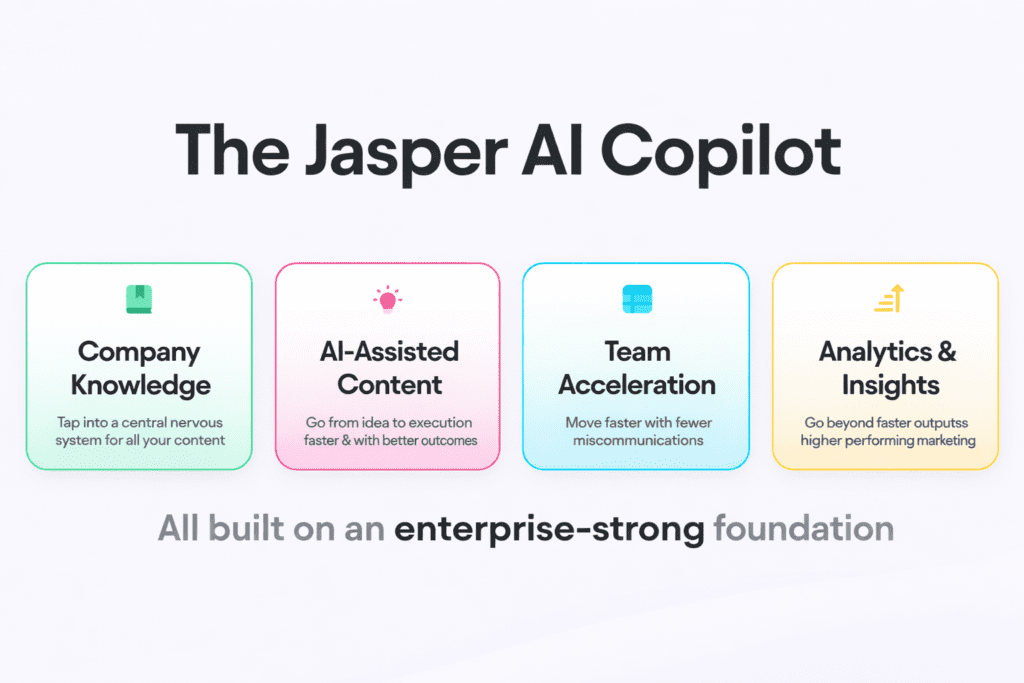
At its core, Jasper is an AI writing tool built to help create content faster using artificial intelligence and machine learning. It takes a simple input, like a topic or prompt, and generates text based on trained language models.
But it’s not just a basic text generator anymore. Jasper evolved into a full writing platform with templates, guided workflows, and brand voice controls. That shift is a big reason it’s still relevant in the current world of AI.
The company behind Jasper started by focusing on marketing-focused AI writing. Over time, it expanded into broader content creation, including blog posts, campaign content, and even visual content through Jasper Art.
That evolution matters. Some tools are built for experimentation. Jasper was built for structured output. It tries to help users produce content repeatedly, not just generate random paragraphs.
In 2026, the relevance of Jasper mostly comes down to positioning. It’s no longer the only option, but it still stands out as a structured writing tool designed for businesses and serious content creators.
Most casual users exploring AI for the first time might compare it directly with tools like ChatGPT. But Jasper’s real focus has always been guided writing workflows rather than open-ended conversations.
That difference becomes clearer once you look at how it fits into the current AI landscape, which we’ll explore next.
Why Jasper AI Still Matters in 2026
The AI writing space looks very different today compared to just a few years ago. New tools appear almost every month, and many of them promise faster results at lower prices. So it’s fair to ask why Jasper still comes up in almost every serious Jasper AI review.
One big reason is positioning. While newer tools focus on speed or affordability, Jasper leans toward structured content workflows. It’s built less like an experiment and more like a system for teams and marketers who produce content regularly.
That said, competition is real now. Tools like ChatGPT and other best AI tools offer flexible writing without locking users into a specific format. For solo creators, that flexibility sometimes feels more natural.
Here’s the thing though. Jasper didn’t try to win the price war. It shifted toward enterprise and brand-focused users. That includes agencies, SaaS companies, and content teams that care about consistency more than cost.
From my research, this shift explains why Jasper still has a strong presence in the US market. Businesses want predictable output. They don’t always want to build workflows from scratch using multiple AI platforms.
Another factor is maturity. Jasper has been around long enough to build a complete ecosystem. Templates, integrations, collaboration features, and brand voice tools all live inside one writing environment. Many newer tools still feel fragmented.
Still, it’s not perfect. Some creators feel Jasper now sits in an awkward middle space. It’s not the cheapest AI tool, and it’s not the most flexible either. That’s why understanding who actually benefits from it matters more than ever.
In most cases, Jasper still makes sense for users who want structure over experimentation. Especially marketers managing repeatable content pipelines.
Key Features of Jasper AI in 2026
Features are where Jasper tries to justify its pricing. Instead of focusing on one standout capability, the platform bundles multiple writing workflows into a single AI writing assistant.
Some features feel genuinely useful. Others depend heavily on how you plan to use Jasper. Let’s break them down starting with the core writing abilities.
AI Writing Capabilities
The foundation of Jasper is still AI writing. That hasn’t changed. What has changed is how guided the experience feels compared to earlier versions.
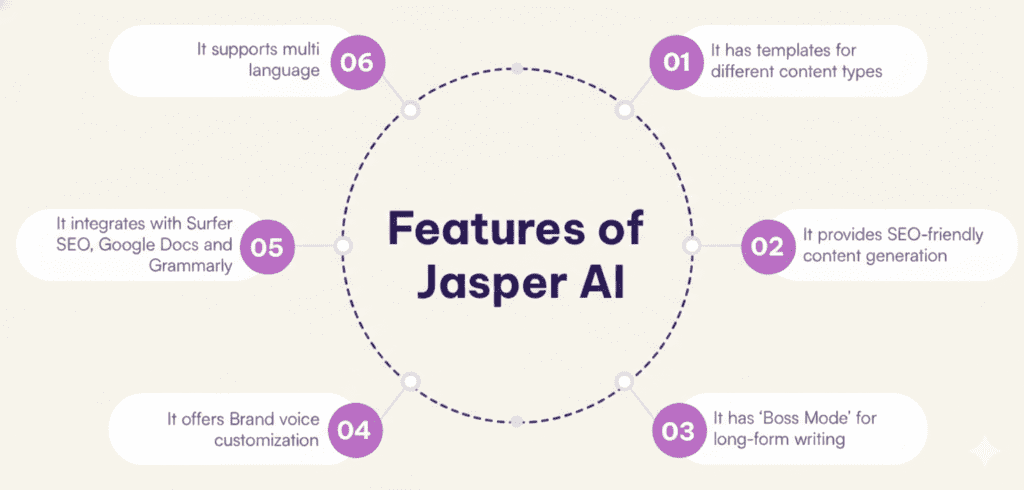
For long-form content, Jasper offers structured editors designed to generate blog posts in stages. You can start with a topic, provide a prompt, and build sections step by step. This approach works well for drafting blog posts quickly, especially if you already have an outline.
Short-form content is also supported through dedicated templates. These include things like ad copy, email subject lines, and landing page snippets. The outputs aren’t always publish-ready, but they give a strong starting point.
Tone control is another standout feature. You can adjust the tone of voice to sound more casual, formal, or brand-focused. This matters more than it sounds, especially for marketers trying to maintain consistency across campaigns.
Jasper also includes tools designed to help users create content in different styles. That includes storytelling formats, persuasive copy, and structured marketing frameworks like AIDA and PAS. These frameworks are especially useful for copywriters who want guided outputs instead of blank-page writing.
One thing worth noting is how Jasper handles long-form content. It tends to produce more structured drafts than most tools like ChatGPT. That structure can feel limiting at times, but it helps maintain flow when generating multi-section blog posts.
In real workflows, the biggest strength of Jasper’s writing engine is predictability. Once you understand how to use Jasper properly, the output becomes more consistent. That consistency is why many marketers still rely on it for regular content creation.
Next, it helps to look at how Jasper expands beyond writing into conversational workflows and automation.
Jasper Chat and Workflow Automation
One of the biggest additions in recent years is Jasper Chat. This feature brings a conversational layer to the platform, making it feel closer to tools like ChatGPT while still keeping Jasper’s structured approach.
Instead of jumping between templates, you can ask Jasper Chat to generate ideas, outlines, or even full blog posts. The difference is that Jasper still nudges you toward guided workflows rather than free-form exploration.
From my research, this hybrid approach works well for marketers who want flexibility without losing structure. You can brainstorm using chat, then move into a more organized editor to refine the content.
Jasper also includes campaign-style workflows. These let teams create multiple content assets from a single idea. For example, a marketer can start with a core topic and expand it into blog posts, email drafts, and supporting content inside the same environment.
Collaboration is built into these workflows. Teams can leave notes, adjust outputs, and refine content together. That makes Jasper more than just a writing tool. It becomes a lightweight content production system.
SEO Integrations and Optimization Workflows
SEO support has always been part of Jasper’s appeal, especially for affiliate marketers. The most notable integration is with Surfer SEO, which helps guide content optimization during the writing process.
Instead of writing first and optimizing later, Jasper allows users to combine AI writing with SEO data. You can see keyword suggestions, content scores, and optimization tips while drafting blog posts.
This approach saves time, especially for users building niche sites or producing multiple blog posts each week. It reduces the back-and-forth between tools, which can slow down workflows.
That said, SEO performance still depends on editing. Jasper can help generate optimized drafts, but rankings usually improve when humans refine structure and intent.
For affiliate marketers, this integration is still one of the main reasons to use Jasper AI. It bridges the gap between writing and optimization in a fairly smooth way.
Jasper AI Chrome Extension and Integrations
Jasper also expanded outside its main dashboard through a Chrome extension and third-party integrations. This makes the AI tool more flexible across everyday writing environments.
The Chrome extension allows users to generate AI content directly inside platforms like Google Docs, Gmail, and content management systems. Instead of switching tabs, you can create content wherever you’re already working.
This small change makes a bigger difference than expected. Most content creators spend more time editing than generating drafts. Having AI available in those spaces speeds things up.
Jasper integrates with several tools as well. That includes CMS platforms, ecommerce systems, and collaboration apps. For example, marketers can generate product description drafts or ad copy without leaving their workflow.
Here’s what I noticed during testing. Integrations matter more for teams than solo creators. If you’re working across multiple tools daily, the ability to keep AI inside your workflow becomes a real advantage.
Brand Voice and Style Training
Brand voice control is one of Jasper’s most unique features. Instead of generating generic text every time, Jasper allows users to train the AI on existing content.
You can feed the platform past blog posts, marketing copy, or brand guidelines. Jasper then tries to mirror that tone of voice in future outputs. It’s not perfect, but it’s noticeably better than starting from scratch every time.
For agencies and marketers managing multiple brands, this feature can be a major time saver. It reduces the need to rewrite every draft just to match a specific voice.
Most beginners overlook this feature at first. But once you start producing content regularly, consistency becomes more important than speed. That’s where Jasper’s brand voice tools stand out compared to simpler AI writing tools.
Team Collaboration Features
Jasper isn’t built only for solo creators. It includes several features aimed at teams and agencies that need structured collaboration.
Workspaces allow multiple users to operate under the same account. Each member can have different roles, which helps manage permissions and approvals. This is useful for content pipelines where drafts move through editors, strategists, and clients.
Approval workflows also make a difference. Teams can review content before publishing, which reduces mistakes and maintains quality across large campaigns.
In real-world use, these features make Jasper more appealing to agencies than hobby bloggers. If you’re producing content at scale, built-in collaboration tools can simplify operations.
Jasper AI Templates Breakdown
Templates are still at the heart of the Jasper experience. While newer tools rely heavily on open-ended prompts, Jasper continues to offer structured template-based writing.
Blog post workflows are among the most used templates. These guide users through generating outlines, introductions, and section drafts step by step. It’s especially helpful for beginners who don’t want to start from a blank page.
Marketing templates are another major category. Jasper includes classic copywriting formats like AIDA and PAS. These frameworks help marketers create persuasive content without needing deep copywriting experience.
Email and ad templates also remain popular. Users can generate email subject lines, short promotional content, and campaign snippets quickly. While these outputs often need editing, they provide a solid starting point.
Affiliate marketers tend to benefit the most from templates. Review-style blog posts, comparison content, and structured blog posts are easier to produce when the writing flow is predefined.
That said, templates can feel limiting if you prefer creative freedom. Some users eventually shift toward chat-style writing once they become comfortable with AI tools.
Still, for structured workflows and repeatable outputs, templates remain one of the main reasons people continue using Jasper.
Jasper AI Pricing Updated for 2026
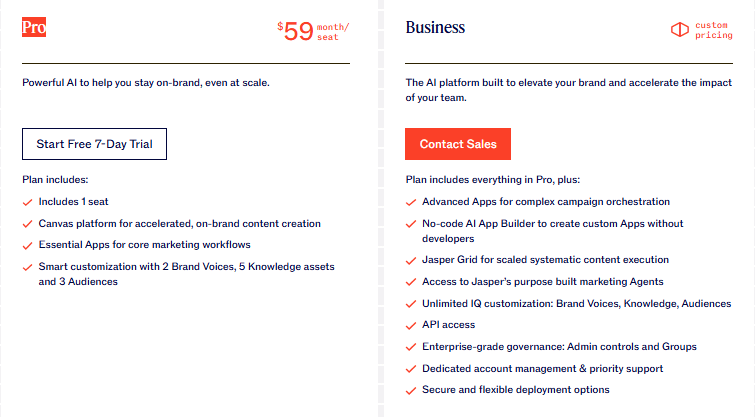
Pricing is usually the biggest deciding factor in any Jasper AI review. The platform has changed its pricing structure several times, and in 2026 it leans more toward premium positioning than budget accessibility.
Jasper typically offers tiered plans designed for individuals, teams, and businesses. The pricing structure depends on usage limits, features, and collaboration tools.
Here’s a simplified breakdown based on current positioning.
| Plan | Monthly Price | Key Inclusions |
|---|---|---|
| Pro Plan | $59/month | Advanced features, collaboration tools |
| Business Plan | Custom pricing | Brand voice training, enterprise support |
Annual billing usually lowers the effective monthly cost. Many users choose yearly plans if they plan to use Jasper consistently.
What’s included varies by tier. Lower plans focus on writing capabilities, while higher tiers unlock collaboration features, integrations, and advanced brand voice tools.
There are also hidden costs worth mentioning. For example, Surfer SEO integration often requires an additional subscription. Some advanced features may also rely on credit-based usage depending on the plan.
That said, pricing transparency has improved compared to earlier years. Most features are now clearly tied to plan levels rather than confusing credit systems.
From my research, US-based marketers usually evaluate Jasper based on time saved rather than raw cost. If the tool replaces freelance writing hours, the math can look very different.
Refund Policy and Free Trial Details
Before committing to any paid AI writing tool, most people want to know if they can test it risk-free. Jasper has experimented with trials over the years, and availability can change depending on promotions.
In many cases, Jasper offers a limited free trial rather than a permanent free plan. This allows users to explore features before committing to a subscription.
Refund policies are typically short. If you decide Jasper isn’t the right fit, you usually need to cancel within the allowed window to avoid charges. That’s something beginners should pay attention to.
If you’re evaluating the tool, it’s smart to test it with real content tasks. Don’t just generate random paragraphs. Try creating blog posts, marketing drafts, and short-form content you’d actually use.
That approach gives a clearer picture of whether Jasper fits your workflow. AI tools can feel impressive in demos but less practical during daily content creation.
One tip that works well is using the trial period to test different templates and Jasper Chat workflows. That helps you understand how flexible the platform feels before committing long term.
Is Jasper AI Expensive Compared to Alternatives?
This is where opinions tend to split. Some users feel Jasper is expensive, while others see it as reasonable for what it offers.
Compared to budget AI tools, Jasper definitely sits on the higher end. Many newer AI writing tools cost significantly less per month, especially those built around open AI models.
However, price-to-value depends heavily on how you plan to use Jasper. For casual bloggers who publish occasionally, the cost can feel hard to justify.
On the other hand, agencies and marketers producing content weekly often see things differently. If Jasper helps produce multiple blog posts faster, the cost per article drops quickly.
Here’s the thing most beginners overlook. Expensive tools aren’t always overpriced. Sometimes they’re simply built for a different audience.
If you’re comparing Jasper directly with tools like ChatGPT, the difference becomes clearer. ChatGPT offers flexibility at a lower price, while Jasper offers structured workflows and built-in templates.
Neither approach is automatically better. It really comes down to whether you value flexibility or guided content production.
In most cases, Jasper makes more sense when content output is high and consistency matters. If you only publish occasionally, cheaper alternatives might feel more practical.
Real Use Cases of Jasper AI
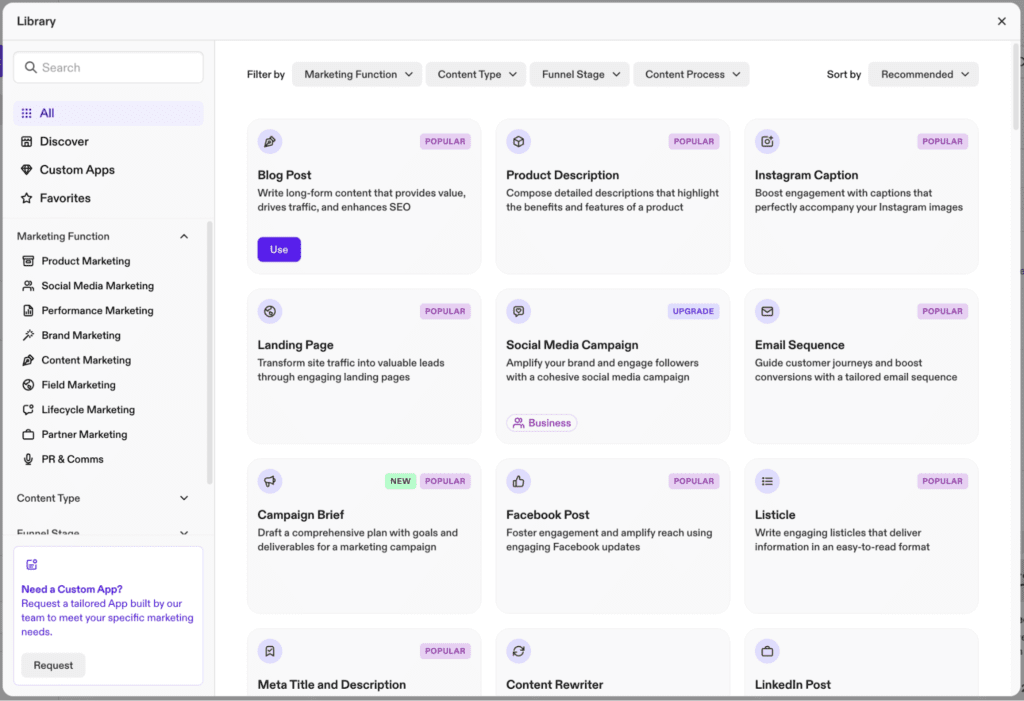
Understanding real use cases makes this Jasper AI review more practical. AI tools can sound impressive on paper, but value only shows up when you look at how people actually use them.
Jasper works best in structured content environments. That usually includes blogging, marketing campaigns, and content teams producing material regularly.
Bloggers and Affiliate Marketers
Bloggers often use Jasper for long-form content creation. It helps generate outlines, draft blog posts, and speed up the writing process. This is especially useful when building niche sites that rely on consistent publishing.
Affiliate marketers use Jasper to produce review-style blog posts and comparisons. The structured template system makes it easier to create repeatable formats without reinventing every article.
Scaling content is another major benefit. Instead of writing everything manually, bloggers can use Jasper to draft multiple blog posts in less time and then refine them through editing.
Agencies and Content Teams
Agencies tend to get the most value from Jasper. When multiple clients require regular content, consistency becomes more important than speed alone.
Jasper helps teams maintain a unified brand voice across campaigns. With collaboration features and shared workflows, teams can create content that feels consistent even when multiple writers are involved.
Bulk content production is another strong use case. Agencies producing blog posts, marketing content, and campaign materials weekly can streamline operations using Jasper’s structured workflows.
Ecommerce and SaaS Brands
Ecommerce brands often use Jasper to generate product description drafts and marketing copy. Instead of writing every listing manually, they can create content faster and then refine it.
SaaS companies benefit from landing page content, onboarding emails, and ad copy generation. These formats require consistency, which fits well with Jasper’s guided writing style.
Email campaigns are another common use case. Generating email subject lines and body content becomes faster when templates guide the process.
Beginners vs Advanced Users
Beginners can use Jasper fairly quickly, especially with templates guiding the process. The interface is relatively simple, and structured workflows reduce decision fatigue.
That said, output quality improves with experience. Advanced users tend to get better results because they understand how to refine prompts and edit AI-generated drafts.
Most beginners in the US start by using Jasper for basic blog posts or short-form content. Over time, they expand into more complex workflows once they understand how the tool behaves.
Real Results: Does Jasper AI Actually Work?
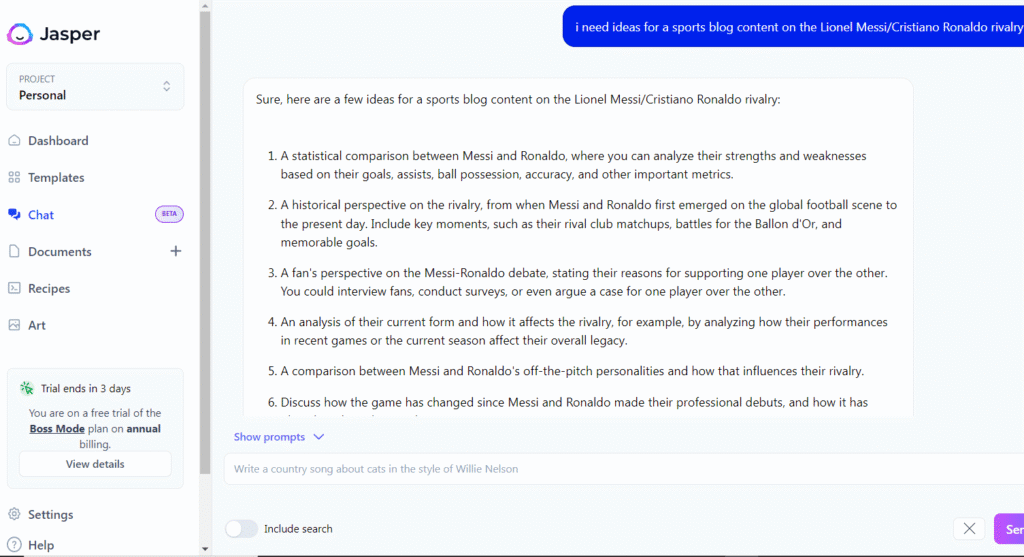
The real question behind any Jasper AI review is simple. Does it actually deliver useful results?
In most cases, yes, but with a few caveats. Jasper produces strong first drafts, not finished articles. Expecting publish-ready blog posts without editing usually leads to disappointment.
Content quality depends heavily on input clarity. Clear instructions and structured prompts tend to produce stronger drafts. Vague inputs often lead to generic output.
Compared to manual writing, Jasper significantly reduces drafting time. Generating a rough article outline or initial draft takes minutes instead of hours.
However, editing is still part of the process. Most blog posts generated by Jasper need refinement for tone, clarity, and originality. That’s true for nearly every AI writing tool today.
Speed is where Jasper stands out. It can generate multiple blog posts quickly, which helps creators maintain publishing schedules without burning out.
That said, speed alone doesn’t guarantee quality. The best results usually come from combining AI drafting with human editing. This hybrid approach tends to produce the most readable and engaging content.
Jasper AI Output Examples Before and After Editing
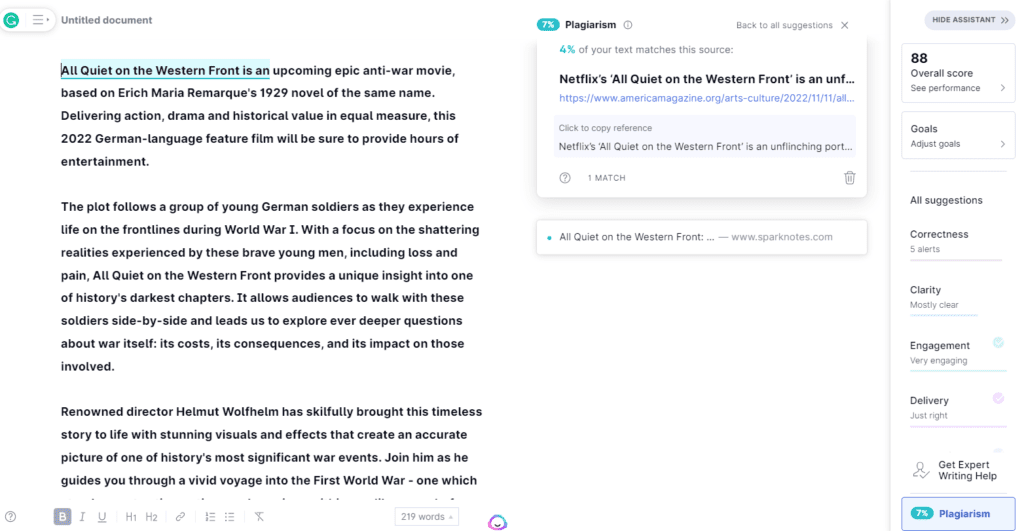
Looking at output quality is easier when comparing raw and edited versions. AI-generated text often improves significantly after a simple editing pass.
Raw outputs from Jasper are usually structured but slightly generic. The ideas are clear, but the tone can feel neutral or repetitive in longer blog posts.
After editing, the difference becomes noticeable. Adding transitions, tightening sentences, and refining the tone makes the content feel more natural and engaging.
From my research, most marketers treat Jasper as a drafting engine rather than a final writing solution. They generate a base article, then reshape it to match their style and audience.
This workflow explains why some users love Jasper while others feel underwhelmed. Expectations play a huge role. If you expect perfect articles instantly, the tool might disappoint.
But if you see it as a productivity boost, the value becomes easier to appreciate.
Content Performance Insights
Performance matters more than features when evaluating any AI writing tool. After all, generating blog posts is only useful if the content actually performs well once published.
From what I’ve seen, Jasper-generated content can perform decently when properly edited. Raw AI content rarely ranks on its own, but optimized drafts often compete well in search results.
SEO potential largely depends on structure and intent alignment. Jasper tends to produce organized blog posts, which helps readability and user experience. That’s a good starting point for rankings.
Engagement also improves after light editing. Adding transitions, examples, and clearer tone adjustments makes AI-generated blog posts feel less robotic. Most readers don’t mind AI assistance as long as the content feels helpful.
In most cases, performance improves when Jasper is used as a drafting engine rather than a one-click publishing solution. That hybrid workflow tends to produce stronger long-term results.
Jasper AI for SEO Limitations You Should Know
Despite strong drafting abilities, Jasper isn’t perfect for SEO. There are a few limitations that show up consistently in real-world usage.
One common issue is over-optimization. When relying too heavily on templates, some blog posts end up sounding formulaic. That can reduce uniqueness, especially in competitive niches.
Another limitation is search intent interpretation. Jasper can generate well-structured content, but it doesn’t always understand deeper ranking signals like topical authority or nuanced user intent.
Overuse can also create pattern repetition. If multiple blog posts follow the same structure, search engines may pick up similarities. That’s why editing and personalization still matter.
There are also scenarios where specialized SEO tools outperform Jasper. Platforms focused purely on optimization sometimes provide stronger keyword guidance and ranking insights.
This doesn’t make Jasper ineffective. It just means expectations should be realistic. It’s a strong AI writing assistant, not a complete SEO replacement.
Jasper AI vs Alternatives Quick Comparison
Comparing tools helps clarify where Jasper fits in today’s AI landscape. The competition is much stronger now than when Jasper first gained popularity.
| Name | Jasper | Writesonic | ShortlyAI | ChatGPT |
|---|---|---|---|---|
| Price | Subscription-based pricing | Various pricing plans | Subscription-based pricing | Free to use |
| User Interface | Text-based interface | User-friendly | User-friendly | Text-based interface |
| Writing Templates | Not available | Customizable templates | Not available | Not available |
| Free trial | Yes | Yes | Yes | Free to use |
| Grammar and Spelling | Yes | Yes | Yes | Yes |
| Auto-Completion | Yes | Yes | Yes | Yes |
| Quality of output | High | High | Good | High |
| Ease of use | Yes | Yes | Yes | Yes |
Jasper AI vs ChatGPT-Style Tools
Tools like ChatGPT focus on flexibility. You can generate almost anything using open-ended prompts, which appeals to solo creators and experiment-driven workflows.
Jasper takes a more structured approach. Instead of relying purely on prompts, it offers templates and guided workflows designed for repeatable output.
For users who prefer control and structure, Jasper often feels easier to manage. But for those who value flexibility and lower cost, ChatGPT-style tools may feel more practical.
Jasper AI vs Surfer-Focused Writers
Some AI writing tools are built primarily around SEO optimization. These tools combine keyword research and writing inside one platform.
Jasper integrates SEO through partnerships, but it isn’t purely optimization-first. That means some dedicated SEO writers may provide stronger ranking-focused guidance.
However, Jasper often feels more polished overall. The interface, collaboration tools, and workflow systems make it more than just an optimization engine.
Jasper AI vs Budget AI Writers
Budget AI tools have improved significantly. Many offer solid drafting abilities at a fraction of Jasper’s cost, which makes them appealing to beginners.
The trade-off is usually ecosystem depth. Cheaper tools often lack collaboration features, brand voice training, and structured workflows.
That’s why the choice usually comes down to priorities. If affordability is key, budget tools might win. If consistency and workflow structure matter more, Jasper still holds an edge.
Jasper AI Alternatives by Use Case
Instead of looking for a single replacement, it helps to consider alternatives based on how you plan to use AI.
For bloggers, flexible tools like ChatGPT or other tools like ChatGPT often provide enough power without the higher cost. These tools work well for idea generation and drafting blog posts.
Agencies may prefer enterprise-focused platforms with collaboration features. Some newer AI platforms now offer team-based workflows that feel similar to Jasper’s approach.
Budget-conscious users often gravitate toward lightweight AI writing tools. These tools prioritize affordability and simplicity over advanced features.
For all-in-one users, some newer platforms combine writing, optimization, and publishing tools in a single environment. These alternatives aim to reduce the need for multiple subscriptions.
From my research, no single alternative replaces Jasper perfectly. Each option trades structure for flexibility or price for features. That’s why the right choice depends heavily on your workflow and goals.
When Jasper AI Is Worth It
Jasper makes the most sense when content production is consistent and structured. It’s not built for casual experimentation. It works best when output volume is high and consistency matters.
Agencies are one of the clearest examples. Teams managing multiple clients often need predictable workflows. Jasper’s templates, collaboration tools, and brand voice controls help streamline repeatable content pipelines.
Serious affiliate marketers also benefit. If you’re publishing multiple blog posts weekly, the time savings add up quickly. Instead of writing everything manually, you can use Jasper to speed up drafting and focus more on optimization.
Businesses that care about brand voice consistency tend to appreciate Jasper the most. Training the platform on existing content helps maintain tone across campaigns, which is harder to manage with open-ended tools.
High-output creators fall into the same category. If your goal is to create content regularly without rebuilding workflows each time, Jasper’s structured approach becomes more valuable.
When Jasper AI Is Not Worth It
On the flip side, Jasper isn’t ideal for everyone. For beginners on a tight budget, the cost alone can feel difficult to justify.
Casual bloggers who publish occasionally may not get enough value from the subscription. If you only write a few blog posts per month, cheaper AI tools often provide similar results.
People looking for one-click SEO content may also feel disappointed. Jasper still requires editing and optimization. It’s not designed to replace the full content creation process.
Users who prefer all-in-one cheaper tools might find better value elsewhere. Many newer platforms bundle writing and optimization at lower price points, even if they lack Jasper’s polish.
In most cases, the biggest mismatch happens when expectations don’t align with how Jasper is designed. It’s built for structured workflows, not instant publishing.
Who Jasper AI Is Not Designed For
Some use cases clearly fall outside Jasper’s ideal audience. Understanding this helps prevent unrealistic expectations.
Solo hobby bloggers often don’t need the depth Jasper provides. If content creation is occasional, the platform may feel unnecessarily complex.
Ultra-budget creators are another group that may struggle to justify the pricing. There are many affordable AI writing tools that cover basic drafting needs without the premium cost.
People who want fully automated SEO workflows might also find limitations. Jasper still works best as part of a broader process that includes editing and optimization.
This doesn’t mean Jasper lacks value. It simply means the platform is tailored toward structured content environments rather than ultra-light use cases.
Common Mistakes When Using Jasper AI
A lot of frustration around Jasper comes from how it’s used rather than what it can do. Avoiding common mistakes makes a big difference in results.
One of the biggest issues is expecting publish-ready blog posts without editing. Like most AI writing tools, Jasper generates strong drafts, not final versions.
Ignoring brand voice training is another mistake. Users who skip this feature often end up with generic AI content that lacks personality.
Overusing templates can also limit creativity. While templates provide structure, relying on them too heavily can make blog posts feel repetitive.
Another common oversight is not pairing Jasper with SEO tools. Optimization still matters, and combining AI drafting with SEO insights usually produces stronger outcomes.
Is Jasper AI Easy for Beginners?
Ease of use is one area where Jasper performs fairly well. The interface is clean, and templates guide new users through the writing process.
Onboarding is straightforward. Most beginners can generate their first blog posts within minutes of signing up. Guided workflows reduce the intimidation factor that comes with blank-page writing.
That said, mastering Jasper takes time. Learning how to refine prompts, adjust tone, and edit outputs improves results significantly.
First-content expectations should be realistic. Beginners often assume AI will replace writing entirely, but the real benefit comes from speeding up drafting rather than eliminating editing.
From what I’ve seen, beginners who treat Jasper as a learning tool tend to get better outcomes. Over time, they understand how to guide the AI instead of relying on default outputs.
Data Privacy and AI Content Safety
Data privacy is becoming a bigger concern in the world of AI, especially for businesses using generative tools regularly.
Jasper has positioned itself as a more enterprise-friendly platform compared to many lightweight AI tools. This includes stronger emphasis on data handling and privacy controls.
For teams working with sensitive content, this matters. Companies want reassurance that their content and inputs aren’t being reused in unintended ways.
AI detection concerns also come up frequently. While no AI writing tool guarantees invisibility, edited Jasper outputs tend to feel more natural than raw AI drafts.
Plagiarism safety is another consideration. Like most modern AI tools, Jasper generates original text rather than copying existing sources. Still, running content through plagiarism checkers is a smart extra step.
In most cases, privacy and safety features matter more for agencies and businesses than solo creators. But it’s still a factor worth considering when evaluating long-term use.
Pros and Cons of Jasper AI
Every Jasper AI review should end with a balanced look at strengths and weaknesses. No tool is perfect, and Jasper is no exception.
Pros
• High-quality structured output for blog posts and marketing content
• Strong template system for guided writing workflows
• Brand voice training helps maintain consistent tone
• Collaboration features support teams and agencies
• Mature ecosystem compared to many newer AI tools
Cons
• Expensive for beginners and casual users
• Requires editing before publishing
• Not the strongest option for raw SEO optimization
• Strong competition from flexible AI tools
• Some templates can feel restrictive over time
How Jasper AI Compares to Writing Manually
One of the biggest reasons people consider Jasper is time savings. Writing manually still produces excellent results, but it requires a significant time investment.
With manual writing, a single long-form article can take several hours from research to editing. Jasper shortens the drafting phase dramatically. Generating a structured first draft can take minutes instead of hours.
The cost comparison also matters. Hiring freelance writers often costs more per article than a monthly Jasper subscription, especially for high-volume content creators.
That said, ROI depends heavily on usage. If you publish frequently, the time saved adds up quickly. If you only create occasional blog posts, manual writing may still feel more practical.
From a productivity perspective, Jasper works best as an accelerator. It reduces the effort required to produce content but doesn’t fully replace human creativity or editing.
FAQs About Jasper AI
Is Jasper AI worth it in 2026?
It depends on your workflow. For agencies, marketers, and high-output creators, Jasper can still provide strong value. Casual users may find cheaper alternatives more appealing.
Is Jasper AI better than ChatGPT for content writing?
Not necessarily better, just different. Jasper focuses on structured workflows and templates, while ChatGPT offers more flexibility and conversational writing.
Can Jasper AI write SEO articles that rank?
Yes, but editing and optimization are still required. Jasper can generate strong drafts, but rankings usually improve after human refinement.
How much does Jasper AI cost per month?
Pricing varies by plan, but entry-level tiers typically start around $49/month, with higher tiers offering advanced features and collaboration tools.
Is Jasper AI good for affiliate marketing?
It can be useful for scaling blog posts and structured review content. Affiliate marketers who publish frequently tend to benefit the most.
Do you still need editing with Jasper AI?
Yes. Like most AI writing tools, Jasper generates drafts rather than final articles. Editing improves tone, clarity, and originality.
Can beginners use Jasper AI easily?
Yes, the interface is beginner-friendly. However, results improve significantly as users learn how to guide the AI and refine outputs.
Does Jasper AI replace human writers?
Not entirely. Jasper speeds up drafting and idea generation, but human input is still important for strategy, storytelling, and editing.
What is Jasper and how does it compare in an honest jasper ai review?
Jasper is an advanced AI writing tool that uses GPT-style models to create blog content, ad copy, and social media posts; an honest jasper ai review notes it is powerful but needs human editing.
Can Jasper create blog posts and blog content quickly?
Yes, Jasper can draft full blog posts and blog content fast, saving time when you want jasper to write and outline ideas.
What is Boss Mode and should I use it?
Boss Mode boosts Jasper’s control and speed for longer content, and many users like jasper when using Boss Mode for better structure.
Does Jasper support ai art or jasper art features?
Jasper Art can generate images from prompts, useful for simple AI art needs, though advanced ai art may need specialized tools.
Can Jasper write ad copy for google ads, facebook and google campaigns?
Yes, Jasper can create ad copy tailored for google ads and Facebook and Google formats, but test variations for best results.
How does Jasper compare to similar tools like jasper and copy.ai?
Compared to copy.ai and other tools similar to jasper, Jasper often offers more template depth and boss mode for long-form content.
Is Jasper easy to learn and where can I learn how to use Jasper?
The Jasper team provides tutorials and guides so you can learn how to use Jasper quickly; start with basic prompts and build up.
Can Jasper help with social media posts and watch jasper create content?
Yes, Jasper generates short social media posts and you can watch Jasper create drafts in real time to tweak tone and length.
Does Jasper provide ai support and customer help when I need it?
Jasper offers ai support and human help from the jasper team for billing, usage issues, and tips on using generative AI effectively.
Is Jasper good for brands that want jasper to write long-form content and SEO pieces?
Jasper is well suited for SEO-focused long-form content and can help scale content production, though always check facts and optimize for SEO.
Final Verdict: Is Jasper AI Worth It in 2026?
So what does all of this mean if you’re considering Jasper today?
Jasper remains one of the most polished AI writing platforms available. Its biggest strengths are structure, consistency, and a mature feature set designed for real content workflows.
It shines in environments where content needs to be produced regularly. Agencies, marketers, and serious bloggers are the groups most likely to benefit from what Jasper offers.
At the same time, it’s not the obvious choice for everyone. Beginners on tight budgets and casual creators may find more flexible or affordable tools that fit their needs better.
Value ultimately comes down to how you plan to use it. If your workflow involves frequent blog posts and structured content pipelines, Jasper still holds strong relevance.
If your needs are lighter or more experimental, alternatives may feel more practical.
Bottom line? Jasper still earns its place in the current world of AI writing, but only when expectations match its strengths. If you want scalable, brand-consistent AI content and can justify the price, Jasper remains a solid option worth considering.