

AI writing tools are now part of everyday blogging. Millions of creators use them to generate blog posts faster, yet most AI content still feels robotic. Learning how to write blog posts with AI isn’t about speed alone. It’s about using the right process so your content still sounds human and ranks well in search engine results.
A lot of new bloggers jump straight into an AI tool and expect magic. The result is usually generic blog posts that struggle with SEO and reader engagement. The problem isn’t the technology. It’s how people use it.
The real challenge today is balance. You want the efficiency of AI writing without losing clarity, trust, or a personal voice. That balance is what separates ranking blog posts from forgettable ones.
In this guide, you’ll learn a clear beginner workflow for writing blog posts with AI. We’ll cover practical tips, SEO basics, and simple ways to make AI-generated content feel natural and readable.
My Experience Writing Blog Posts with AI
When I first started using AI for blog writing, I treated it like a shortcut. I’d generate full drafts and publish quickly. It saved time, but the results were inconsistent.
Some blog posts performed well. Others felt flat and didn’t gain traction. Over time, it became obvious that pure automation wasn’t the answer.
The turning point came when I shifted to a hybrid approach. Instead of letting a generator do everything, I began using AI as a writing partner. It handled brainstorming and first drafts, while I focused on editing and structure.
This change improved both quality and consistency. Blog posts started sounding more natural, and SEO performance improved as well. The writing process felt faster but also more controlled.
From my experience, hybrid workflows outperform fully automated ones. AI accelerates the creation process, but human input still shapes the final outcome.
What It Means to Write Blog Posts with AI
At its core, writing blog posts with AI means using an AI tool to assist different stages of the writing process. This can include brainstorming ideas, generating outlines, drafting sections, or refining content.
There’s an important distinction between AI-generated and AI-assisted content. AI-generated blog posts are produced mostly by a generator with minimal editing. AI-assisted blog posts involve collaboration between human and machine.
This difference matters more than most people realize. Many assume AI writing replaces the writer completely. In reality, the most effective workflows combine both.
Modern bloggers often use AI to brainstorm topics, create outlines, and draft long-form sections. Then they refine tone, add insights, and optimize SEO manually.
That hybrid model reflects how blogging has evolved. AI tools handle repetitive parts of content generation, while writers focus on clarity, storytelling, and originality.
Why Writing Blog Posts with AI Matters in 2026
The blogging landscape has changed fast. The number of blog posts published daily has exploded, and AI plays a big role in that shift. Learning how to write blog posts with AI is quickly becoming a core skill rather than an optional experiment.
One reason is speed. Readers expect fresh content more frequently, and creators are under pressure to publish faster. AI writing helps reduce the time spent on drafting without sacrificing structure.
Another factor is competition. More creators are entering blogging, which raises the overall content bar. To stay competitive, many writers now use AI to streamline parts of the creation process.
There’s also a shift in mindset. Blogging is becoming less about typing speed and more about strategy. The real advantage comes from how you use AI, not just whether you use it.
Think of AI as a productivity layer. It can automate repetitive steps, but it still depends on human direction. The bloggers who adapt to this mindset tend to stay ahead as the content landscape evolves.
Can You Rank If You Write Blog Posts with AI?
A common concern is whether AI-generated blog posts can actually rank on Google. The short answer is yes, but the details matter.
Search engines don’t rank content based on whether AI was involved. They focus on usefulness, clarity, and originality. If a blog post helps readers and satisfies search intent, it has a chance to perform well.
That said, not all AI blog posts succeed. Content that feels thin or generic often struggles to rank. This is especially true when people publish raw drafts from a generator without editing.
Successful AI-assisted blog posts usually have one thing in common. They go through a strong editing phase. Writers refine structure, improve readability, and add original insights.
Originality plays a big role here. Even if you use AI to write sections, adding unique angles makes a difference. It helps your content stand out in crowded search results.
The takeaway is simple. AI can support SEO, but it doesn’t replace thoughtful writing. The outcome depends heavily on how the content is refined before publishing.
Google EEAT and AI Blogging
Trust is becoming a bigger factor in SEO, especially with the rise of AI-generated content. That’s where concepts like experience, expertise, authority, and trust come into play.
When you write blog posts with AI, experience signals still matter. Readers and search engines both look for signs that the content reflects real understanding.
Adding personal insights or practical observations can strengthen credibility. Even small touches, like sharing lessons learned, can make a blog post feel more grounded.
Authority also comes from consistency. Publishing helpful blog posts regularly builds trust over time, regardless of whether you use AI in the process.
Another key factor is transparency in quality. Well-structured content, clear explanations, and logical flow all contribute to perceived authority.
In the end, AI doesn’t eliminate the need for trust signals. If anything, it makes them more important. Writers who combine AI efficiency with genuine credibility tend to build stronger long-term SEO performance.
Step-by-Step: How to Write Blog Posts with AI
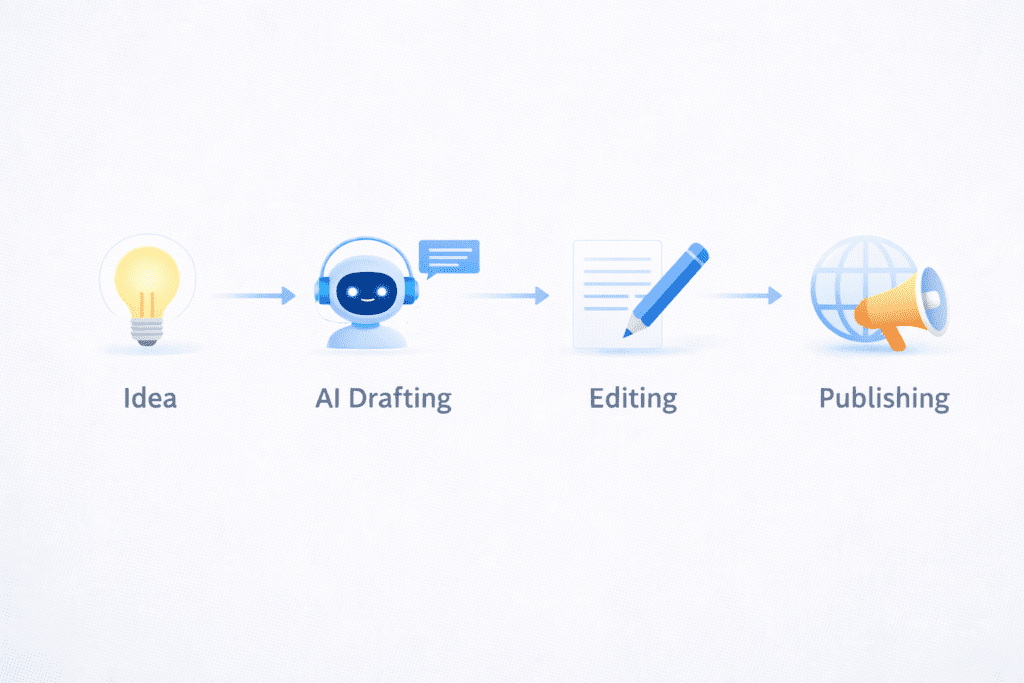
Once you understand the basics, the real value comes from having a repeatable workflow. Learning how to write blog posts with AI becomes much easier when you follow clear steps.
The goal isn’t to automate everything. It’s to guide the writing process so each blog post feels structured, readable, and useful.
Let’s walk through the beginner workflow that works reliably today.
Step 1: Choose a Clear Topic and Keyword
Every strong blog post starts with clarity. Before opening any AI tool, define your topic and keyword.
Search intent should guide your decision. Think about what the reader wants to learn and why they’re searching. This makes your blog posts more focused from the start.
Avoid extremely competitive keywords early on. Instead, look for topics where you can provide clear value without competing against massive sites.
Simple keyword research using SEO tools can help here. Even basic analysis of search results gives insight into what kind of content ranks.
Choosing the right keyword upfront makes the rest of the writing process smoother.
Step 2: Create a Structured Outline with AI
Outlines are one of the best ways to use AI effectively. Instead of asking a generator to write everything, start by generating structure.
A well-crafted prompt can produce a logical outline in seconds. This saves time and prevents rambling blog posts.
Once you have the outline, review it carefully. AI-generated outlines aren’t perfect, so adjust headings for clarity and flow.
This step gives you control over direction. You’re guiding the blog post instead of reacting to whatever the generator produces.
A strong outline also improves SEO. Clear structure makes it easier for search engines to understand your content.
Step 3: Generate the First Draft
With an outline ready, it’s time to generate the draft. This is where many people rush, but a slower approach works better.
Instead of generating a full blog post at once, write section by section. This keeps the tone consistent and easier to manage.
Use clear prompts that define the style you want. For example, ask the AI tool to write in a simple, conversational tone with short paragraphs.
Breaking the draft into sections helps avoid generic outputs. It also makes editing easier later.
At this stage, focus on getting ideas down rather than perfection. Think of the draft as a rough version you’ll refine in the next steps.
This structured approach keeps the writing process efficient while maintaining control over quality.
Once the first draft is ready, the real transformation begins. This stage is where average AI content becomes strong, readable blog posts.
Many people stop too early and publish rough drafts. The next steps are what actually make AI-assisted blog posts perform well.
Step 4: Add Human Insights

This is where your blog posts gain originality. AI can generate structure and ideas, but it rarely provides unique perspectives.
Start by adding personal observations or lessons learned. Even small details can make content feel more authentic.
You can also include opinions or practical tips. These additions help readers connect with your writing and build trust.
Real-world examples are especially powerful. They show that the blog post isn’t just generated content but reflects genuine understanding.
This step often determines whether blog posts feel generic or memorable.
Step 5: Optimize for SEO
Now it’s time to refine the structure for search visibility. Good SEO doesn’t mean stuffing keywords. It means clarity and relevance.
Start by improving headings. Make sure each section clearly reflects what readers are searching for.
Next, add supporting keywords naturally. This helps search engines understand context without making the writing feel forced.
Formatting also matters. Short paragraphs, clear subheadings, and readable flow improve both SEO and user experience.
Internal linking is another simple upgrade. Linking related blog posts strengthens site structure and keeps readers engaged.
Small refinements here can make a big difference in search engine performance.
Step 6: Humanize the AI Content
Even strong drafts can still feel slightly mechanical. Humanizing the content helps blog posts sound more natural.
Begin by fixing robotic phrasing. Replace stiff sentences with conversational language where possible.
Transitions are another area to improve. Smooth connections between sections make the blog post easier to follow.
Simplifying complex sentences also helps. Clear language improves readability and keeps readers engaged longer.
Reading the post aloud can reveal awkward phrasing quickly. If something sounds unnatural, rewrite it in a simpler way.
This stage is less about SEO and more about reader experience.
Step 7: Edit and Finalize the Post
The final step is polishing everything before publishing. This ensures your blog posts feel complete and professional.
Start with proofreading. Check grammar, clarity, and overall flow. Small errors can impact credibility more than you might expect.
Fact-checking is also important. AI tools can occasionally generate incorrect information, so verifying details builds trust.
Next, refine formatting. Use spacing, headings, and structure to make the post easy to scan.
Finally, prepare the post for publishing. Add images, optimize meta descriptions, and ensure everything aligns with your SEO strategy.
This last layer turns a rough draft into a polished, publish-ready blog post.
Real Example: Writing a Blog Post with AI
To make this practical, let’s look at a simple walkthrough of how a blog post comes together using AI.
Start with a keyword and a basic goal. For example, a beginner blogger might target a long-tail topic related to SEO or blogging tips.
Next, use an AI tool to generate an outline. A clear prompt can quickly create structured headings that guide the blog post.
Then generate a rough draft section by section. The first version usually feels decent but slightly generic.
This is where editing makes the difference. Adding personal insights, simplifying sentences, and improving transitions can transform the tone completely.
After SEO optimization and formatting, the final version often feels far more natural than the initial draft.
The biggest takeaway from this process is simple. AI accelerates the writing phase, but the editing phase shapes the final quality.
What Most Blogs Get Wrong When They Write Blog Posts with AI

A lot of blog posts fail not because of AI itself, but because of how it’s used.
One common mistake is publishing raw drafts. Many creators assume the generator output is ready to go, which usually leads to thin content.
Another issue is ignoring structure. Without proper formatting and headings, even good ideas can feel hard to follow.
Keyword overuse is another trap. Trying too hard to optimize SEO can make blog posts sound unnatural and repetitive.
Some writers also treat AI as a full replacement rather than a tool. That mindset often results in content that lacks depth.
Understanding these pitfalls can help you avoid the most common problems early on.
Common Signs Your AI Blog Post Won’t Rank
Sometimes it’s easy to spot issues before publishing. Certain patterns signal that a blog post may struggle in search engine rankings.
Thin content is a major warning sign. If sections feel shallow or repetitive, readers and search engines will notice.
Generic tone is another red flag. Blog posts that sound interchangeable rarely stand out in competitive niches.
Poor structure also hurts performance. Without clear headings and logical flow, content becomes harder to scan.
A lack of real insights can make blog posts feel forgettable. Adding even small original observations can improve engagement.
Recognizing these signs early gives you a chance to improve content before publishing.
Common Mistakes When You Write Blog Posts with AI
Even experienced bloggers make mistakes when using AI tools. Knowing these patterns helps you refine your workflow.
Weak prompts are one of the biggest issues. Vague instructions often lead to vague outputs.
Skipping fact-checking is another risk. AI-generated content can include inaccuracies, so verifying information is essential.
Generic tone can also creep in easily. Without editing, many blog posts end up sounding similar.
Some writers jump into drafting without clarifying intent. This often leads to unfocused content that struggles with SEO.
Publishing too quickly is another common problem. Slowing down for editing usually improves results significantly.
Avoiding these mistakes doesn’t require advanced skills. It simply requires a more intentional approach to the writing process.
How to Make AI Blog Posts Sound Human
Humanizing content is one of the most important steps in the workflow. Even strong AI-generated drafts can feel slightly mechanical without editing.
Start by adjusting the tone. Conversational phrasing makes blog posts easier to read and more relatable.
Adding micro-opinions can also help. Small observations make the writing feel less generic and more personal.
Breaking predictable sentence patterns improves flow. Mixing short and longer sentences makes content feel more natural.
Transitions play a big role too. Simple phrases that guide readers between ideas can make blog posts feel smoother.
One practical trick is reading the post aloud. If something sounds stiff, rewriting it in simpler language usually fixes the issue.
How to Detect AI-Sounding Content and Fix It
Recognizing robotic writing patterns gets easier with practice. Once you know what to look for, editing becomes faster.
Repetitive phrasing is a common sign. AI writing sometimes uses similar sentence structures across sections.
Overly perfect grammar can also feel unnatural. Human writing usually has slight variation in rhythm and tone.
Another signal is lack of specificity. Generic statements without examples often make blog posts feel automated.
Fixing these issues usually involves simple edits. Adding concrete details, simplifying sentences, and improving transitions can make a big difference.
Manual editing still remains the most reliable way to improve AI-assisted content.
AI Writing Prompts That Work for Beginners
Good prompts shape better outputs. Learning a few reliable patterns can improve your entire writing process.
A simple outline prompt is a great starting point. Ask the AI tool to generate a structured outline with clear headings and logical flow.
For expanding sections, use a paragraph prompt. Provide context and ask for a conversational tone with short paragraphs.
Rewrite prompts are also useful. Asking the generator to simplify or humanize text can improve readability quickly.
Another helpful prompt is simplification. Request clearer language and shorter sentences to make blog posts easier to scan.
These prompt patterns work across many AI platforms, including tools like ChatGPT.
Beginner vs Advanced AI Blogging Workflows
Not all bloggers use AI the same way. Workflows tend to evolve with experience.
A beginner workflow is simple. Generate a draft, edit lightly, and publish. This approach works for learning the basics.
Intermediate bloggers take a more structured approach. They generate outlines first, then combine AI drafting with manual editing.
Advanced workflows are more layered. AI assists with research and drafting, while humans focus heavily on authority and insights.
Understanding where you are helps you choose the right workflow. Each stage builds on the previous one.
How Long Does It Take to Write Blog Posts with AI?
Time savings are one of the biggest reasons people explore AI writing. But expectations should stay realistic.
For beginners, a full blog post might take several hours. Learning prompts and editing techniques takes time initially.
Intermediate users usually write faster. With practice, drafting and editing can often be completed in one focused session.
Advanced bloggers can streamline the process even further. With refined workflows, creating blog posts becomes much more efficient.
Even with AI, editing still takes time. The goal isn’t instant publishing. It’s producing better content faster.
Is It Ethical to Write Blog Posts with AI?
Ethics is an ongoing discussion in the blogging world. Transparency and intent often shape how people view AI-generated content.
One concern is authenticity. Readers expect blog posts to provide real value, regardless of how they’re created.
Disclosure can make sense in certain contexts. Some bloggers choose to be transparent about using AI tools, especially in professional niches.
The key factor is usefulness. If content genuinely helps readers, most concerns become less significant.
A trust-first mindset works best. Prioritizing accuracy and clarity ensures AI-assisted blog posts remain valuable.
AI Content vs Human Content: Key Differences
Comparing AI content with traditional writing highlights both strengths and limitations.
AI-assisted blog posts are usually faster to produce. Generators can create structured drafts quickly, which speeds up the writing process.
Human writing tends to excel in depth. Personal stories and nuanced perspectives often feel more natural when written manually.
Tone differences can also appear. AI writing may sound polished, while human writing often feels more varied and expressive.
From an SEO perspective, both can perform well. The deciding factor is usually quality rather than whether AI was involved.
Understanding these differences helps set realistic expectations when integrating AI into your workflow.
The Future of Writing Blog Posts with AI

The way bloggers use AI is still evolving. Instead of replacing writers, AI is slowly becoming a writing partner.
One clear trend is deeper collaboration. More creators are using AI tools to brainstorm ideas, generate outlines, and refine drafts rather than automate everything.
Personalization is also growing. AI-powered platforms are getting better at adapting tone and structure, which helps blog posts feel more tailored to specific audiences.
At the same time, expectations are rising. As more AI-generated content appears online, readers and search engines are demanding higher quality.
This shift means originality matters more than ever. Bloggers who combine AI efficiency with unique insights will likely stand out.
The future isn’t about avoiding AI. It’s about learning how to use it intelligently.
Skills That Become More Valuable When Using AI
As AI tools become more common, certain skills are gaining importance rather than fading away.
Original thinking is one of them. Strong ideas help blog posts stand out even when drafting becomes easier.
Editing and synthesis are also valuable. Turning raw AI output into clear, structured content is a skill in itself.
Voice development matters too. Maintaining a consistent brand voice helps readers recognize your writing across blog posts.
Strategic blogging is another advantage. Understanding SEO, audience intent, and content positioning becomes even more important in an AI-driven landscape.
These skills future-proof your writing more than relying on any single tool.
Key Takeaways: Writing Blog Posts with AI That Work
Stepping back, a few patterns stand out clearly.
AI speeds up the writing process but doesn’t replace thinking. Strong ideas still drive successful blog posts.
Editing plays a major role in quality. The difference between average and high-performing content often comes down to refinement.
SEO structure still matters. Clear headings, logical flow, and readable formatting help blog posts perform better.
Human insights create differentiation. Even small personal touches can make content feel more authentic.
Keeping these principles in mind makes AI-assisted blogging much more effective.
FAQs About Writing Blog Posts with AI
Can beginners write blog posts with AI?
Yes, beginners can use AI tools effectively with the right workflow. Starting with simple prompts and focusing on editing helps build confidence quickly.
Is it safe to write blog posts with AI?
Using AI for blog writing is generally safe when content is reviewed carefully. Fact-checking and editing remain important parts of the process.
Can AI-written blog posts rank on Google?
Yes, blog posts created with AI can rank if they provide value and follow SEO best practices. Quality matters more than the writing method.
How do you make AI blog posts sound human?
Editing for conversational tone, adding personal insights, and improving transitions helps AI-generated content feel more natural.
Should you edit AI blog posts before publishing?
Editing is essential. Reviewing structure, clarity, and accuracy ensures the final blog posts meet both reader and search engine expectations.
Do professional bloggers write blog posts with AI?
Many experienced bloggers now use AI as part of their workflow. Most combine AI drafting with human editing for better results.
Who Should NOT Write Blog Posts with AI
AI isn’t the right fit for everyone. Some creators prefer a fully manual approach to writing.
Writers who value complete craftsmanship may find AI disruptive. Manual writing offers full control over tone and pacing.
Creators unwilling to edit may also struggle. AI-generated drafts almost always need refinement before publishing.
Voice-first writers might hesitate too. If your blog relies heavily on a deeply personal style, AI may require more careful integration.
Recognizing these cases helps set realistic expectations about AI blogging.
Final Thoughts: Should You Write Blog Posts with AI?
Writing blog posts with AI isn’t a shortcut. It’s a skill that develops over time.
When used thoughtfully, AI can streamline the writing process and reduce friction during drafting. But the best results still come from hybrid workflows.
Human creativity continues to shape high-quality blog posts. AI supports the process, but it doesn’t replace thoughtful storytelling or insight.
For bloggers willing to learn the workflow, AI becomes a long-term advantage. It helps you move faster while still maintaining quality.
Ultimately, the goal isn’t automation. It’s using AI as a smart tool that supports better, more efficient blogging.