

Have you ever wondered why some people get amazing results from AI while others end up with bland, forgettable content? Learning How to Use AI Writing Tools Effectively isn’t about typing better prompts. It’s about understanding the process behind strong results.
AI tools are powerful, but outcomes vary widely. Some creators use AI to generate helpful, clear writing, while others struggle with robotic drafts and weak structure. The difference usually comes down to how thoughtfully the tools are used.
The real challenge today isn’t access to AI. It’s knowing how to balance speed with clarity, originality, and trust. That balance separates useful content from noise.
In this guide, you’ll learn how to use AI writing tools effectively through practical workflows, real lessons, and quality-first strategies. The focus isn’t automation. It’s better outcomes.
My Workflow for Using AI Writing Tools Effectively
Over time, I’ve developed a simple daily workflow for using AI without sacrificing quality. It’s not complicated, but it’s intentional.
I usually start with a clear goal. Before opening ChatGPT or Claude, I define what I want the output to achieve. That might be a draft, an outline, or a rewritten paragraph.
Next comes structured prompting. Instead of vague instructions, I provide context, tone, and format. This alone improves output dramatically.
After generating a draft, I move straight into editing. I review structure, refine clarity, and adjust tone so the content feels natural. Editing is where most quality gains happen.
I also fact-check important details. AI can occasionally make assumptions, so verifying claims ensures credibility.
Finally, I refine and polish the final version. This includes improving transitions, tightening sentences, and ensuring the writing aligns with the intended audience.
This workflow evolved through trial and error. The biggest lesson? AI works best as a collaborator, not a replacement.
What It Means to Use AI Writing Tools Effectively
Using AI effectively means focusing on outcomes rather than speed. Fast output isn’t helpful if the final content lacks clarity or trust.
Many people assume effective AI usage means generating more text quickly. In reality, it means producing better content with less friction.
There’s also an important difference between smart usage and lazy automation. Smart usage involves guiding AI with clear direction and refining the results. Lazy automation relies on raw drafts with minimal review.
AI should function as a tool, not a decision-maker. It can generate ideas, drafts, and suggestions, but human judgment shapes the final result.
When used thoughtfully, AI enhances writing and editing workflows. It reduces repetitive effort while preserving creativity and intent.
The key idea is simple. Effectiveness comes from how you manage the process, not how often you use AI.
Why Using AI Writing Tools Effectively Matters in 2026
The internet is flooded with AI-assisted content. More creators use AI every day, which makes quality more important than ever. Knowing how to use AI writing tools effectively helps you stand out in a crowded space.
One major shift is content saturation. It’s easy to generate large volumes of text now, but volume alone doesn’t create impact. Readers quickly recognize weak or repetitive writing.
Search engines are also evolving. Algorithms increasingly reward helpful, well-structured content instead of surface-level drafts. That means using AI thoughtfully is no longer optional if you care about visibility.
Another factor is reader awareness. People can often sense when writing feels overly automated. Clear structure and natural tone help build trust in an AI-driven landscape.
In short, effectiveness is becoming a competitive advantage. The better you use AI, the more consistent your results become.
Google EEAT and AI Content Quality
Trust plays a major role in modern content standards. When you use AI, signals like experience and credibility still matter.
Experience is often reflected through context. Adding practical insights or clear explanations makes writing feel more grounded. Even simple refinements can improve clarity and perceived authority.
Authority builds over time. Consistent, helpful content signals reliability regardless of whether AI is involved in the writing process.
Trust also comes from accuracy. Reviewing AI output and correcting unclear sections helps ensure readers feel confident in what they’re reading.
Another important layer is transparency in quality. Clean structure, logical flow, and thoughtful editing show intentional effort, which strengthens credibility.
Using AI doesn’t remove the need for trust signals. If anything, it increases the importance of careful editing and review.
Common Misconceptions About AI Writing Tools
There are several myths that make AI harder to use effectively. Clearing them up makes the learning curve much smoother.
One misconception is that AI automatically produces high-quality content. In reality, output quality depends heavily on the prompt and editing process.
Another belief is that more AI always means better results. Overusing AI without refinement can actually reduce clarity and originality.
Some users assume editing is optional. That assumption often leads to drafts that feel unfinished or unclear.
There’s also the idea that all AI tools behave the same. Different tools generate content differently, which affects tone, structure, and reliability.
Understanding these misconceptions helps reset expectations. Once you see AI as a guided tool rather than a magic solution, results improve quickly.
How AI Writing Tools Actually Work
To use AI effectively, it helps to understand what’s happening behind the scenes. Most AI systems are built on language models trained to predict patterns in text.
These models don’t truly “understand” meaning the way humans do. Instead, they analyze patterns and generate responses based on probability. That’s why output depends so heavily on the prompt you provide.
When you ask ChatGPT to generate a draft, it predicts the most likely sequence of words based on context. The clearer your prompt, the more focused the output becomes.
This also explains why AI sometimes produces vague or generic text. Without clear direction, the algorithm defaults to safe, broad responses.
Another limitation is assumptions. AI can fill gaps with plausible but incorrect details. That’s why review and editing remain essential parts of the workflow.
Understanding this foundation helps you set realistic expectations. AI is a pattern engine, not a source of absolute truth.
AI Writing Tools vs Traditional Writing Methods
Comparing AI-assisted workflows with traditional writing highlights why many creators are adopting AI.
The biggest difference is speed. AI can generate drafts quickly, which reduces the friction of starting from scratch.
Traditional writing, on the other hand, often involves more manual effort upfront. But it gives full control over structure and tone.
Creativity is another contrast. AI can spark ideas, but human creativity shapes deeper meaning and emotional nuance.
Efficiency is where AI shines. It helps manage repetitive tasks like drafting, rewriting, and summarizing.
Many creators now blend both approaches. They use AI for momentum and manual editing for depth and clarity.
This hybrid method reflects how modern writing workflows are evolving.
How to Choose the Right AI Writing Tool
Not every AI tool fits every goal. Choosing the right one can make the writing process smoother.
Start by defining your main objective. Are you generating blog drafts, refining emails, or creating outlines? Matching the tool to your goal prevents frustration later.
Ease of use also matters. A simple interface often leads to faster adoption, especially if you’re new to AI-assisted writing.
Feature priorities should come next. Some tools focus on drafting, while others emphasize editing or rewriting.
It’s also helpful to test a few options. Trying different tools like ChatGPT or Claude can reveal which workflow feels most natural.
Avoid overcomplicating the decision. The best AI tool is the one that integrates smoothly into your existing writing process.
Step-by-Step: How to Use AI Writing Tools Effectively
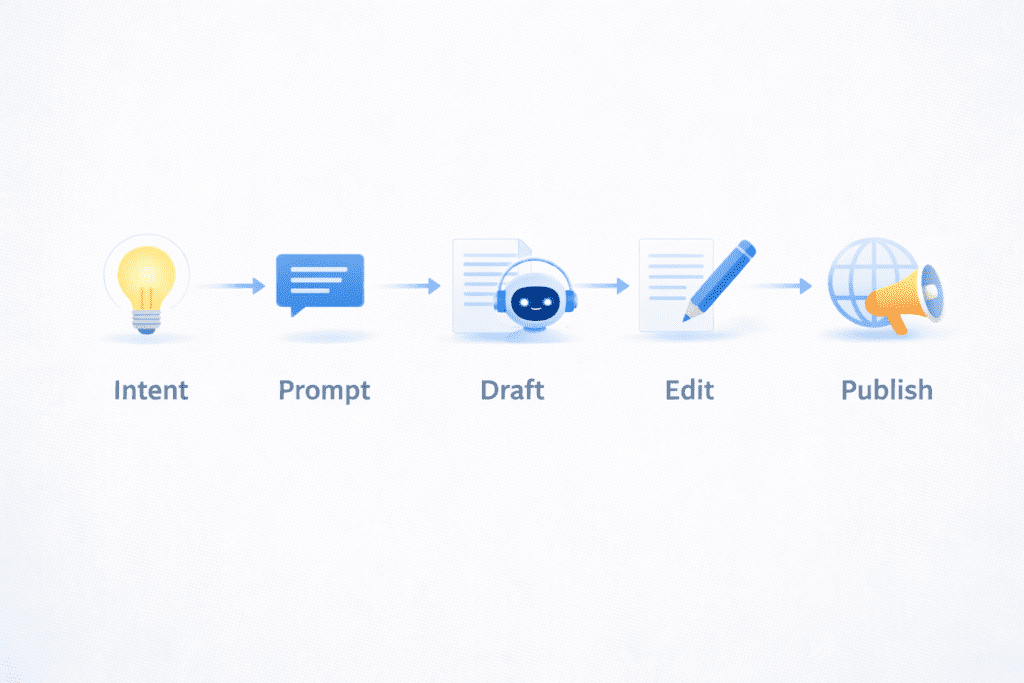
Once you understand the basics, the next step is building a repeatable workflow. Learning How to Use AI Writing Tools Effectively becomes much easier when you follow a layered process.
Instead of trying to generate perfect content instantly, focus on guiding the output step by step.
Step 1: Start With Clear Intent
Everything begins with clarity. Before you use AI, define the goal of the content.
Ask yourself what you want the output to accomplish. Are you creating a draft, refining an idea, or rewriting something for clarity?
Matching intent to output improves results immediately. Clear direction helps the algorithm generate more focused responses.
Intent also shapes tone and structure. A thoughtful starting point reduces the need for heavy editing later.
Step 2: Use Structured Prompts
Prompts are the foundation of strong results. Vague prompts usually create vague output.
A strong prompt includes context, tone, and format. For example, you might specify audience, style, and structure in one instruction.
Providing more detail helps guide the response. It reduces ambiguity and improves clarity.
You can also iterate on prompts. Small adjustments often produce significantly better results.
Structured prompting is one of the fastest ways to improve writing quality.
Step 3: Generate Content in Layers
Trying to generate everything at once rarely works well. Layered drafting produces better outcomes.
Start with an outline before generating a full draft. This creates structure and ensures logical flow.
Then generate sections one at a time. Working in layers makes editing easier and keeps the content focused.
Layered generation also prevents repetition. It allows you to refine each section independently.
This approach trades speed for clarity, but the quality gains are usually worth it.
Step 4: Add Human Context and Direction

This is where human value becomes clear. AI can generate structure, but people provide meaning.
Add insights, examples, or clarification that reflect real understanding. Even small additions improve depth.
Human direction also helps refine structure. Adjust headings, transitions, or emphasis to improve flow.
At this stage, you’re shaping the narrative. AI provides momentum, but you control the direction.
This balance is what makes AI-assisted writing effective rather than mechanical.
After shaping the structure and direction, the next steps focus on polishing the content. This is where effectiveness really shows up in the final result.
Strong editing and validation separate high-quality writing from rushed drafts.
Step 5: Edit for Clarity and Flow
Editing is where most improvements happen. Even strong drafts need refinement before they feel natural.
Start by simplifying sentences. Removing unnecessary complexity improves clarity and readability.
Next, refine transitions between sections. Smooth flow helps readers stay engaged.
You should also adjust tone during this stage. Small wording changes can make the content feel more human.
Consistent editing ensures the output feels intentional rather than generated.
Step 6: Fact-Check and Validate Information
Accuracy is essential when using AI. Models can generate convincing but incorrect details.
Take time to verify statistics, claims, or examples. A quick review prevents misinformation from slipping through.
Cross-checking important points strengthens credibility. It also builds trust with readers over time.
If something feels unclear, revisit the source or rewrite the section. Careful validation protects the final content quality.
Step 7: Optimize the Final Output
Once editing is complete, focus on presentation. Formatting plays a bigger role than many people realize.
Break long blocks of text into shorter paragraphs. This improves readability instantly.
Adjust tone consistency across sections. The goal is a cohesive voice from start to finish.
You can also refine structure during this step. Tightening headings and transitions helps ensure clarity.
This final polish prepares the content for publishing and strengthens overall effectiveness.
Real Example: Using AI Writing Tools Step by Step

To see how this works in practice, imagine creating a short article from scratch.
Start with a prompt asking for a structured outline. After reviewing and adjusting the outline, generate a rough draft section by section.
Then move into editing. Simplify sentences, improve transitions, and refine clarity. This stage often changes the tone dramatically.
After editing, validate key details. Ensuring accuracy improves trustworthiness.
Finally, polish the structure and formatting. The finished version usually feels far more cohesive than the initial draft.
The difference between the first and final versions often comes down to iteration rather than generation.
What Most People Get Wrong About Using AI Writing Tools
A common mistake is treating AI like a content machine. Generating text without strategy often leads to weak results.
Some users also skip structure. Without a clear outline, writing can feel scattered and harder to refine.
Publishing raw output is another issue. Unedited drafts rarely meet quality expectations.
Over-reliance on automation can also reduce originality. AI works best when paired with thoughtful input.
Recognizing these patterns helps you avoid the most common pitfalls early on.
Common Mistakes That Reduce AI Content Quality

Several recurring mistakes tend to lower writing quality when using AI.
One is weak prompting. Lack of context often leads to generic drafts.
Another is skipping editing entirely. Even minor refinements can significantly improve clarity.
Repetitive phrasing is another issue. Without revision, AI writing can feel overly uniform.
Rushing the publishing process also reduces effectiveness. Taking time to refine output improves overall results.
Avoiding these mistakes makes the difference between average and strong AI-assisted writing.
Signs You’re Using AI Writing Tools the Wrong Way
Sometimes the easiest way to improve is recognizing what isn’t working. Certain patterns suggest your workflow needs adjustment.
If content feels generic every time, it may signal over-reliance on automation. Weak structure often points to skipping outlines.
Heavy editing after every draft can also indicate unclear prompts. If the starting point is messy, refinement becomes harder.
Low engagement is another clue. When readers struggle to connect, clarity or originality may be missing.
Recognizing these signs early helps you course-correct and improve effectiveness quickly.
Signs You’re Using AI Writing Tools Effectively
On the flip side, there are clear signals when things are working well.
Content feels natural and easy to read. The tone flows smoothly without sounding mechanical.
Editing becomes lighter over time. Strong prompts and structure reduce the need for major revisions.
Reader engagement tends to improve as clarity increases. Well-structured content is easier to digest.
Consistency is another indicator. Reliable structure and flow across drafts show a mature workflow.
When speed increases without quality dropping, it’s a strong sign you’re using AI effectively.
Beginner vs Advanced AI Usage
Not everyone uses AI at the same level. Understanding your stage can help set realistic expectations.
Beginner users often rely on simple prompts and basic drafting. Editing tends to be heavier at this stage.
Intermediate users develop more structured workflows. Multi-step prompting and clearer direction improve outcomes.
Advanced users combine AI with strategy. They use it for research, drafting, and iteration while maintaining a distinct voice.
Progression usually comes through practice. Each stage builds confidence and control over the writing process.
How Long Does It Take to Learn AI Writing Tools?
Learning how to use AI writing tools effectively takes time, but the curve is manageable.
Beginners often see improvements within weeks. Small workflow adjustments can quickly improve results.
With consistent use, skills develop naturally. Prompting, editing, and refinement become more intuitive.
Mastery takes longer. Developing a reliable process that balances speed and clarity requires ongoing iteration.
The key is consistency. Regular practice shortens the learning curve significantly.
Ethical Considerations When Using AI Writing Tools
Ethics is an important part of effective AI usage. Responsible publishing builds long-term trust.
Transparency is one factor. Some creators choose to disclose AI assistance depending on context.
Avoiding misinformation is another priority. Careful validation ensures accuracy and credibility.
Maintaining authenticity also matters. Readers value clarity and usefulness regardless of how content is created.
A thoughtful approach helps ensure AI remains a helpful assistant rather than a shortcut.
Skills That Improve When You Use AI Writing Tools
Interestingly, AI doesn’t just speed up writing. It can strengthen several skills over time.
Editing becomes sharper. Reviewing AI drafts builds clarity and precision.
Critical thinking improves as well. Evaluating output requires judgment and refinement.
Prompting skills develop naturally. Clear instructions lead to better results.
Strategic writing also grows stronger. Managing structure and direction becomes a key strength.
These skill gains make AI a valuable long-term tool when used thoughtfully.
The Future of Using AI Writing Tools Effectively

Looking ahead, collaboration between humans and AI will likely deepen. Workflows will continue evolving.
Personalized AI experiences are becoming more common. Tools are adapting to individual preferences and writing styles.
Originality will likely become more valuable. As AI-generated content increases, unique perspectives will stand out more.
The skill shift is already visible. Writing is moving toward thinking, editing, and refining rather than pure drafting.
Those who adapt early will likely benefit the most as tools continue improving.
Key Takeaways: How to Use AI Writing Tools Effectively
A few core principles stand out after everything we’ve covered.
AI works best as a productivity amplifier, not a replacement. Thoughtful use leads to stronger results.
Prompts shape outcomes more than most people realize. Clear direction improves quality instantly.
Editing determines the final impact. Refinement turns rough drafts into polished content.
Human insight creates differentiation. AI provides momentum, but people provide meaning.
Keeping these ideas in mind helps ensure consistent, high-quality results.
FAQs About How to Use AI Writing Tools Effectively
How do beginners use AI writing tools effectively?
Start with clear goals and simple prompts. Focus on editing and refining drafts rather than publishing raw output.
Can AI writing tools produce high-quality content?
Yes, but quality depends on how thoughtfully the tools are used. Strong prompts and careful editing make a big difference.
How do you avoid robotic AI writing?
Editing for clarity, improving transitions, and adding human insights helps content feel more natural.
Is editing necessary when using AI writing tools?
Editing is essential. Reviewing and refining drafts ensures clarity, accuracy, and trustworthiness.
How long does it take to learn how to use AI writing tools effectively?
Most users see improvement within weeks. Mastery takes longer and develops through consistent practice.
Are AI writing tools reliable for professional content?
They can be, especially when combined with strong review and editing processes.
What is the best way to ask AI to write a first draft for a blog post or newsletter?
Give a clear title, short brief, target audience, and desired tone, then ask AI to produce a first draft and suggest headlines.
How can an editor use AI to enhance your writing without losing voice?
An editor can use AI to refine grammar and suggest structure while keeping human input to maintain voice and expertise.
Can AI replace human reviewers or editorial teams when producing large volumes of content?
AI helps speed up work for large volumes of content but doesn’t replace human reviewers for fact checks, bias checks, and nuance.
When should an entrepreneur consider AI to help with social media posts and LinkedIn updates?
Use AI to generate ideas, cadence, and headlines, then edit for brand fit and to ensure the message helps people and sounds authentic.
What are common use cases for AI to enhance marketing copy and newsletters?
AI is useful for drafting headlines, writing newsletter intros, creating variations of social posts, and improving grammar quickly.
How do I ask AI to avoid bias and ensure accurate information?
Ask AI to cite sources, flag uncertain claims, and have human reviewers verify facts and remove biased language.
Should I paste sensitive or proprietary content into AI tools?
Avoid pasting confidential material unless you know the tool’s data policy; consider on-prem or enterprise options for privacy.
How does AI help me think through an editorial strategy or content cadence?
AI can suggest topics, a publishing cadence, and audience segments, which you then refine using your expertise and goals.
What role does AI play in polishing grammar versus improving ideas or expertise?
AI is strong on grammar and clarity, but human insight and subject matter expertise are still needed to craft authoritative content.
How can I use AI responsibly when creating content to avoid overlap or duplication?
Use AI to generate unique outlines and then edit to add original research and perspective to reduce overlap and ensure value.
Who Should NOT Use AI Writing Tools Heavily
AI isn’t ideal for every workflow. Some creators prefer fully manual writing.
Writers focused on pure craftsmanship may find AI disruptive. Manual approaches allow full control over style.
Those unwilling to edit may also struggle. AI-assisted writing still requires refinement.
Voice-first creators might hesitate too. If maintaining a deeply personal tone is critical, AI requires careful integration.
Understanding these cases helps set realistic expectations.
Final Thoughts on How to Use AI Writing Tools Effectively
Effectiveness doesn’t come from the tool itself. It comes from the workflow behind it.
AI rewards thoughtful users who prioritize clarity and structure. The more intentional your process, the better the results.
Quality emerges from collaboration, not automation. Human direction shapes meaning while AI supports execution.
Learning how to use AI writing tools effectively is less about mastering software and more about mastering process.
As AI continues evolving, this skill will only become more valuable.