

A common mistake people make is assuming that using AI automatically hurts your rankings. You publish a few posts, hear someone say Google hates AI, and suddenly you start wondering if you’ve damaged your site. That’s usually when the real question shows up: are AI writing tools safe for SEO?
The confusion makes sense. Advice online is mixed, and a lot of it is outdated. Some bloggers talk about penalties, others say AI is the future, and many beginners are stuck somewhere in the middle. If you’re trying to grow traffic in the US or anywhere else, you just want a clear answer without the noise.
This breakdown focuses on what actually matters today. Not hype. Not fear. Just how AI content works in modern SEO and what the data suggests in 2026.
My Experience Using AI Content for SEO
From my research and testing, using AI for content creation can work, but only when expectations are realistic. Early on, I tried publishing lightly edited AI-generated content. Some posts indexed. A few even showed movement in search ranking. But most didn’t hold steady.
Once I shifted the process and treated AI as a starting point instead of a final draft, results improved. Rankings became more stable, and engagement metrics looked healthier. That’s when it became clear that the tool itself wasn’t the problem. The process around it was.
Here’s what stood out over time:
• Light edits rarely work long term
• Heavily refined AI content performs better
• Context and originality change outcomes
• SEO content needs a human layer
Most people in the US who test AI seriously reach a similar conclusion. AI can help speed up the content creation process, but it doesn’t replace strategy or editing.
What People Mean by “Are AI Writing Tools Safe for SEO”
When someone asks whether AI is safe for SEO, they’re usually not asking about technology. They’re asking about risk. Specifically, risk to traffic and ranking.
There are three common concerns behind this question. First is the fear of penalties. Many assume that using generative AI automatically flags a site in Google search. That belief still circulates widely.
The second concern is spam classification. People worry that AI content will be grouped with low-quality pages or duplicate content, even when intentions are good.
The third issue is confusion between tools and outcomes. AI-generated content isn’t always bad, but low-effort content is. That difference gets blurred in a lot of conversations.
Let’s keep it simple. The real debate isn’t AI versus human writing. It’s useful content versus weak content. Once you see it that way, the question becomes easier to unpack.
Why This Question Matters More in 2026
This topic feels bigger now than it did just a few years ago. One reason is scale. AI tools can generate content fast, which means more websites are experimenting with automation including AI to generate content at scale.
That growth has pushed SEO conversations into new territory. Search engines are dealing with massive volumes of content created faster than ever. Naturally, that raises concerns about quality and trust.
At the same time, Google’s quality systems have become more refined. The focus has shifted toward helpful content and signals that show real value. The origin of the content matters less than how useful it is to readers.
Another reason this question matters more now is competition. As more creators use AI tools, the quality bar keeps rising. Simply publishing AI-generated content isn’t enough anymore. The quality of content and how it serves readers has become the real differentiator.
Here’s the thing. The risk isn’t really AI. It’s how AI is used within your SEO strategy. And that distinction shapes everything that follows.
What Google Officially Says About AI Content

Google’s position on AI content is more balanced than most headlines suggest. The company has repeated the same core idea across multiple updates. It doesn’t judge content based on whether it was written by a person or generated by AI. It evaluates usefulness.
In other words, AI content isn’t automatically bad for SEO. What matters is whether the piece of content helps readers. Google’s systems are built to reward helpful content, not punish tools.
From official guidance, the focus stays consistent:
• Content that is helpful to readers performs better
• Production method isn’t the primary ranking factor
• Quality signals outweigh authorship method
• Content that demonstrates value is prioritized
That’s why Google talks so much about people-first content. If content is produced with the primary purpose of helping users, it aligns with modern SEO best practices.
Many people misunderstand this and assume there’s a hidden ban on all human-generated content or AI-written material. That’s not how modern search works. The real target is scaled content abuse, especially content created only to manipulate search ranking.
Does Google Penalize AI Content Automatically?
Short answer: no. Google doesn’t automatically penalize AI-generated content just because it exists.
This is where nuance matters. Google’s systems evaluate your content based on signals like usefulness, originality, and engagement. If AI content performs poorly on those signals, it may struggle in search ranking. But that’s different from a direct penalty.
In fact, Google has clarified multiple times that it doesn’t penalize AI content simply for being generated by AI. The issue appears when content is created primarily for manipulating ranking in search results rather than helping users.
So the origin isn’t the trigger. Intent and execution are.
This usually works, but not always. There are exceptions, especially when sites publish large volumes of thin AI content. In those cases, ranking drops can happen, but the root cause is quality, not the use of an AI tool.
Are AI Writing Tools Safe for SEO Today?
In most cases, yes, AI writing tools are safe for SEO today. But that answer comes with conditions.
The biggest factor is quality. High-quality content that demonstrates depth and relevance can perform well whether it’s human-written or AI-assisted. On the other hand, weak content struggles regardless of how it’s produced.
Context also matters. Using AI to support research or drafts is very different from publishing mass-produced yet human-generated content without editing. One approach supports SEO efforts. The other often hurts them.
It helps to think of AI as a tool, not a shortcut. When you use AI to help people create great content, it fits naturally into a modern SEO strategy. When you rely on it to produce content with minimal oversight, results become unpredictable.
That balance explains why opinions about AI and SEO are so divided. People aren’t always talking about the same level of effort.
Real Examples of AI Content That Ranks (and Fails)
Looking at real-world patterns makes the answer clearer. AI content can rank, but the outcomes depend heavily on how it’s used.
Strong examples usually involve layered editing. The content is generated, then expanded with insights, structure, and clarity. These pages often perform well because they feel like great content for the web, not automated output.
On the other hand, failing examples often share similar traits. The content feels generic, lacks depth, and doesn’t fully match search intent. Even the best AI tools can’t compensate for missing context or weak positioning.
From what I’ve seen, there’s a visible split:
• AI-assisted pages with human editing often hold rankings
• Raw AI drafts rarely sustain search ranking
• Content with added expertise builds authority faster
• Generic AI content struggles over time
This pattern shows up across blogging, affiliate SEO, and niche sites. The takeaway isn’t that AI content is risky by default. It’s that the quality of content and how it’s positioned determine outcomes more than the tool itself.
When AI Writing Tools Are Safe for SEO
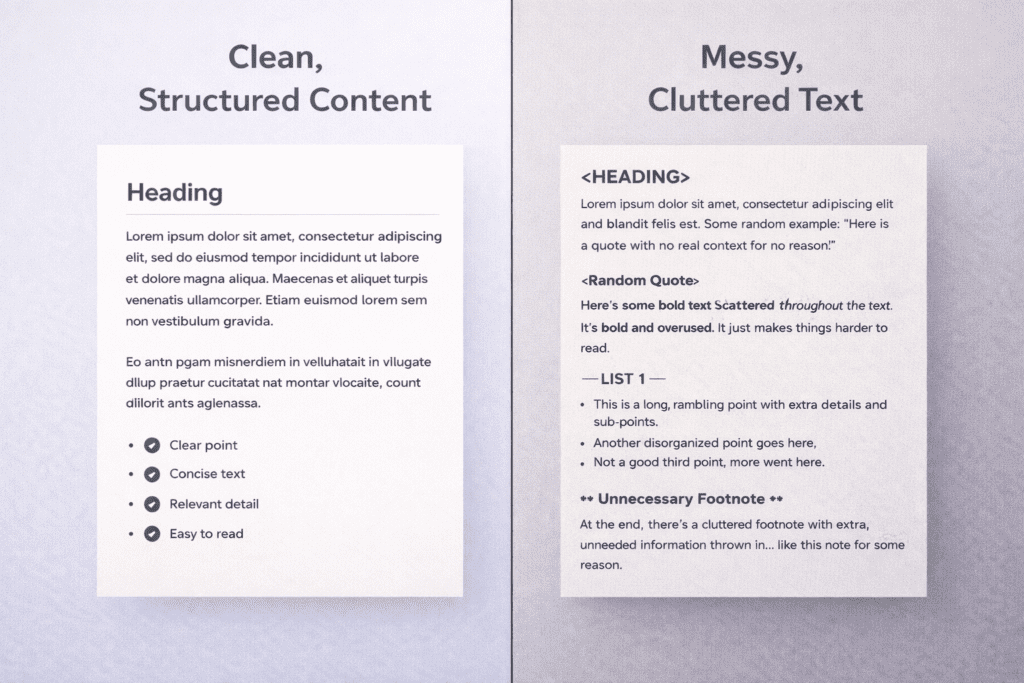
AI writing tools are generally safe for SEO when they’re used with intention. The biggest difference comes down to effort and editing. If you treat AI as a starting point instead of a final draft, the results are usually much better.
Heavily refined AI-generated content often performs well because it blends speed with human insight. The content creation process still includes research, structure, and clarity. That combination makes the content feel natural.
Here are situations where AI tends to work well for SEO:
• Heavily edited AI content with clear improvements
• Adding original insights during content creation
• Strong alignment with search intent
• Helpful, reader-first structure
• Consistent formatting and readability
In these cases, using AI to create content supports SEO instead of harming it. The AI tool speeds up the draft phase, while human input strengthens the final output.
When AI Writing Tools Can Hurt SEO
That said, AI content can hurt SEO when it’s used carelessly. Most issues don’t come from the technology itself. They come from shortcuts.
Publishing raw AI content without editing is one of the most common mistakes. The content often feels flat and repetitive, which hurts engagement. Over time, that can impact search ranking.
Other risky patterns include over-automation. When sites rely heavily on generative AI to produce content at scale without quality control, problems start to appear.
Situations where AI may hurt SEO include:
• Publishing unedited AI-generated content
• Thin or overly generic pages
• Keyword-stuffed AI SEO content
• Mass publishing without review
• No human oversight in the content creation process
These patterns increase the risks of AI-generated pages being seen as low value. Not because they’re written by AI, but because they don’t offer meaningful depth.
AI Content vs Spam Content: The Real Difference

A big misconception is that AI content automatically equals spam. That’s not accurate. The real difference comes down to intent and execution.
Spam content is typically created to manipulate ranking. It often lacks originality, context, and usefulness. AI content, on the other hand, can still deliver value if it’s built around helpful information.
Think about it this way. A helpful tutorial written with AI assistance is very different from duplicate content created purely to fill a site with pages. One helps readers. The other targets search engines.
What separates the two is effort. Content that demonstrates expertise, structure, and clarity rarely feels spammy, even when AI is involved.
Common Myths About AI Writing Tools and SEO
There are a lot of myths floating around about AI and SEO. Some come from outdated advice, while others come from misunderstanding how search systems work today.
One of the biggest myths is that Google can detect all AI content and punish it instantly. In reality, detection isn’t the main ranking factor. Usefulness and engagement matter more.
Another myth is that AI content is automatically bad for SEO. This belief ignores how many successful sites use AI as part of their content marketing workflow.
Some creators also believe they must disclose every use of AI to rank. While transparency can build trust, there’s no clear evidence that disclosure directly impacts search ranking.
Common misconceptions include:
• Google automatically penalizes all AI content
• AI content can’t rank in competitive niches
• Human-written content always wins
• Detection tools influence search ranking
Most of these ideas oversimplify how modern SEO works. The reality is more nuanced. Whether to use AI depends on how you apply it, not just the fact that you’re using it.
AI Content Detection Tools: Do They Matter for SEO?
AI detection tools get a lot of attention, but their role in SEO is often misunderstood. Many creators assume these tools influence rankings directly. That’s not really how search works.
Detection tools analyze patterns to estimate whether content was written by AI. But they don’t control how Google evaluates your pages. They’re separate systems with different goals.
From an SEO perspective, detection tools are mostly informational. They can help you review tone or originality, but they don’t determine whether your content will appear in Google search.
Here’s where they actually matter:
• Internal quality checks during content creation
• Editorial workflows that want consistency
• Avoiding overly robotic phrasing
But when it comes to search ranking, detection scores don’t carry direct weight. A page written by AI can still perform well if the content that drives value is strong and relevant.
What Most Blogs Get Wrong About AI and SEO
A lot of blogs frame AI and SEO in extremes. Either AI is the future of content marketing, or it’s a guaranteed way to damage your rankings. Both views miss the middle ground.
One common mistake is overhyping penalties. Some articles make it sound like Google actively hunts down AI-generated content. In reality, the focus is on evaluating your content based on usefulness.
Another issue is confusing detection with ranking factors. Just because a tool flags something as written by AI doesn’t mean search engines see it the same way.
Outdated advice also plays a role. SEO changes quickly, but older posts still circulate widely. Many of them reflect earlier concerns about automation, not how modern generative AI tools are evaluated.
The result is a lot of unnecessary fear. When you strip away the noise, most SEO guidance still points to the same core principle: create quality content that helps users.
How Google Actually Evaluates AI Content
To understand whether AI is safe, it helps to look at how search systems evaluate content overall. Google doesn’t rely on a single signal. It looks at a combination of factors that reflect usefulness and trust.
Some of the biggest signals include relevance, clarity, and engagement. If content is produced with the primary goal of helping readers, it tends to perform better over time.
Search systems also look at how content fits into a broader site. Consistent value across multiple pages strengthens authority and improves search ranking stability.
Key evaluation signals include:
• Relevance to search intent
• Depth and clarity of explanations
• Engagement patterns across users
• Topical authority across your site
• Trust signals around the brand or author
None of these factors are exclusive to AI or human writing. They apply across all SEO content. That’s why the quality of content matters more than the method used to create it.
Google EEAT and AI Content
EEAT plays a major role in how modern SEO works. Experience, expertise, authoritativeness, and trust form the foundation of how content is evaluated, especially in competitive niches.
AI content can still align with EEAT, but it usually needs extra layers. Adding experience signals, clear sourcing, and structured explanations helps build credibility.
For example, content that demonstrates firsthand insight often feels more trustworthy. Even when AI is involved, layering human context can improve perceived expertise.
Authority also grows through consistency. When multiple pages show depth and clarity, search systems start recognizing the site as a reliable source.
This is where hybrid workflows stand out. Using AI to speed up drafting while applying human judgment during editing helps produce more high-quality content over time.
The key takeaway is simple. AI isn’t incompatible with EEAT. But strong trust signals rarely happen without human refinement.
Are AI Writing Tools Safe for SEO Across Different Use Cases?
The safety of AI in SEO often depends on where and how it’s used. Not every niche reacts the same way, and expectations vary across industries.
For blogging and affiliate sites, AI can work well when content is value-driven. If you’re focused on helping readers and not just pushing pages live, AI-generated content for SEO can still perform.
Niche authority sites usually require stronger editing. These sites rely heavily on trust and depth, so the margin for generic AI content is smaller. Even slight improvements in clarity and examples can make a difference.
News and YMYL topics are more sensitive. When content touches finance, health, or legal advice, expectations rise. In these areas, relying purely on AI to generate content is riskier without real expertise layered in.
Programmatic SEO sits somewhere in the middle. Scaling content at volume can work, but quality control becomes critical. Without strong oversight, content at scale can quickly look thin.
SEO Niches Where AI Is Riskier
Some industries carry higher expectations for accuracy and credibility. In these niches, the risks of AI-generated content tend to increase.
Medical and health topics are the most obvious example. Readers expect precise information, and errors can have real consequences. AI content creation in this space often needs strong human review.
Finance and legal content follow similar patterns. Even small inaccuracies can damage trust. That’s why AI SEO content in regulated industries usually demands tighter quality control.
News and real-time content also pose challenges. Generative AI tools can summarize quickly, but they may lack context or nuance when events are evolving.
Highly regulated industries amplify these risks further. When compliance matters, relying too heavily on automation including AI to generate content can create problems.
How to Use AI Writing Tools Safely for SEO
If you want to use AI safely, the goal is balance. AI can help speed up the content creation process, but human input should shape the final result.
Start by treating AI as a draft assistant. Let it handle structure or brainstorming, then refine the piece manually. This approach helps maintain originality while still saving time.
Adding perspective is also important. Even small insights can make AI-generated content feel more grounded. That layer often improves engagement and search ranking stability.
Here are practical ways to use AI more safely:
• Edit and humanize every draft
• Add context during content creation
• Avoid publishing large volumes at once
• Maintain topical authority across your site
• Focus on search intent over speed
When you use AI tools this way, they become part of a sustainable SEO strategy rather than a shortcut.
How Much AI Content Is Too Much for SEO?
This is where things get less clear. There isn’t a universal percentage that defines safe or unsafe AI usage. Instead, it comes down to balance between quality and quantity.
Publishing velocity plays a role. If content is produced too quickly without oversight, quality signals may weaken. On the other hand, steady publishing with consistent editing tends to look more natural.
Scaling safely often means pacing yourself. Even if AI can produce content quickly, slower rollout gives you time to evaluate performance and adjust strategy.
In most cases, the tipping point appears when content isn’t being reviewed properly. That’s when issues like thin pages or weak engagement start showing up.
Signs Your AI Content Is SEO-Safe
If you’re unsure whether your AI content is working, performance signals can provide clarity. You don’t need advanced tools to spot early indicators.
Consistent indexing is a good sign. When pages appear in Google search without delays, it suggests your content meets baseline quality expectations.
Engagement also tells a story. If readers spend time on your pages and interact with the content, it usually means the material feels natural.
Positive indicators include:
• Stable ranking across multiple pages
• Low bounce patterns compared to similar posts
• Natural readability and flow
• Helpful feedback from readers
• Gradual growth in organic traffic
These signals suggest your AI content is aligning with SEO best practices and meeting reader expectations.
Signs Google Trusts Your AI Content
Beyond basic safety, there are signals that suggest growing trust. These signs often appear gradually rather than all at once.
Stable rankings over time are one of the clearest indicators. When pages hold their positions across updates, it usually reflects consistent quality.
Indexing consistency is another positive sign. If new pages are indexed smoothly, it suggests your content creation process is aligned with search expectations.
Growing topical authority also points to trust. As more pages perform well within a niche, your overall search ranking potential expands.
Other encouraging signs include organic backlinks and mentions. These often happen when content is produced with depth and clarity, regardless of whether AI was involved.
Signs AI Content Might Be Hurting Your SEO
Not every drop in ranking comes from AI, but certain patterns are worth watching. If performance declines consistently after publishing AI-heavy content, it may signal deeper issues.
One common sign is indexing problems. When multiple pages struggle to appear in Google search, it often points to weak value signals. That’s especially true if content is produced quickly without enough review.
Engagement metrics can also reveal problems. Low dwell time or quick exits suggest the content isn’t resonating with readers. Over time, that can impact search ranking stability.
Other warning signs include:
• Pages not indexing consistently
• Ranking drops after updates
• Thin patterns across multiple articles
• Limited topical depth
• Weak internal engagement
These signals don’t always mean AI is the cause. But they usually indicate the quality of content needs improvement.
The Role of Human Editing in AI SEO Safety
If there’s one factor that determines whether AI content works, it’s editing. The generation phase matters less than what happens afterward.
Human editing adds clarity, structure, and perspective. It helps ensure content is produced with the primary goal of helping readers rather than filling space. That distinction plays a major role in modern SEO.
A layered editing approach often works best. Start with structural improvements, then refine tone and accuracy. Even small adjustments can transform AI-generated content into something more natural.
Fact-checking also matters. While AI can speed up drafting, it sometimes misses nuance. Reviewing claims and examples helps strengthen trust signals across your site.
Ultimately, editing bridges the gap between automation and quality. It’s what turns AI into a practical tool rather than a risk.
AI Content vs Human Content for Rankings
Comparing AI and human writing isn’t always straightforward. In some cases, well-edited AI content performs similarly to human-written pages. In others, human insight still has an edge.
Where humans often outperform AI is originality. Personal experience and unique framing are harder to replicate with generative AI. That’s why opinion-driven or experience-heavy content often benefits from human input.
That said, hybrid workflows are becoming more common. Many creators use AI to help draft and structure ideas, then refine the final version manually. This balance allows them to produce more high-quality content without sacrificing depth.
The gap isn’t purely about technology. It’s about how content is produced and refined. Even the best AI tools still rely on human direction to reach their full potential.
The Future of AI Writing Tools and SEO

Looking ahead, the relationship between AI and SEO will likely keep evolving. Search systems are becoming better at evaluating the quality of content rather than focusing on production methods.
This shift raises the bar for everyone. As more creators use AI tools, originality becomes a stronger differentiator. Simply publishing faster won’t be enough.
We’re also seeing the rise of hybrid workflows. Using AI to help with research and structure while applying human judgment during editing is becoming standard practice.
Another trend is the growing importance of trust signals. As generative AI becomes more common, credibility and depth may act as a ranking moat.
The future of AI in SEO probably won’t be about avoiding automation. It will be about using it thoughtfully while maintaining high standards.
Key Takeaways: Are AI Writing Tools Safe for SEO?
So what’s the short answer after all this nuance? AI writing tools themselves aren’t dangerous.
Most risks come from how they’re used. Weak editing, low-value pages, and over-automation create problems, not the presence of AI alone.
When AI is used responsibly, it can support content marketing and help scale quality output. But shortcuts still tend to backfire.
Here’s the core takeaway. AI isn’t a ranking factor by itself. The usefulness of your content and the intent behind it carry far more weight.
FAQs About AI Writing Tools and SEO
Are AI writing tools safe for SEO in 2026?
In most cases, yes. When content is helpful and well-edited, AI tools can fit naturally into modern SEO workflows.
Can Google detect AI-written content?
Detection is possible to some extent, but it isn’t the main ranking factor. Search systems focus more on usefulness and engagement signals.
Will AI content get penalized by Google?
AI content isn’t automatically penalized. Issues usually appear when content is created primarily to manipulate ranking in search results.
Do AI blogs rank on Google?
Yes, many AI-assisted blogs rank today. Performance depends more on quality and relevance than the writing method.
Is AI content bad for affiliate SEO?
Not necessarily. AI can support affiliate sites when content remains helpful and original.
Should you avoid AI for SEO entirely?
Avoiding AI completely isn’t required. The better approach is learning how to use AI responsibly within your SEO strategy.
Will using AI to write hurt my site with search engines?
Using ai to write content that’s low-quality or automated-only can be bad for SEO, but AI plus human review can produce content that’s good for SEO.
How should I use ai for seo without breaking rules?
Use AI for SEO as a draft tool, then refine to create high-quality content that demonstrates expertise and aligns with systems to reward quality content.
Does AI create content that’s duplicate or spammy?
Many ai models can generate similar text, so always edit to create your content that’s unique and not just automation including ai to generate content for the sake of keywords.
What are the risks of ai-generated content for SEO?
Risks include low relevance, factual errors, and content that doesn’t meet helpful content standards, so check and improve all AI output.
How do I ensure AI content is valuable content?
Focus AI on research and outlines, then add examples, citations, and a human voice to produce content that is valuable content and helpful for users.
Should I rely on the same AI for all pages?
Using the same ai can make content sound similar, so vary prompts and add unique human edits to avoid thin or repetitive seo content writing.
Can ai for seo content replace human writers?
AI can speed content creation, but human judgment is needed to ensure high-quality content that demonstrates qualities search engines reward.
How do I check if content is AI-generated or human-made?
Tools exist to detect ai-generated content, but the best approach is to ensure content with the primary purpose is helpful and to create your content with clear human input.
Should You Disclose AI Usage for SEO?
Disclosure is more about trust than ranking. There’s no strong evidence that revealing AI usage directly improves SEO performance.
That said, transparency can help build credibility with readers. Some creators choose to mention AI involvement to set expectations, especially in technical niches.
In most cases, disclosure becomes a branding decision rather than an SEO requirement. If your audience values openness, it may help long term.
Final Verdict: Are AI Writing Tools Safe for SEO?
Yes, AI writing tools are safe for SEO when used responsibly. The tool itself isn’t the deciding factor.
What matters is how content is created, refined, and positioned. AI can help speed up content creation, but it doesn’t replace strategy or quality standards.
If you focus on usefulness, originality, and reader value, AI can fit naturally into your workflow. If shortcuts replace effort, results usually suffer.
Bottom line. AI is a tool, not a ranking signal. Quality, intent, and execution still determine whether your content succeeds.