

You generate a draft using AI, skim it quickly, and think it looks solid. The structure is clean, the grammar is fine, and everything seems readable. But once you slow down and actually read it, something feels off. The tone is flat, the flow feels mechanical, and it doesn’t quite sound publish ready. That’s usually the moment people realize they need to learn how to edit AI content properly.
Raw AI output often looks polished at first glance. But underneath that clarity, there are patterns that make it feel robotic. Slight repetition, predictable phrasing, or subtle awkward transitions can weaken the overall impact.
Editing bridges that gap. It turns machine generated text into something that feels intentional, clear, and trustworthy. Once you understand how to edit AI content, you stop treating drafts as finished pieces and start seeing them as raw material.
My AI Content Editing Workflow
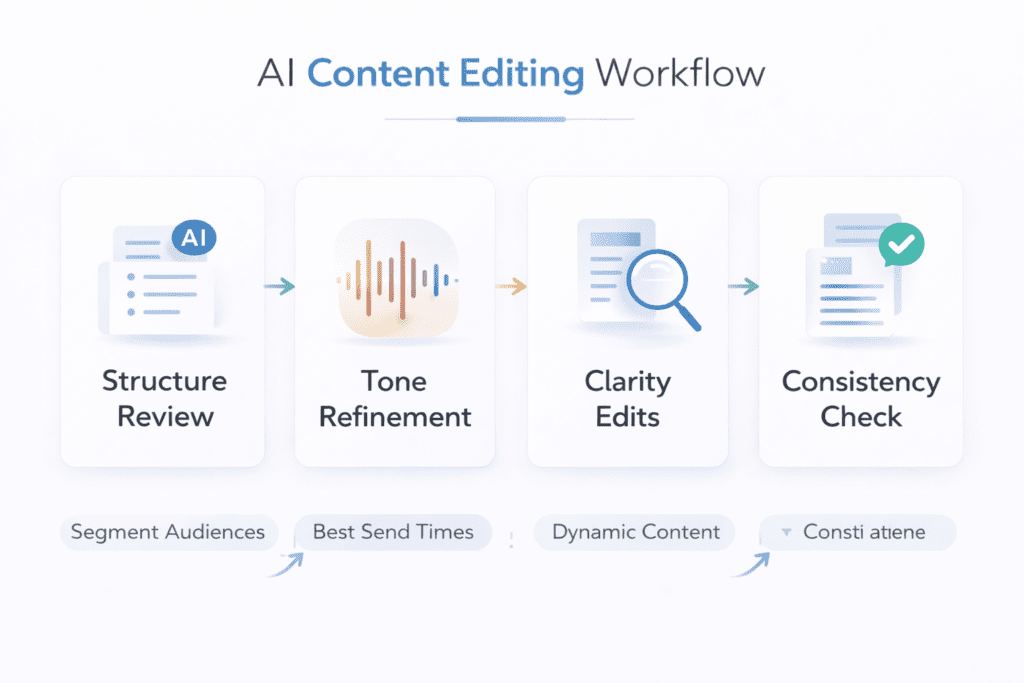
Over time, I’ve developed a simple process for refining AI drafts. It starts with accepting that AI output is rarely final. Even strong AI writing needs shaping before publishing.
My workflow focuses on layers. First, I review the structure. Then I refine tone. After that, I tighten clarity and fix inconsistencies. This layered approach keeps editing efficient instead of overwhelming.
One thing I’ve noticed is that AI models often generate clean but generic drafts. The ideas are usually solid, but the delivery needs personality and precision. That’s where editing makes the biggest difference in transforming AI-written content.
A few lessons from repeated editing cycles:
• AI drafts improve with structured editing
• Tone refinement changes how content resonates
• Clarity edits often matter more than grammar
• Small adjustments elevate overall quality
Once you build a repeatable editing system, working with generative AI becomes much easier. You stop chasing perfection and start refining intentionally.
What Editing AI Content Means
Editing AI content isn’t just about fixing grammar. It’s about transforming output into something readers can trust. The goal is clarity, consistency, and credibility.
When you edit AI-generated content, you’re refining multiple layers at once. You adjust sentence structure, smooth awkward phrasing, and align tone. Each pass improves readability and confidence.
Human editing also adds nuance. AI can generate text quickly, but it doesn’t always capture subtle context. That’s where human insight comes in.
This process is especially useful for creators who use AI tools regularly. Bloggers, marketers, and educators all benefit from learning how to edit AI content effectively.
Why Editing AI Content Matters in 2026
Editing matters more now because expectations are higher. Readers are becoming more familiar with AI writing patterns, which makes unedited drafts easier to spot.
At the same time, content quality signals are evolving. Search engines are paying closer attention to clarity, usefulness, and engagement. Clean editing helps content feel more reliable.
There’s also the trust factor. As AI-generated content becomes more common, readers naturally question authenticity and seek human writing. Well edited content helps maintain credibility.
Long term value plays a role too. AI can speed up content creation, but editing ensures the final piece actually delivers real value instead of sounding formulaic.
Why AI Content Needs Editing in the First Place
To understand why editing matters, it helps to look at how AI generates text. Most AI models rely on probability patterns, not lived experience. That’s why the output often feels technically correct but slightly robotic.
Generative AI tools are designed to produce safe, clear language. While that improves readability, it also creates predictable phrasing. Over time, this leads to repetitive patterns.
Another issue is generalization. AI-generated content tends to default to broad explanations. Without editing, the content can lack specificity or depth.
There’s also the structure factor. AI often produces evenly balanced paragraphs and highly optimized flow. While neat, this structure can feel unnatural without human refinement.
Editing solves these problems. It adds nuance, corrects subtle awkwardness, and ensures the final content feels intentional rather than automated.
Common Problems in AI Generated Text
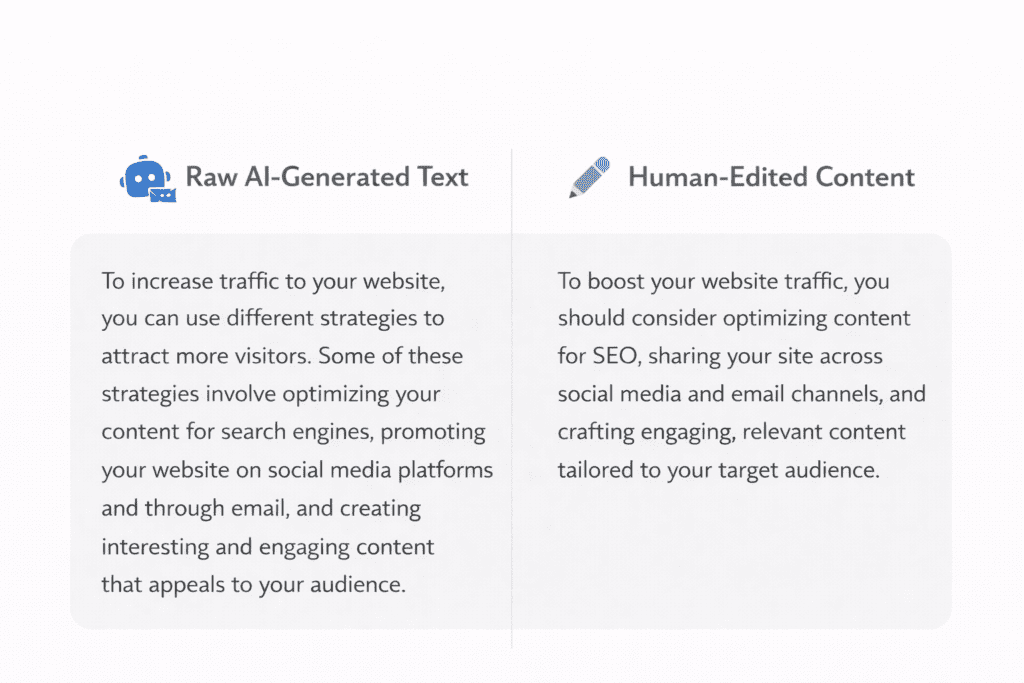
Once you start reviewing AI drafts closely, certain patterns show up again and again. These issues don’t always jump out at first glance, but they become obvious during deeper editing.
One of the most common problems is repetitive sentence structure. AI models often generate evenly shaped sentences, which creates a robotic rhythm. The content reads clearly, but it lacks natural variation.
Another issue is tone. AI-generated text can sound flat or overly neutral, highlighting the need for adding a human element. Without editing, the writing may feel distant instead of conversational.
Voice inconsistency also appears frequently. Since AI pulls from broad training patterns, sections of the same draft can feel slightly mismatched. One paragraph might sound formal, while another feels casual, reflecting the balance of human content.
Factual errors are another concern. AI output may include outdated claims or missing context. That’s why fact-checking remains a critical editing step.
There’s also a subtle originality risk. While AI doesn’t copy intentionally, language models can produce similar phrasing patterns across topics. This makes plagiarism checks important for polished content.
Step by Step: How to Edit AI Content
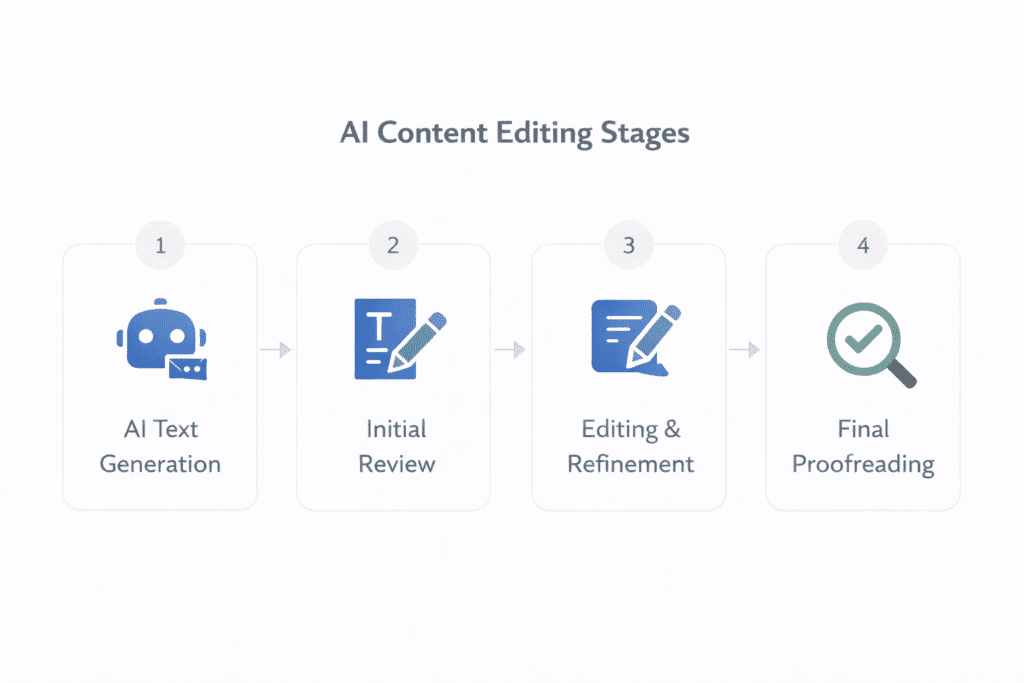
A clear workflow makes editing faster and more consistent. Instead of jumping randomly between fixes, it helps to follow a structured sequence.
Step 1: Read the AI Content Fully
Start by reading the entire draft without editing anything. This helps you understand intent before making changes.
Look for structural gaps. Does the content flow logically? Are ideas presented clearly? This first pass builds context.
You should also notice tone inconsistencies here. Sometimes the AI output shifts subtly between sections.
Step 2: Improve Sentence Structure
Next, focus on sentence structure. AI models often generate long, balanced lines that feel mechanical.
Shorten overly long sentences where needed. Break complex lines into simpler ones. Then combine fragments that feel choppy into coherent bullet points.
Pay attention to awkward phrasing. Even small adjustments can improve clarity and rhythm significantly.
This step is where the writing begins to sound less robotic and more natural.
Step 3: Make AI Content Sound Human
Once structure improves, shift focus to tone. This is where editing adds personality and warmth, making the text feel more like human writing.
Replace overly formal wording with conversational alternatives. Adjust transitions so the content flows smoothly between ideas.
Look for opportunities to simplify language. AI writing often leans toward safe phrasing, which can feel distant.
Adding subtle conversational touches helps the content resonate more naturally with readers.
Step 4: Remove Redundancy
AI output often repeats ideas in slightly different ways. Removing redundancy instantly tightens the content.
Scan for repeated explanations or filler phrases. If two sentences say nearly the same thing, merge them.
Trimming fluff improves readability and keeps attention focused, especially when using generative AI. It also reduces the risk of the content feeling formulaic.
By the end of this stage, the draft should already feel sharper and easier to read.
Once the core structure and tone are refined, the next steps focus on accuracy and polish. This is where editing moves from surface level cleanup to deeper quality control.
Step 5: Fix Factual Errors
AI models can sometimes generate confident but incomplete claims. That’s why fact-checking is essential when you edit AI content.
Verify statistics, timelines, and examples. If something feels vague, look it up and add context. Even small factual errors can reduce credibility.
Updating outdated references also helps. AI-generated content may rely on older patterns, so refreshing details keeps the content relevant.
Step 6: Resolve Inconsistency
After accuracy checks, review consistency. AI drafts often contain subtle shifts in tone of voice or style.
Align terminology across the piece. If one section uses formal wording and another feels conversational, bring them closer together.
Transitions matter here too. Smooth connections between paragraphs help the content feel cohesive rather than stitched together.
This step ensures the entire draft reads like one unified voice.
Step 7: Proofread Carefully
Proofreading is where fine details come into focus. Even strong AI output can contain small grammar or punctuation issues.
Read slowly and look for awkward phrasing. Sometimes AI-generated text includes sentences that are technically correct but feel slightly off.
Checking punctuation also improves clarity. Small refinements can elevate overall readability more than expected.
A careful proofread ensures the final version feels intentional and polished.
Step 8: Check Plagiarism
The last step is originality verification. While AI-generated text is usually unique, running a plagiarism check adds an extra layer of confidence.
Use trusted tools to scan the content. If any sections are flagged, rewrite them in your own words while keeping the meaning intact.
This step protects originality and strengthens trust, especially for long form content.
Real Example: Editing AI Content Before and After
To see how this works in practice, imagine a short AI draft explaining productivity tips. The original output might be clear but slightly repetitive and overly structured.
After editing, the same paragraph reads differently. Sentences vary in length, transitions feel smoother, and redundant phrasing disappears.
The core ideas remain unchanged, but the delivery improves. That’s the real value of learning how to edit AI content. You’re not rewriting everything. You’re refining what’s already there, adding a human touch to the content.
Human Editing vs AI Editing
Both AI and humans can assist with editing, but they play different roles. AI tools are fast at catching surface issues like grammar or formatting.
Human editors bring nuance. They recognize tone mismatches, subtle awkwardness, and areas where clarity can improve.
AI editing works well for speed. Human editing works better for depth. When combined, they create a strong hybrid workflow.
In most cases, AI handles early cleanup while humans guide the final polish. This balance keeps editing efficient without sacrificing quality.
Tools That Help You Edit AI Content Faster
Several tools can speed up the editing process. While none replace thoughtful review, they reduce friction in specific areas.
Grammar checkers are useful for catching small errors quickly. They highlight punctuation issues and awkward sentence patterns.
Readability tools help evaluate clarity. They show whether sentences are too complex or uneven, which helps refine flow.
Fact-checking resources also matter. Verifying claims ensures accuracy, especially when AI-generated content covers technical topics.
Workflow tools can assist with organization. Simple checklists or editing templates help maintain consistency across multiple drafts.
Used wisely, these tools streamline editing without removing the human touch.
AI Editing vs Human Editing: When to Use Each
Knowing when to rely on AI editing versus manual editing saves time. Not every piece requires the same level of refinement.
AI editing is often enough for early drafts. It works well for grammar cleanup and basic clarity improvements.
Human editing becomes critical when tone, trust, or originality matter more. Content that represents a brand voice usually needs deeper refinement.
Hybrid editing workflows are becoming more common. Creators use AI for initial cleanup and human editing for final shaping.
This layered approach helps maintain both speed and quality, especially when working with frequent AI drafts.
How to Make AI Content Sound Human
Once structure and accuracy are handled, the final layer is tone. This is where editing transforms AI output into something that feels natural.
Start by varying sentence length. AI models often generate evenly balanced sentences, which creates a mechanical rhythm. Mixing short and medium lines makes the writing feel more organic.
Natural phrasing also helps. Replace stiff wording with conversational alternatives where appropriate. Small changes in word choice can make content sound more human.
Subtle personality matters too. You don’t need strong opinions, but light conversational touches help readers connect with the text.
Another simple trick is reading the content aloud. If something feels awkward when spoken, it usually needs refinement. This method catches rhythm issues quickly.
Editing AI Content for Different Content Types
Different formats require different editing approaches. The same AI draft style won’t work equally well everywhere.
Blog posts and SEO articles need strong clarity. Focus on flow and readability so readers can follow longer content easily.
Emails and newsletters benefit from a warmer tone. Slightly conversational edits make them feel more personal and less robotic.
Social media posts need rhythm. Shorter sentences and smoother transitions help content feel more natural in fast scrolling environments.
Landing pages require precision. Editing here should focus on clarity and trust so the message feels intentional.
Adjusting editing depth by format keeps content aligned with reader expectations.
Common Mistakes When Editing AI Content
Even experienced creators make editing mistakes. Knowing what to avoid can improve results quickly.
Over editing is one of the biggest issues. Trying to perfect every sentence can make writing feel unnatural.
Ignoring factual errors is another risk. Clean grammar doesn’t guarantee accuracy, so fact-checking remains important.
Skipping plagiarism checks can create problems too. Even small overlaps should be reviewed carefully.
Leaving robotic structure untouched is also common. If sentence rhythm stays too uniform, the content may still feel automated.
Rushed editing is another trap. AI speed can create pressure, but thoughtful editing still matters.
Signs Your AI Content Is Properly Edited
Well edited content has a certain feel. It reads smoothly and maintains consistency from start to finish.
Natural readability is one sign. The writing flows without forcing the reader to slow down.
Tone consistency is another indicator. The entire piece should feel like one voice rather than mixed styles.
Clear structure also stands out. Ideas connect logically, and transitions feel seamless.
Minimal redundancy shows strong editing, especially when using prompts effectively. Each sentence should add something meaningful.
When these signals appear together, the content usually feels polished and trustworthy.
What Most Blogs Miss About Editing AI Content
A lot of advice focuses too heavily on grammar, potentially leading to writer’s block. While correctness matters, structure and flow often matter more.
Tone consistency is frequently overlooked. Even small shifts in voice can affect how content resonates.
Flow is another under discussed factor. Smooth transitions build trust, while abrupt jumps create friction.
Editing is also an SEO advantage. Clear, readable content tends to perform better over time because readers engage more deeply.
Understanding these deeper layers helps you move beyond surface level editing.
Editing AI Content for SEO
Editing supports SEO in indirect but meaningful ways. Search performance often reflects how useful content feels to readers.
Improved readability encourages longer dwell time. When content is easier to follow, readers stay engaged.
Clear structure also supports comprehension. Well organized ideas help readers find answers quickly.
Strong editing can also reinforce credibility. Trust signals grow when content feels thoughtful and consistent.
While editing doesn’t replace strategy, it strengthens the foundation that supports long-term visibility of human content.
Scaling Your AI Editing Workflow
As you work with more AI drafts, building a repeatable system becomes essential. Consistency makes editing faster and more reliable.
An editing checklist is a good starting point for ensuring clarity and avoiding overuse of jargon. It helps ensure no critical steps are skipped.
Layered editing systems also work well. Reviewing structure, tone, and accuracy in sequence keeps the process organized.
Tone guidelines can help maintain consistency across multiple pieces. This is especially useful for teams.
Over time, structured workflows reduce friction and improve overall quality.
How Long Does It Take to Edit AI Content?
Editing time varies based on content length and experience. Short drafts may only take a few minutes to refine.
Long form content naturally takes more time. Reviewing structure, tone, and accuracy across multiple sections adds effort.
Beginners often spend longer because they’re still developing editing instincts. With practice, the process becomes more intuitive.
Efficiency improves as patterns become familiar. Recognizing common AI quirks makes editing faster over time.
FAQs
How long does it take to edit AI content?
Time depends on length and complexity. Short drafts may take minutes, while longer articles can take significantly longer.
Is learning how to edit AI content necessary?
Yes, especially if you rely on AI regularly. Editing improves clarity, trust, and overall quality.
Can AI tools edit AI generated text automatically?
They can handle grammar and surface cleanup, but deeper tone refinement still benefits from human editing.
How do I make AI content sound human fast?
Focus on sentence variation and removing redundancy. Even quick tone edits can improve natural flow.
Should I proofread AI content manually?
Manual proofreading helps catch subtle issues that automated tools, like ChatGPT, may miss.
Do plagiarism tools fully protect originality?
They help detect overlaps, but rewriting and thoughtful editing remain essential for true originality.
What is the first step when you edit ai-generated text?
Start by reading the draft content to check tone, brand consistency, and for any buzzword or repetitive language you want to remove.
How do I keep a unique voice when editing machine-generated text?
Replace generic phrases and add anecdotes or personal details so the content feels human-generated and reflects your unique voice.
Should I fact-check machine-generated or ai-assisted content?
Yes—fact-check dates, names, and claims since ai can sometimes invent details or mix facts in content generation.
How can I use ai prompts to improve edits?
Use ai prompts to create new drafts or suggest alternatives, then human-edit for tone, accuracy, and effective editing goals.
What role does natural language processing play in editing?
NLP helps produce natural language but editors must fix awkward phrasing, word count issues, and ensure clarity for readers.
How do I reduce repetitive language in ai content?
Scan for repeated words and phrases, vary sentence starts, and swap synonyms to make content often feel fresher and more engaging.
Can I use openai tools safely for content generation?
Yes, but make sure your content is reviewed and fact-checked before publishing to avoid errors common in machine-generated drafts.
How do I balance speed of ai with effective editing?
Let ai speed up the draft content step, then spend time on careful edits to ensure quality, brand voice, and a clear call to action.
What are common use cases for editing ai-assisted content?
Use cases include marketing drafts, blog posts, and product pages where editors refine machine-generated text into polished copy.
How many words should I aim for when editing for word count?
Set a target word count for each piece and trim or expand the draft content to match goals while keeping a clear call to action.
Who Should Not Rely on AI Editing Alone
Some creators should be cautious about depending entirely on automated editing.
YMYL content creators often need stronger human review. Accuracy and clarity matter more in sensitive topics.
Expert driven niches also benefit from deeper editing. Human insight strengthens credibility in specialized areas.
Brand voice heavy content is another case. Unique tone often requires careful manual refinement.
Understanding these boundaries helps you decide how much editing automation makes sense.

My Recommendation
Treat AI as a drafting partner, not a final writer. The real value comes from how you refine the output.
Learning how to edit AI content builds a skill that compounds over time. Each draft becomes easier to shape and improve.
Focus on building a repeatable workflow. Structure, tone, and accuracy checks create a reliable editing system.
In the long run, thoughtful editing turns AI from a shortcut into a true content advantage.