

Will AI replace human writers completely, or is that fear a bit overblown? It’s a question that keeps popping up everywhere, from creator forums to mainstream news. The rise of tools like ChatGPT has made the conversation louder, and honestly, more emotional too.
Over the past few years, AI writing has moved from curiosity to reality. Bloggers, freelancers, and content teams are seeing artificial intelligence produce usable drafts in seconds. That speed alone makes people wonder if writers will be replaced entirely.
At the same time, there’s a lot of confusion. Some headlines claim AI will take over all writing jobs. Others insist AI will never replace writers. The truth likely sits somewhere in the middle.
In this article, we’ll take a calm, balanced look at the real situation. No hype, no doom predictions. Just facts, real-world observations, and a clear explanation of what the future of writing may actually look like.
My Perspective on Writing in the AI Era
From my research, the biggest shift isn’t just that AI exists. It’s how fast it became normal. A few years ago, most writers saw AI as a novelty. Today, it’s part of everyday workflows.
Writing itself hasn’t disappeared, but the process has changed. Many creators now use AI for first drafts, outlines, or brainstorming. The human role often moves toward editing, shaping ideas, and adding depth.
Here’s what I noticed. The conversation around AI replacing writers is rarely nuanced. People tend to fall into extremes. Either AI will destroy writing careers, or it’s just another harmless tool.
Reality feels more layered than that. Some areas of writing are clearly shifting faster than others. Certain tasks are being automated, while others still rely heavily on human perspective.
That nuance matters. Without it, the debate becomes louder but less useful. And if you’re a writer trying to plan ahead, clarity is more valuable than fear.
What “AI Replace Human Writers” Really Means
Before going further, it helps to unpack the phrase itself. When people say AI will replace writers, they’re usually talking about full replacement. As in, machines taking over all writing roles.
But that’s not always what’s actually happening.
In many cases, replacement really means assistance. AI tools can replicate certain writing tasks, especially repetitive or formulaic ones. That’s very different from replacing the entire role of a human writer.
The fear often comes from speed. AI can generate text faster than any person. When people see that, they assume complete takeover is inevitable.
But speed alone doesn’t define writing value. Context, originality, and lived experience still matter, especially in deeper content.
This debate also matters because writing sits at the center of so many industries. Blogging, marketing content, journalism, and education all rely on written communication. If AI truly replaces writers, the ripple effects would be massive.
That’s why the conversation keeps growing. Not because the outcome is obvious, but because the stakes feel high for a lot of writers right now.
How AI Writing Tools Actually Work
To understand whether AI can replace writers, it helps to know how these tools work in simple terms. Most modern AI writing systems are built on large language models trained on massive amounts of text.
These models analyze patterns in language. They don’t think or feel. They predict what words are likely to come next based on previous examples.
In other words, AI writes by pattern recognition, not lived experience.
When you ask a tool like ChatGPT to generate text, you’re essentially giving it a starting point. The system then predicts sentences that sound natural based on training data and context.
That’s why AI often feels human-like. It mimics tone, rhythm, and structure very well. But under the surface, it’s still predictive text at a much more advanced scale.
This also explains why AI sometimes sounds confident even when it’s wrong. It’s not reasoning in the human sense. It’s generating responses based on probability, not understanding.
Still, the progress is impressive. Modern artificial intelligence can produce essays, summaries, and even longform content that reads surprisingly smooth. That level of fluency is what fuels the fear around writers being replaced.
Why This Question Matters More in 2026
A few years ago, AI writing was mostly experimental. Now it’s everywhere. The number of AI tools has exploded across industries, and content creation is one of the biggest areas affected.
Blogs, social media posts, and marketing content are being generated faster than ever. The internet is seeing a massive wave of AI-generated material, and that shift is changing expectations.
For bloggers and SEO professionals, the impact is immediate. Search results are now filled with AI-assisted articles. That creates both opportunity and competition at the same time.
Freelance writers are also feeling the pressure. Some entry-level gigs that once required manual writing are now being automated or reduced. Companies experimenting with AI often start by replacing repetitive writing tasks.
Even media companies are exploring AI to produce certain types of articles at scale. Not everything, but enough to reshape parts of the industry.
This is why the question feels urgent now. AI isn’t a future concept anymore. It’s actively reshaping how content is created and distributed today.
Where AI Is Already Replacing Human Writers
In some areas, the shift is already visible. AI hasn’t taken over everything, but it has clearly replaced writers in certain types of content.
One of the biggest examples is basic SEO content. Articles that follow predictable formats are easier for AI to replicate. When the structure is repetitive, machines perform surprisingly well.
Product descriptions are another area. Ecommerce brands now use AI to mass-produce listings that once required manual writing. These descriptions often follow templates, which makes them easier to automate.
Simple informational articles also fall into this category. Content that summarizes common knowledge without deep insight is more vulnerable to automation.
Social media captions and bulk content are shifting too. Many brands now rely on AI to generate large volumes of short-form material quickly.
The biggest impact shows up at the entry level. Writers who relied on high-volume, low-differentiation gigs are seeing fewer opportunities. Some platforms now encourage AI-assisted workflows by default.
The key insight here is simple. Replacement tends to happen where writing is predictable and easily repeatable. The more formulaic the content, the easier it is for AI to replicate it.
Where AI Still Struggles to Replace Human Writers
Even with rapid progress, there are clear areas where AI still struggles. The biggest gap shows up when writing requires originality or lived experience.
AI can replicate structure, but it has a harder time producing truly original opinions. It can summarize ideas well, yet forming a unique perspective still feels deeply human.
Storytelling is another challenge. Emotional narratives, personal journeys, and deeply personal reflections rely on real experience. AI can imitate tone, but the depth often feels thinner.
Expert authority content also remains difficult to automate. Writing that reflects years of experience carries subtle signals readers recognize, even if they can’t always explain why.
Cultural nuance is another area where AI isn’t perfect. Humor, regional references, and subtle tone shifts are easy for humans but tricky for machines to replicate consistently.
Longform thought leadership highlights these gaps even more. Articles that require layered reasoning and fresh insights still lean heavily on human creativity.
This doesn’t mean AI cannot improve. It likely will. But for now, depth and perspective remain strong human advantages.
Industries Where Human Writers Will Always Matter
Some industries rely so heavily on trust and accountability that human writers will likely remain essential.
Journalism is a strong example. Investigative reporting depends on interviews, fieldwork, and ethical judgment. AI can assist research, but the responsibility still sits with people.
Medical and legal writing also demand accuracy and accountability. These fields carry real-world consequences, which makes human oversight critical.
Personal brand content is another area where humans dominate. Audiences connect with personality and authenticity. That kind of voice is difficult to automate convincingly.
Opinion writing and cultural commentary follow the same pattern. These formats rely on perspective, not just information. Readers want to hear what a real human thinks, not just what sounds correct.
In these areas, AI may assist workflows, but full replacement feels unlikely anytime soon.
AI vs Human Writers Core Differences
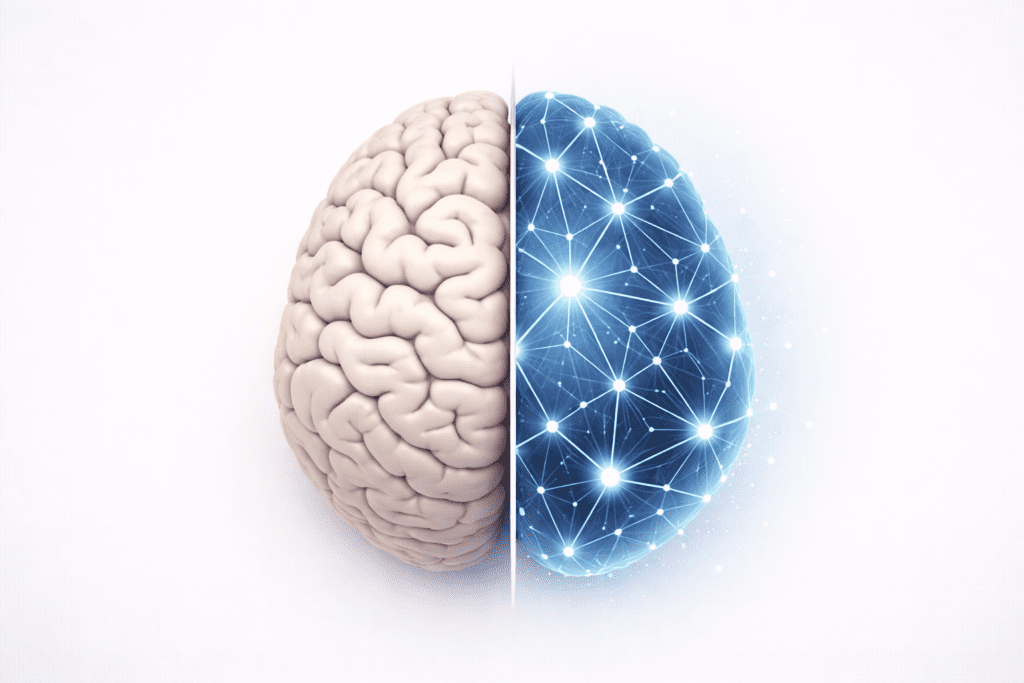
Instead of asking who wins, it’s more useful to look at capability gaps. AI and humans approach writing from very different starting points.
Creativity is one major difference. AI can remix existing patterns, but generating something truly unexpected still leans toward human thinking.
Emotional intelligence is another gap. Humans naturally understand tone shifts, subtle meaning, and context. AI simulates emotion but doesn’t actually feel it.
Real-world experience plays a big role too. Humans draw from memory, mistakes, and personal growth. That depth shapes writing in ways artificial systems struggle to replicate.
Strategic thinking also sets humans apart. Writing isn’t just about sentences. It’s about intent, positioning, and audience understanding.
Ethical judgment may be the most underrated difference. Humans weigh consequences, values, and responsibility. AI generates text without that layer of accountability.
These differences explain why the conversation is more complex than simple replacement.
Real Examples of AI vs Human Writing
When you compare outputs side by side, the differences become clearer. AI-generated text often sounds smooth and structured at first glance.
But after a closer read, patterns emerge. AI writing tends to stay safe. It avoids strong opinions and often sticks to balanced, predictable phrasing.
Human writing usually feels more uneven, but in a good way. There are sharper takes, subtle emotions, and moments of personality that stand out.
Readers often notice this subconsciously. They may not identify exactly why one piece feels more engaging, but depth and voice make a difference.
That said, the gap isn’t always obvious in short content. For quick summaries or simple explanations, AI performs surprisingly well.
The contrast becomes clearer in longer pieces. As depth increases, human perspective tends to stand out more strongly.
Common Myths About AI Replacing Writers
Whenever a new technology appears, myths spread quickly. The conversation around AI replacing writers is full of assumptions that don’t always hold up in reality.
One popular myth is that AI will eliminate all writing jobs. This idea spreads easily because automation feels fast and visible. But historically, technology tends to reshape roles rather than erase them completely.
Another myth is that search engines now prefer AI-generated content automatically. That assumption oversimplifies how ranking systems work. Quality and usefulness still matter more than how content is produced.
There’s also the belief that AI content is always faster and better. Speed is definitely an advantage, but better is subjective. Fast output doesn’t always mean stronger ideas or deeper insight.
Some people also assume writing skills no longer matter. In reality, strong writers often use AI more effectively than beginners. The tool amplifies skill rather than replacing it entirely.
These myths persist because extreme narratives spread faster than nuanced ones. But once you look closely, the situation feels more balanced.
What Google Actually Says About AI Content
Search engines play a huge role in this debate, especially for bloggers and SEO-focused writers. Many people assume Google either fully supports or completely rejects AI writing, but the real stance is more nuanced.
Google has repeatedly emphasized usefulness over method. Content is evaluated based on whether it helps readers, not just whether AI helped create it.
This means AI-written material isn’t automatically penalized. What matters is value, originality, and clarity. Low-quality content struggles regardless of whether it’s written by humans or machines.
Helpful content principles still apply. Pages that provide genuine insights tend to perform better than generic summaries. That standard hasn’t really changed, even as AI tools improve.
Experience and authority signals also remain important. Content that reflects real expertise continues to stand out, especially in competitive niches.
For writers, this is an important takeaway. The presence of AI doesn’t remove the need for quality. If anything, it raises the bar.
What Most Blogs Get Wrong About AI Replacing Writers
A lot of online discussions fall into predictable traps. One of the biggest issues is overhyping extreme outcomes.
Some articles frame AI as an unstoppable force that will wipe out writing careers overnight. Others dismiss the shift entirely and treat AI as irrelevant.
Both views miss the middle ground.
Another common mistake is confusing automation with replacement. Automating parts of a workflow doesn’t necessarily mean eliminating the entire role. Many industries have gone through similar transitions before.
There’s also a lack of nuance in predictions. Writing isn’t one uniform job. It includes storytelling, strategy, editing, research, and positioning. Treating it as a single task oversimplifies reality.
Ignoring hybrid workflows is another blind spot. Many creators now combine human thinking with AI drafting. This blended model rarely gets enough attention in dramatic headlines.
Without nuance, the conversation becomes louder but less useful. That’s why taking a calmer view helps make better long-term decisions.
The Psychology Behind AI Fear
Fear around AI isn’t just about technology. It’s deeply psychological.
For many writers, the fear comes from uncertainty. When a tool suddenly appears that can generate text instantly, it challenges a core part of professional identity.
Economic anxiety plays a role too. Writing has always been a competitive field. The idea of automation adds another layer of pressure, especially for freelancers.
There’s also a natural resistance to change. Humans tend to feel uneasy when familiar systems shift quickly. The faster the change, the stronger the reaction.
Social media amplifies these fears. Dramatic predictions spread quickly, creating the impression that disruption is more immediate than it actually is.
From my research, most worried writers aren’t reacting only to AI itself. They’re reacting to uncertainty about the future. And uncertainty often feels scarier than reality.
The Rise of Hybrid Writers Using AI as a Tool

One of the most interesting shifts is the rise of hybrid writers. Instead of competing with AI, many creators are learning to work alongside it.
These writers use AI for drafting, brainstorming, or outlining. Then they step in to refine tone, add insight, and shape the final message. It becomes a layered process rather than a replacement scenario.
In practice, this approach works surprisingly well. AI handles repetitive groundwork, while humans focus on perspective and clarity.
This is why the hybrid model keeps gaining traction. It combines speed with depth, which neither side achieves alone.
You’ll notice this especially among experienced creators. They don’t treat AI as a threat. They treat it as leverage.
And in many cases, that mindset shift makes all the difference.
Who Is Most at Risk if AI Keeps Improving?
While not all writers face the same risk, some groups are more exposed than others. The pattern usually follows how predictable the writing is.
Entry-level content writers often feel the pressure first. Roles built around high-volume output are easier for AI to replicate.
Generic SEO writers also face challenges. Content that follows rigid templates becomes more vulnerable as AI improves at pattern-based writing.
Freelancers working on high-volume platforms may notice similar shifts. Some clients now experiment with AI-assisted workflows to reduce costs.
Non-specialized creators fall into this category too. Without a clear niche or voice, it becomes harder to stand out as AI tools improve.
This doesn’t mean these paths disappear entirely. But the bar keeps rising as automation expands.
Who Will Thrive in the AI Era
On the flip side, certain creators are well positioned for the future. The common thread is differentiation.
Experts with deep knowledge tend to stay valuable. When writing reflects real experience, it’s harder for AI to replicate convincingly.
Personal brand writers also benefit. Audiences connect with recognizable voices and perspectives, which strengthens long-term relevance.
Story-driven creators fall into this category as well. Narratives built around real experiences maintain strong appeal even as technology evolves.
Strategic content marketers are another group likely to thrive. Writing that blends messaging, positioning, and audience insight goes beyond surface-level text.
Editors and content strategists may see new opportunities too. As AI produces more drafts, demand for refinement and direction can grow.
In many ways, the future favors creators who bring something uniquely human to the table.
The Future of Writing Jobs: A Realistic Outlook

Predicting the future of writing jobs requires balance. Extreme optimism and extreme pessimism both miss important details.
Lower-paying, repetitive gigs may decline over time. Automation tends to target predictable tasks first, and writing is no exception.
At the same time, premium opportunities could expand. As generic content becomes easier to produce, originality becomes more valuable.
The role of writers may shift as well. Instead of focusing only on output, more emphasis may move toward thinking, positioning, and storytelling.
Content is also becoming more personality-driven. Audiences increasingly gravitate toward voices they recognize and trust.
This shift doesn’t mean writing disappears. It means the definition of valuable writing evolves.
How This Impacts Bloggers and Affiliate Marketers
Bloggers and affiliate creators are already seeing changes in real time. The content landscape is becoming more crowded as AI lowers the barrier to entry.
Competition in search results is rising. More articles are being published faster, which makes differentiation more important than ever.
Authority signals are also becoming more critical. Readers and platforms both pay closer attention to credibility and trust.
For niche site builders, hybrid workflows are becoming common. Many creators now combine AI drafting with personal editing to scale production without losing identity.
This shift rewards adaptability. Those who evolve their workflows tend to stay competitive, while rigid approaches feel harder to sustain.
How Fast Is AI Improving Really?
The pace of AI improvement is another source of confusion. Some people believe progress will slow down soon, while others expect rapid breakthroughs.
Reality sits somewhere in between. Advances continue, but not always in dramatic leaps. Improvements often come as steady refinements rather than sudden revolutions.
Timing also matters. Predictions about replacement often assume immediate change, but real-world adoption usually takes longer.
There’s also a tendency to underestimate human adaptation. As tools evolve, creators adjust their workflows and expectations.
From what I’ve seen, the future isn’t shaped by AI alone. It’s shaped by how people respond to it. And that makes long-term predictions more complex than simple yes-or-no answers.
Long-Term Predictions About AI and Writing
Looking ahead, the future of writing will likely be shaped by collaboration rather than replacement. AI will continue improving, but its role may settle into specific lanes.
Volume content is one area where AI will dominate. Tasks that involve summaries, structured explanations, or repeatable formats are well suited for automation.
At the same time, humans will likely continue leading in meaning-driven writing. Content built around perspective, storytelling, and insight still leans heavily on human thinking.
Collaboration may become the default model. Writers using AI as a productivity layer could outperform both pure human and pure AI approaches.
Writing as a skill probably won’t disappear. It will evolve. The emphasis may shift from typing speed to idea quality, positioning, and clarity of thought.
This evolution has happened before with other technologies. Writing tools change, but the need for communication remains.
Should Writers Be Worried Right Now?
This is the question many people quietly ask. And the honest answer is nuanced.
Some concern is valid. Writers working in highly repetitive niches may need to adapt faster than others. Ignoring change rarely works well in fast-moving industries.
But panic is rarely helpful. Not every writing role is disappearing, and the timeline is not uniform across all fields.
A better approach is awareness without fear. Understanding how AI is evolving gives you more control over your next steps.
If your work relies heavily on formulaic output, it may be time to rethink positioning. If your writing already includes insight or personality, you may be more future-proof than you think.
Context matters more than blanket predictions.
How Writers Can Stay Relevant in the AI Era
Staying relevant doesn’t require rejecting AI. In many cases, the opposite is true.
Building expertise is one of the strongest defenses. Deep knowledge creates differentiation that automation struggles to replicate.
Developing a unique voice also matters. Readers tend to connect with personality and perspective, which strengthens long-term relevance.
Learning editing and positioning skills can add another layer of value. As AI generates more drafts, refinement becomes more important.
Using AI strategically rather than competitively is another smart move. Treating it as a tool can unlock productivity without sacrificing identity.
Focusing on trust-driven content helps too. Credibility and authenticity remain powerful signals in an increasingly automated landscape.
Skills That Will Become More Valuable Because of AI
Interestingly, some skills may grow more important as automation expands.
Original thinking stands out immediately. The ability to synthesize ideas and form fresh perspectives becomes more valuable when generic content is abundant.
Editorial judgment is another rising skill. Knowing what to include, what to remove, and how to shape a narrative gains importance in AI-assisted workflows.
Personal storytelling also holds strong value. Stories rooted in real experience tend to resonate even as technology evolves.
Strategic communication is likely to matter more as well. Writing that connects ideas to audience needs goes beyond surface-level text generation.
In many ways, AI shifts value toward thinking rather than typing.
Key Takeaways About AI Replace Human Writers
To bring everything together, it helps to step back and look at the bigger picture.
AI is already replacing certain tasks, especially predictable writing. But that doesn’t automatically translate to replacing all writers.
Creativity, authority, and perspective still matter. These qualities remain difficult for machines to replicate fully.
Hybrid creators appear to have a strong advantage. Combining human insight with AI efficiency creates a powerful balance.
The future looks more collaborative than catastrophic. Writing may change shape, but it’s unlikely to vanish entirely.
Will AI Replace Other Creative Jobs Too?
The writing debate often connects to a broader question about creative work in general.
Designers and artists are having similar conversations. AI-generated visuals are improving, yet human creativity still plays a major role in defining style and originality.
Video creators face comparable shifts. Automation can speed up editing or scripting, but storytelling still depends heavily on human direction.
Musicians and storytellers are also navigating change. Technology can assist production, but emotional depth and cultural impact remain human-driven.
Across creative fields, the same pattern appears. Automation changes workflows, but rarely erases creativity altogether.
FAQs About AI Replace Human Writers
Will AI replace human writers completely?
Complete replacement feels unlikely in the near term. AI can automate certain writing tasks, but deeper creative and strategic work still relies on human input.
Is AI replacing freelance writers already?
In some entry-level areas, yes. High-volume and repetitive gigs are seeing the most disruption, especially where content follows predictable formats.
Can AI replace creative writers?
Creative writing remains difficult to automate fully. AI can assist with drafts, but originality and emotional depth still lean toward human creators.
Will AI replace blog writers?
Blogging is evolving rather than disappearing. Writers who adapt and integrate AI thoughtfully tend to remain competitive.
Should writers learn AI tools now?
Learning how to work with AI is generally a smart move. Understanding the technology helps writers stay adaptable as the landscape evolves.
Is AI content bad for SEO?
Not necessarily. Search performance usually depends on quality and usefulness rather than whether AI was involved in the process.
Final Thought: AI Is a Tool, Not a Replacement
Stepping back, it helps to reframe the narrative. AI is powerful, but it’s still a tool shaped by how people use it.
Technology has always changed creative work. Each shift creates new challenges, but also new opportunities.
Thinking in extremes often creates unnecessary fear. The reality tends to be more balanced and more practical.
A long-term perspective makes this clearer. Tools evolve, but the need for ideas and communication stays constant.
Final Verdict: Will AI Replace Human Writers?
So, will AI replace human writers entirely? A calm look at the evidence suggests a more measured answer.
AI will likely transform writing workflows in meaningful ways. Some tasks will become automated, and certain roles will evolve or shrink.
But writing itself is unlikely to disappear. Communication, storytelling, and perspective remain deeply human activities.
Writers who adapt and evolve will likely continue to find opportunities. Those who resist change may face more friction as the landscape shifts.
The future of writing looks less like extinction and more like transformation.