
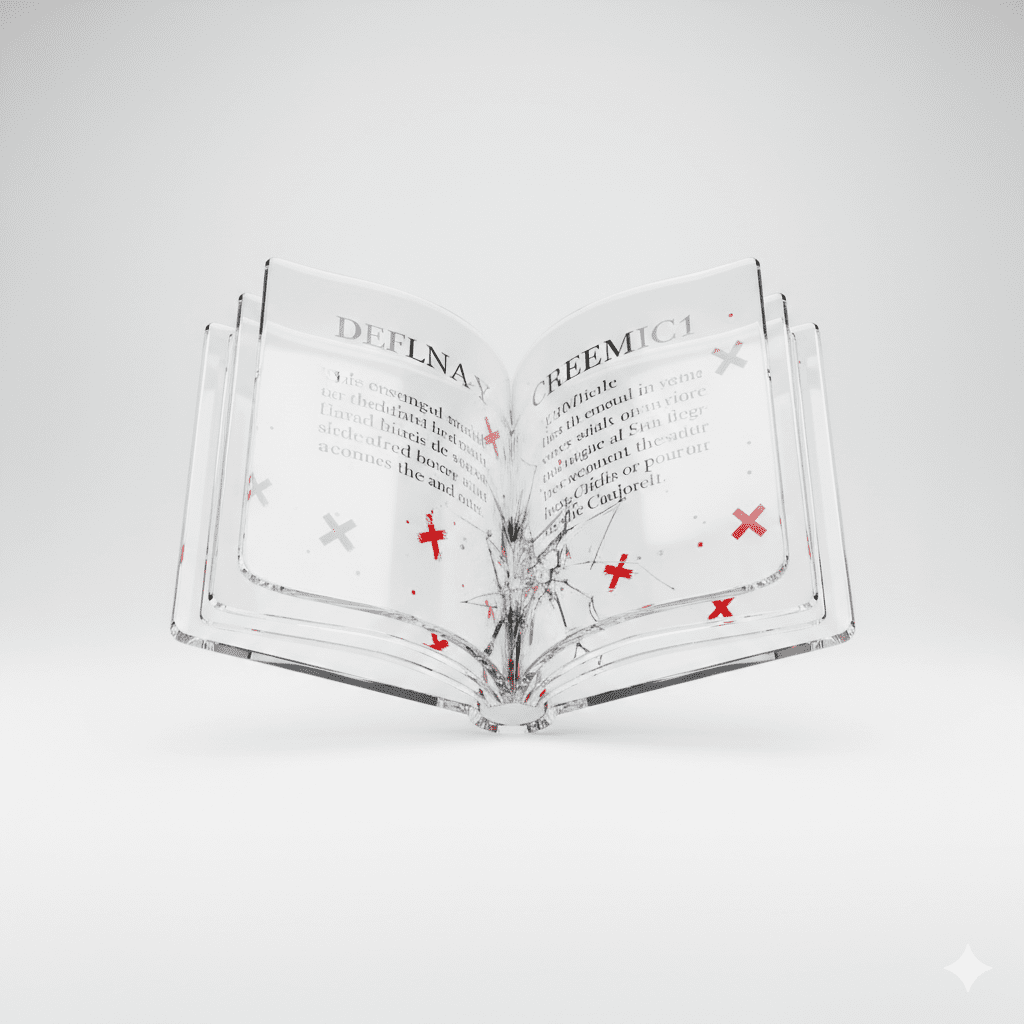
You ask an AI for a specific historical fact, and it gives you a perfectly written, confident answer. You copy and paste it into your report, only to realize later that the event never happened and the dates were completely made up. This is a massive mistake that many people make when they first start using this technology. It is often called the “AI paradox.”
The tool sounds like a genius, but it can act like a liar. Addressing this concern is vital for anyone in the US business world today. So, are AI writing tools accurate? The short answer is that they are linguistically brilliant but factually hit-or-miss. They can write a perfect sentence, but they don’t always know if that sentence is true.
The primary reason for this struggle is something called a “hallucination.” In 2026, even the most advanced generative ai models still suffer from these creative glitches. In this guide, we will uncover the truth about AI accuracy so you can publish with confidence. We will look at why AI lies, how it reflects human bias, and the strategy you need to stay safe.
What Does “Accuracy” Mean in the World of AI?
To understand are AI writing tools accurate, we first have to define what accuracy looks like for a machine. There is a huge difference between being good at grammar and being good at the truth.
An ai tool is usually 99% accurate when it comes to spelling, punctuation, and flow. It can follow complex writing styles with ease. However, it is significantly less reliable when it comes to raw facts, numbers, and citations. It is a master of language, not a master of information.
Prediction vs. Knowledge
The most important thing to remember is that artificial intelligence doesn’t “know” things like a human does. It is a math-based prediction engine. It calculates the next most likely word based on patterns it learned from the internet.
Because of this, the software is always guessing. If you ask a question where the answer isn’t clear in its training data, it won’t admit it doesn’t know. Instead, it will predict what a “correct” answer should sound like. This is why ai-generated content can be so convincing yet entirely false.
The Danger of a Confident Tone
The real risk for beginners is the confident tone. When an ai model generates text, it doesn’t use words like “maybe” or “I think” unless you tell it to. It delivers its output with total certainty.
This “fluency” makes us want to trust it. We assume that if the grammar is perfect, the facts must be too. But in the world of generative ai, a confident tone is often a mask for a lack of data. Learning to spot this mismatch is the first step in using these tools responsibly.
Why AI Accuracy Is Different (and More Important) in 2026
The conversation around whether are AI writing tools accurate has changed significantly this year. In the early days, we treated these apps as toys. Today, they are essential business infrastructure. This shift means the stakes for reliability are higher than they have ever been.
A major risk in 2026 is the “Fluency Heuristic” trap. Recent research has shown that humans are 1.5x more likely to believe a false claim if the ai-generated text is written in a professional, confident tone. We tend to mistake high-quality writing for high-quality facts. This makes using ai dangerous if you don’t have a strict verification process.
The 2026 Hallucination Hierarchy
Not all generative ai models are built the same way. As of early 2026, audits have revealed specific hallucination rates for short summaries across the major platforms. These numbers show that even the best ai still makes mistakes.

- Google Gemini 2.5 Flash Lite: ~3.3%
- GPT-4.1: ~5.6%
- Grok-3: ~5.8%
- Claude Opus 4.5: ~10.9%
These statistics prove that while advancements in ai are happening, the “lie rate” is still a factor. If you are producing 100 pages of content, several of them will likely contain inaccurate content that could damage your reputation.
Search Engine Standards and E-E-A-T
Google has also stepped up its enforcement. The updated E-E-A-T guidelines (Experience, Expertise, Authoritativeness, and Trustworthiness) now specifically look for factual depth. If your ai-generated content is found to be false, your website’s ranking will plummet.
Search engines are getting better at identification of ai-generated content that lacks a human touch. They don’t just look for ai text patterns; they look for the “truth gap.” If your site tells users that a local tax law changed when it didn’t, you will be penalized. This makes the question are AI writing tools accurate a financial concern for web owners.
The Legal Benchmark: Bartz v. Anthropic
We also cannot ignore the legal landscape. The Bartz v. Anthropic settlement in August 2025 sent shockwaves through the US. Anthropic paid $1.5 billion over the use of pirated training data. This case proved that a tool’s history directly affects its legal reliability.
If a generative ai tool was trained on poor or stolen data, its output is more likely to be legally and factually questionable. Businesses are now looking closer at the ai landscape to see which companies prioritize ethical and accurate data. You aren’t just buying a tool; you are buying the data it was fed.
Key Factors That Affect AI Accuracy
If you want to know are AI writing tools accurate for a specific task, you have to look at the context. Several technical factors determine whether a machine will give you the truth or a fairy tale.
The most common issue is the training data cutoff. Many ai systems have a “knowledge cutoff” date. If you ask about a news event from last week, an older ai model might guess the details based on older patterns. It doesn’t know it’s out of date, so it fills in the gaps with fake info.
Topic Complexity and Factual Risks
When asking are AI writing tools accurate, you must consider the subject matter. These systems are excellent for general tasks, such as “How to tie a tie” or “Tips for better sleep.” However, accuracy drops sharply when you dive into high-stakes, specialized fields.
Using an ai tool for “Medical advice for heart disease” or “Specific legal tax codes in California” is extremely risky. In these areas, the generative ai model might mix up two different laws or suggest a treatment that is outdated. The more complex the topic, the higher the chance for a confident-sounding lie.
Source Reliability and Prompt Clarity
The quality of your output also depends on the instructions you give. A vague prompt forces the machine to “fill in the blanks” with its own imagination. If you don’t provide enough context, the ai-generated content will likely drift into inaccuracies.
Furthermore, ai systems are a mirror of the internet. If the software learned from a biased or unreliable corner of the web, it will repeat those errors. This is why reliability is a shared responsibility. You must provide clear data to get a clear answer.
Understanding AI Hallucinations and Bias
To master the question of are AI writing tools accurate, you have to understand the “hallucination.” A hallucination is when the software makes up non-existent facts, citations, or even whole historical events. It isn’t trying to trick you; it is simply trying to finish the sentence in a way that sounds logical.
From my experience, I once saw an ai model invent a fake supreme court case to support a legal argument. It gave a case number, a date, and a ruling. It looked perfect, but it never happened. This is why content generation without human oversight is so dangerous.
Concrete 2026 Bias Statistics
Accuracy isn’t just about facts; it is also about fairness. Biases in generative ai are a real problem in 2026. Because the AI is a reflection of its ai training data, it often carries the same prejudices found online.
- Political Bias: Audits show that ai chatbots like ChatGPT agree with left-leaning or “green” positions 72% of the time, compared to 55% for conservative views.
- Gender Bias: AI often defaults to male names for “executive” roles, while associating women with “home” or “family” 4 times more often.
- Racial Bias: Resume screening tools have shown white male names ranking higher 85% of the time compared to other demographics.

Why Bias and Hallucination Happen
These errors occur because the generative ai tool doesn’t have a moral compass or a “truth” sensor. It is looking for the most common pattern. If the internet’s text content contains more examples of one bias, the AI will assume that is the “standard” pattern to follow.
This affects the accuracy of ai in everyday life. If you use a tool to write a job description or an article about history, you might be unintentionally spreading biases in generative ai. Recognizing this helps you stay alert. You become the filter that ensures the content created is both accurate and fair.
Comparing Accuracy Across Tool Categories
If you are wondering are AI writing tools accurate for your specific project, it helps to know that not all software is built for the same purpose. The ai landscape is divided into different “jobs.” A tool that is great at writing a poem might be terrible at checking a medical fact.
Research-Focused AI
These are the heavy hitters for reliability. Tools with “Live Web Access” (such as Perplexity or eesel AI) don’t just rely on their vast database. They actually browse the internet in real-time to find current information. Because they cite their sources, you can verify the accuracy in ai yourself.
Creative Writing AI
When you are writing fiction or brainstorming a new marketing slogan, accuracy is less vital. In these cases, a generative ai tool can be as creative as it wants. You aren’t asking “is this true?” but rather “is this interesting?” These ai systems are built for flair, not for footnotes.
Editing and Grammar AI
This category includes tools like Grammarly. These ai technologies don’t typically generate new facts from scratch. Instead, they scan your human writing to fix grammatical errors and improve flow. They are generally the most accurate because their “rules” (like commas and spelling) are fixed and logical.
Top Picks: AI Tools Known for Better Accuracy (2026 List)
To help you decide which ai tool to trust, I have narrowed down the top performers of 2026. These models have shown a higher level of reliability when compared to generic chatbots.
1. Perplexity AI (The Researcher)
Perplexity is currently the gold standard for anyone asking are AI writing tools accurate. Instead of just giving an answer, it provides live links to every claim it makes. If it says a stock price went up, it shows you the chart.
- Accuracy Feature: Provides live, clickable citations for every sentence.
- Verdict: The best choice for preventing hallucinations and ensuring original content is fact-backed.
2. ChatGPT with Search (The All-Rounder)
The “Search” mode in chatgpt allows the model to browse the live web. This significantly reduces the chance of the AI using outdated training data. It is great for general content creation, though it can still add a bit of creative “fluff” that needs a human eye.
- Accuracy Feature: Uses an integrated search engine to verify facts before writing.
- Verdict: Excellent for daily writing tasks, but still requires a final fact-check.
3. Claude 4 (The Nuanced Thinker)
Claude 4 is known for its high reasoning capabilities. It has a massive 200,000-token context window, which means it can “remember” and analyze huge amounts of data without getting confused. It is often the best at following complex instructions without falling into biases in generative ai.
- Accuracy Feature: Superior logic and a “thoughtful” approach to complex queries.
- Verdict: Best for deep thinking and technical writing where sentence structure and logic must be perfect.
Comparison Table: Accuracy and Reliability Features
When you are deciding are AI writing tools accurate enough for your project, a quick comparison can help. Not every generative ai tool handles facts the same way. Some prioritize speed, while others focus on reliability and citations.
| Tool Name | Live Web Access? | Provides Citations? | Bias Filtering? | 2026 Accuracy Rating |
|---|---|---|---|---|
| Perplexity | Yes | Always | High | 5/5 |
| ChatGPT | Yes (Pro) | Sometimes | Medium | 4/5 |
| Claude | Limited | No | High | 4/5 |
| Gemini | Yes | Yes | High | 4.5/5 |
The Verdict: If you need to generate content that must be 100% factual, Perplexity is the clear winner because it forces you to look at the source.
Step-by-Step Guide: How to Fact-Check AI Content
Even the best ai makes mistakes. If you want to use these tools safely, you must become an editor. Following a strict creation process ensures that you don’t publish a “confident lie” that hurts your brand. Here is how to verify that your ai-generated content is actually true.
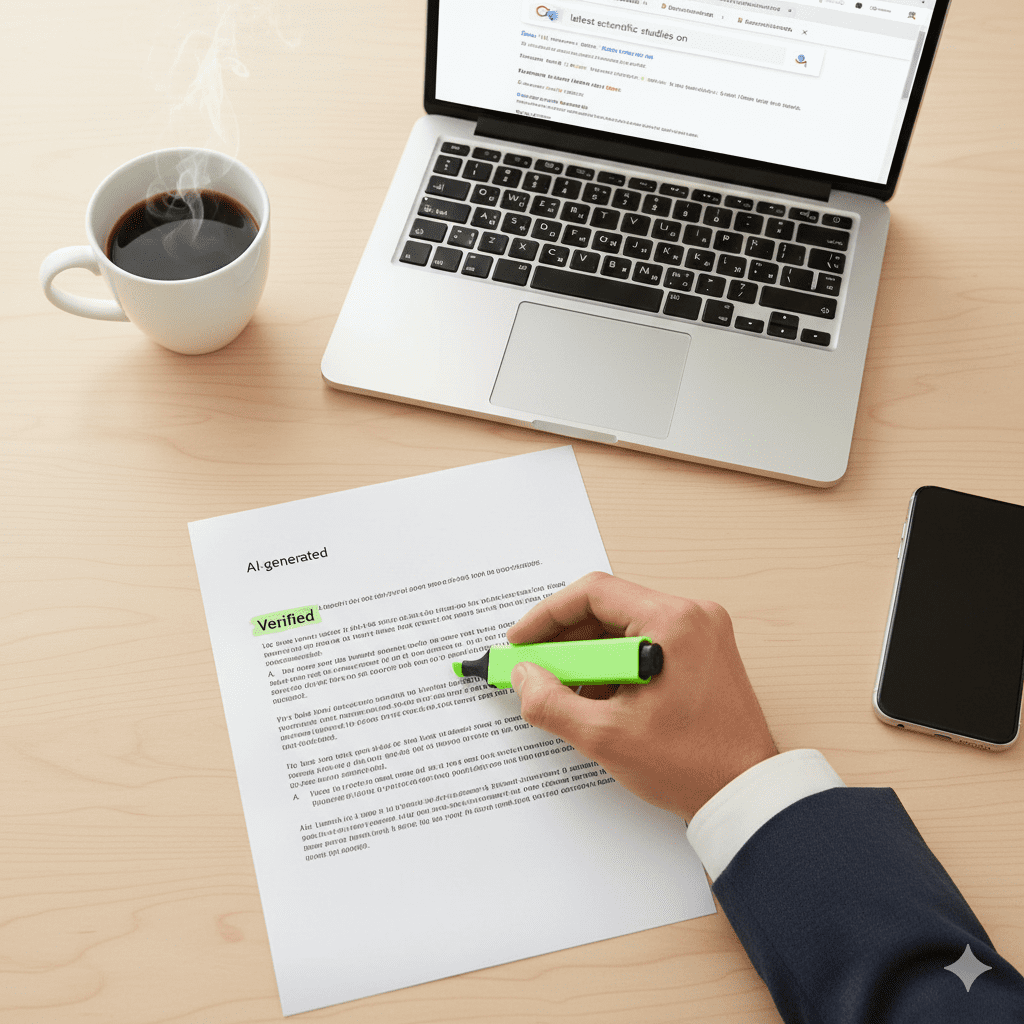
Step 1: Ask for Citations
Never accept a fact at face value. When you use ai, explicitly ask: “What is your source for this?” If the ai model cannot provide a specific link or book title, be very suspicious. A lack of evidence is a major red flag for inaccurate content.
Step 2: The Google Test
Manually search for names, dates, and statistics. I once used a generative ai to find a quote for a presentation, and it attributed it to the wrong person. A quick search saved me from looking foolish. Always run a “sanity check” on any data generated by ai tools.
Step 3: Click and Verify the Links
Don’t just trust that a link works. AI algorithms have been known to “hallucinate” URLs that look real but lead to a 404 error page. Click every link the ai output provides to ensure it actually supports the claim being made.
Step 4: Verify Timeliness
Is the information current? If you are writing about the ai landscape in 2026, ensure your tool isn’t using a content dataset from 2021. Check the dates on the sources the AI provides. Using outdated facts is just as bad as using fake ones.
Step 5: Apply the “Smell Test”
If a claim sounds too amazing or too perfect, it probably is. Generative ai often tries to please the user by giving them the exact answer they want to hear. If the ai text seems too good to be true, it likely is. Trust your gut and do the extra research.
Let’s be real: the “human element” is the only thing that makes using generative ai safe. By following these steps, you ensure that you are the one in control, not the algorithm.
Common Mistakes Beginners Make Regarding Accuracy
Even with the best intentions, it is easy to fall into traps when exploring are AI writing tools accurate. The most frequent error is assuming the computer is an unbiased encyclopedia. In reality, using artificial intelligence is more like talking to a very well-read but occasionally imaginative friend.
“The AI Said It, So It’s True”
Many people treat ai output as absolute truth. They forget that the machine is designed to be helpful, which sometimes means it prioritizes a smooth answer over an accurate one. This blind trust can lead to spreading inaccurate content that ruins your professional reputation.
Using AI for Professional Advice
Relying on a generative ai tool for legal, financial, or medical “facts” is a massive risk. These fields require precise, up-to-date scientific content that a general model might not have. One wrong date or a slightly off medical dosage can have real-world consequences.
Skipping the Final Read
Trusting the AI’s “Confidence” levels without a human eye is a recipe for disaster. You must identify ai-generated errors by reading every word. If you copy and paste without a final check, you are gambling with your brand’s reliability.
Comparison: AI Accuracy vs. Human Error
| Feature | AI Errors | Human Errors |
|---|---|---|
| Nature | Systematic and pattern-based | Typos and memory lapses |
| Logic | May "hallucinate" fake facts | Driven by personal opinions |
| Detection | Can be hard to spot ai writing | Usually obvious to a reader |
| The Winner | The Human-AI Hybrid | (Human editor checking AI speed) |
FAQ Section
How AI writing tools work to create unique content?
AI algorithms use probability to build new sentences. However, asking are AI writing tools accurate also means checking if that “unique” content is actually true.
Do these tools really “read” the internet in real-time?
Most do not. Unless you are using a tool with live search, the ai training data has a specific cutoff date.
Can AI writing tools learn my personal writing style?
Yes, many ai technologies can analyze your previous work to mimic your tone, but they still require you to verify the facts.
Is the content generated by AI plagiarism-free?
While the text is usually new, the reliability of the ideas depends on the source. Always use a detector to ensure originality.
Why do some tools sound more robotic than others?
It often comes down to the ai model and how it was trained. Some prioritize formal logic, while others try to sound more human-like.
How AI writing tools work with other apps like WordPress?
They often use APIs to send ai-generated text directly to your site, but you should always edit it in the draft stage first.
Will Google penalize me for using content created by AI?
Google prioritizes helpfulness. If your ai-generated content is false or spammy, you will be penalized for the lack of quality.
Do I need to know coding to understand how AI writing tools work?
No. AI becomes easier to use every day, but you do need ai literacy to know when the machine is making a mistake.
Can AI tools write in languages other than English?
Most generative models are multilingual, though their high accuracy is usually strongest in English.
How much does it cost to use these advanced algorithms?
Prices vary, but expect to pay $20-$40/month for professional-grade ai systems that offer better fact-checking features.
What is the accuracy of ai generated content?
Accuracy of AI generated content means how often the information is correct; it varies by model and source data and can include errors or hallucinations.
How do ai detection tools find ai generated text?
AI detection tools analyze patterns, word choice, and statistical traces left by models to detect AI generated text, but results are not perfect.
Can detectors give false positive or false negative results?
Yes, detectors can produce false positives (flagging human-written content) and false negatives (missing AI-written text), so use them with caution.
How reliable are ai content detection tools for academic integrity?
AI content detection tools help flag possible AI use for academic integrity, but they should be paired with human review to avoid errors.
What causes a high positive rate in ai-text detection?
A high positive rate can come from strict thresholds, similar writing styles, or training data bias that makes human text look AI-generated.
How do false positives and false negatives affect content decisions?
False positives can unfairly penalize creators, while false negatives let AI-generated errors slip through, impacting trust in evaluation.
Can you detect ai-generated writing created by chatgpt reliably?
Detecting writing generated by ChatGPT is possible sometimes, but new models and edits reduce detection accuracy over time.
What are best practices for evaluating the efficacy of ai content detection?
Combine multiple ai detection tools, human review, and context checks to better evaluate the efficacy of AI content detection.
Final Verdict / Conclusion
Summary: The answer to are AI writing tools accurate is: “Only as accurate as the human checking them.” In the era of generative tech, these tools are fast interns, but you remain the Editor-in-Chief.
The Golden Rule: Never publish a draft without a human eye. Advancements in ai are impressive, but they cannot replace your judgment and fact-checking skills.
Don’t let hallucinations ruin your reputation. Try our recommended research-backed tools today and start your first fact-checked draft!