
Imagine sitting at your desk with a deadline looming and a cursor blinking on a blank page. You have the ideas, but you don’t have the hours needed to turn them into a polished 1,000-word article. This is the exact moment many people reach for an ai tool to save the day.
In 2026, the conversation has shifted away from whether these machines will replace us. Instead, we are asking how to use them without losing our search engine rankings or our unique voice. The pros and cons of ai writing tools are more complex than they were just a few years ago.
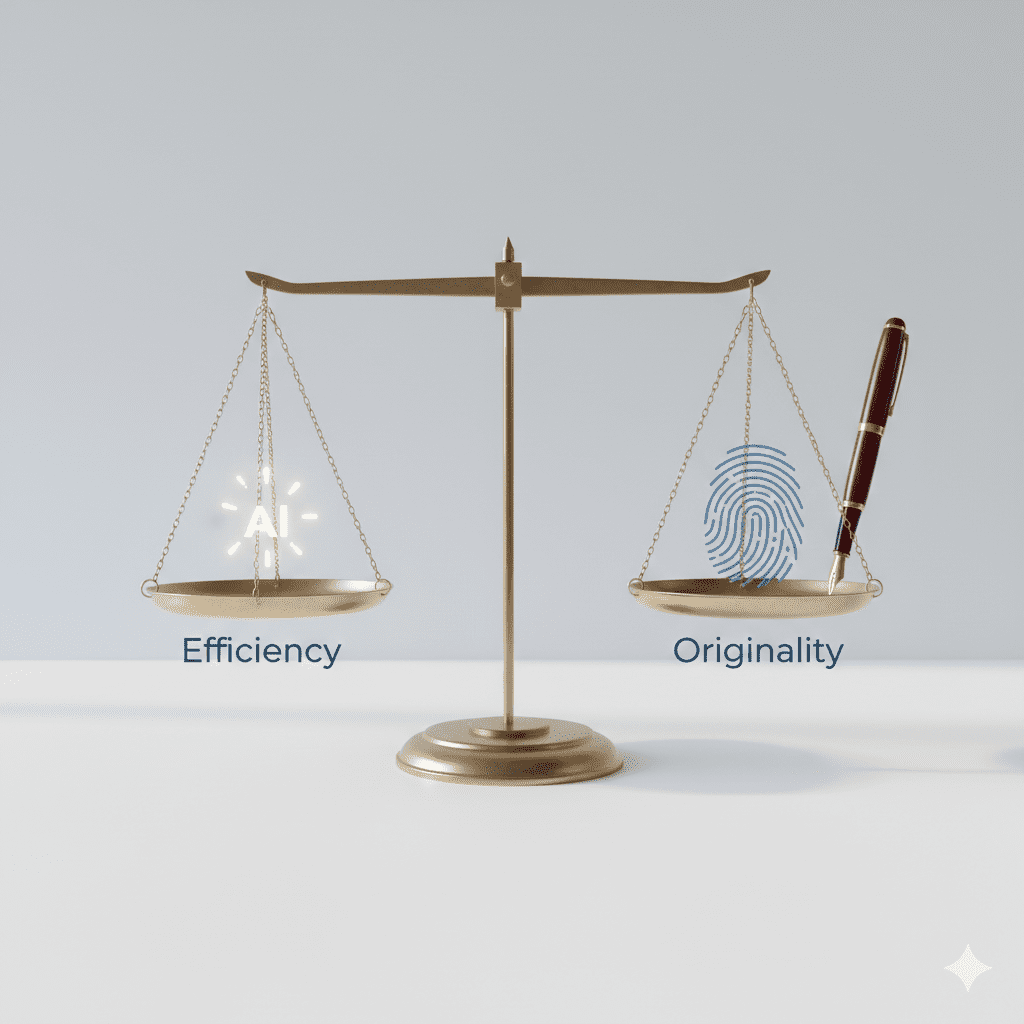
While an ai tool can generate a draft in seconds, the “human touch” is still what wins over your readers. It is the secret sauce that satisfies modern seo standards. Let’s weigh the benefits against the risks to see if these tools are right for your next project.
What Are AI Writing Tools and Why Use Them?
Before diving into the pros and cons of ai writing tools, we need to define what they actually are. Think of them as predictive assistants. They generate text based on patterns they learned from massive collections of human data.
These ai systems don’t “think,” but they are excellent at guessing which word should come next. In the current 2026 landscape, these tools have become “multimodal,” meaning they can handle text, images, and data analysis all at once. They are likely to become even more integrated into our daily work.
The Rise of Agentic AI
We are also seeing the rise of “agentic” tools. These aren’t just simple chatbots anymore. They can execute full workflows, like researching a topic, creating an outline, and then drafting the content. This level of writing assistance is why so many people are making the switch.

Busy entrepreneurs and e-commerce owners are the primary users. They use these ai tools that generate bulk product descriptions or email marketing campaigns in record time. It allows a small team to produce the same volume as a much larger agency.
Why Patterns Matter
Because these tools rely on a corpus of existing data, they are great at mimicking standard formats. If you need a formal business letter or a standard blog post, the ai tool knows the pattern perfectly. This saves you from having to figure out the format from scratch every single time.
However, this reliance on patterns is also why they sometimes struggle with original work. They are looking backward at what has already been written. Using artificial intelligence requires you to provide the creative spark while the machine handles the repetitive heavy lifting.
Why the Pros and Cons of AI Writing Tools Are Different in 2026
The year 2026 has brought a massive shift in how we view the pros and cons of ai writing tools. Just two years ago, we were impressed if a tool could write a single coherent sentence. Now, the stakes are much higher because the internet is flooded with ai-generated text.
We are seeing a major crackdown by search engines on what many call “thin” content. Google’s 2026 standards prioritize “Experience” and “Expertise” (E-E-A-T) more than ever. If your blog doesn’t include personal insights, the “Pro” of speed quickly turns into a “Con” of invisible rankings.
The Problem of Market Saturation
With 90% of marketers now using ai, generic content is no longer enough to stand out. This has created a “homogenization trap” where everyone’s brand starts to sound exactly the same. To win, you must refine the machine’s work with your own unique stories.
In 2026, models have actually evolve to be better at humor and sarcasm. However, they still fail at “deep empathy.” They can mimic the punctuation of a sad story, but they can’t truly feel a customer’s pain. This is a critical drawback to keep in mind.

Accuracy and the Legal Landscape
The legal side of generative ai has also matured. The Bartz v. Anthropic settlement in late 2025 proved that a tool’s database directly impacts its legal safety. If a tool was trained on pirated data, your business could face risks you didn’t see coming.
Furthermore, we must be aware of the “Fluency Heuristic.” This is a fancy term for how humans trust a piece of writing more just because it sounds professional. Even if the facts are inaccurate, a confident AI tone can trick you into skipping the fact-check.
Key Factors Beginners Should Consider Before Using AI
Before you decide to use ai tools, you need to look at the work involved. Many beginners think it’s a “set it and forget it” solution. In reality, the pros and cons of ai writing tools often balance each other out through the time spent editing.
Ease of Use vs. Prompt Skills
While the dashboard of a modern tool is simple, getting a good draft requires skill. You need to learn “Prompt Engineering” to give the right instructions. If your prompt is vague, the machine will give you a generic, boring result that lacks originality.
There is also a hidden cost: the time it takes to revise. A “fast” draft often requires a “deep” human review to ensure it doesn’t contain a bias. You might save an hour on writing, but you could spend 40 minutes checking for grammatical errors and facts.
Safety and Content Detection
Finally, you must consider academic integrity and plagiarism. Most 2026 tools have built-in checkers, but they aren’t perfect. You also have to deal with ai detectors. While their reliability is still debated, being flagged can hurt your brand’s authoritative standing.
Always check if the tool provides a clear citation for the facts it claims. If it can’t tell you where it got the information, it is likely guessing. Balancing these factors is the only way to successfully use generative ai in a professional setting.
The Major Pros of AI Writing Tools
The primary reason to explore the pros and cons of ai writing tools is the massive jump in productivity. For a small business or a solo creator, time is the most valuable resource. Using a writing assistant allows you to do more with less, turning a stressful workweek into a manageable afternoon.
In 2026, data shows that users experience a 40% speed increase on average. This means saving about 2.2 hours per week just on drafting. Instead of spending your morning staring at a blank screen, you can generate a solid first draft in minutes.
Curing “Blank Page Syndrome”
We have all been there stuck on the first sentence for an hour. One of the greatest benefits of ai is its ability to break that creative block. You can ask the tool to generate ten different outline options for a single topic.
By seeing these different angles, your writing process becomes much smoother. You aren’t starting from zero; you are starting from a foundation. It is much easier to refine an existing idea than it is to pull one out of thin air when you are tired.
Significant Cost Savings
Hiring a high-end freelancer for every small task is expensive. While you still need humans for deep strategy, an ai tool can handle the repetitive “grunt work.” This includes things like SEO meta tags, product blurbs, or basic social media captions.
The monthly cost of a generative ai subscription is often less than a single freelancer’s hourly rate. This allows you to reallocate your budget toward higher-level growth. It reduces the reliance on entry-level help for writing assignments that follow a strict pattern.
Infinite Scalability and Reach
Finally, there is the power of scale. With artificial intelligence, you can turn one blog post into an email sequence, five tweets, and a LinkedIn guide. This allows you to produce up to 5x more content without increasing your workload.
Many tools also offer incredible multilingual support. You can generate text in one language and have it accurately adapted for another market. This level of writing assistance helps your business reach a global audience without the cost of a full translation team.
The Major Cons of AI Writing Tools
While the efficiency is impressive, we cannot ignore the risks. When weighing the pros and cons of ai writing tools, you must be aware of the “truth gap.” Even in 2026, ai systems are not perfect and can lead you toward a major drawback if you aren’t careful.
The biggest danger is the “Hallucination” Risk. Current stats show that some top models still have a 15% error rate in factual analysis. This means the tool might confidently invent a citation or a statistic that doesn’t exist. You can’t trust the ai-generated facts without checking them yourself.
Lack of “Soul” and Personal Storytelling
An ai tool cannot “experience” a product. It doesn’t know what it’s like to feel a customer’s frustration or the joy of a success story. This lack of originality is a major hurdle. If your content lacks a human pulse, your readers will notice.
Furthermore, there is the Data Privacy concern. Many businesses worry that their private secrets are being used to train the next public large language model. If you don’t use the tool ethically, you might accidentally leak sensitive info into the public database.
The Homogenization Trap
If every marketer uses the same ai tool with the same settings, everyone starts to sound the same. This leads to “boring” content that lacks a unique voice. To avoid this, you must refine the work so it doesn’t just sound like every other ai-generated text on the web.
Top AI Writing Tools Comparison (2026 Picks)
Choosing the right writing assistant depends on your specific needs. Each platform has its own set of pros and cons of ai writing tools based on how their language models were trained.
1. ChatGPT (The Versatile Generalist)
ChatGPT is the world’s most famous chatbot for a reason. It is incredibly flexible and great for brainstorming initial ideas or creating a quick outline.
- Pros: Best for creative ideas; massive 2026 plugin ecosystem.
- Cons: Can sound generic; lacks “Brand Voice” guardrails.
2. Jasper (The Enterprise Marketer)
If you run a business, Jasper is a top choice. It is a specialized ai tool built specifically for marketing. It uses a “Brand Voice” memory to ensure the ai content matches your company’s specific tone.
- Pros: Professional memory; high-level SEO integrations.
- Cons: Most expensive tier; steep learning curve for beginners.
3. Claude (The Natural Communicator)
In 2026, Claude is widely considered the most “human-sounding” AI. Its neural network is trained to be helpful and honest, which often results in a better piece of writing than other models.
- Pros: Excellent long-form flow; fewer hallucinations than rivals.
- Cons: Smaller template library than Jasper.
Comparison Table: Pros and Cons of AI Writing Tools at a Glance
When you look at the pros and cons of ai writing tools, it helps to see how they stack up against a human writer. While the ai tool wins on speed and cost, the human still leads in reliability and deep experience.
| Feature | Human Writer | AI Writing Tool |
|---|---|---|
| Speed | Slow (Hours/Days) | Instant (Seconds) |
| Experience | High (First-hand) | Low (Pattern-based) |
| Accuracy | High (Reliable) | Variable (Requires checking) |
| Cost | High ($100+) | Low ($0 - $50/mo) |
| SEO Compliance | Manual | Automated |
Step-by-Step Guide: How to Safely Choose Your Tool
If you want to use ai tools without hurting your brand, you need a plan. Follow these steps to find a writing assistant that fits your specific writing process.
Step 1: Define Your Output
Are you making short-form ads or 3,000-word guides? Some ai tools may be great for captions but struggle with longer texts. Know your goal first to avoid a major drawback.
Step 2: Test “Logic” via Free Trials
Don’t just look at the format. Use a free trial to see how the tool handles a complex assignment. If it makes too many grammatical errors, it’s not the right fit for you.
Step 3: Evaluate “Context Memory”
Check if the tool can remember your brand’s specific tone. A good ai technology should be able to keep a consistent voice throughout a long piece of writing.
Common Mistakes Beginners Avoid

One of the biggest pros and cons of ai writing tools is that they are easy to use which makes them easy to misuse. To keep your academic integrity and professional trust, avoid these traps.
- “Publishing Raw”: This is the #1 way to get flagged by search engines in 2026. Always revise the content.
- Blindly Trusting Facts: Never use AI for “Your Money, Your Life” topics without a human expert to refine the data.
- Losing the “Who”: Failing to disclose when you use generative ai can hurt user trust. Being honest is a 2026 best practice.
FAQ Section: Pros and Cons of AI Writing Tools
What are the biggest pros and cons of AI writing tools for small businesses?
The pros are significant cost savings and speed, while the cons include the risk of inaccurate facts and a lack of a unique, human voice.
Will using AI tools hurt my website’s Google ranking in 2026?
Only if you post “thin” or false content. Google rewards originality and helpfulness, regardless of whether you used a writing assistant.
Can AI writing tools generate 100% original content?
Technically, they generate new word combinations, but they rely on a database of existing ideas. They lack true first-hand experience.
How do I avoid “hallucinations” when using AI?
Always ask for a citation and manually verify any names, dates, or numbers. Don’t let the ai tool guess on important facts.
Is AI content considered plagiarism?
Usually not, as the text is unique. However, if the tool mimics a source too closely, it could raise plagiarism concerns. Always use a checker.
Which is the best AI tool for long-form blogs?
In 2026, Claude is often preferred for flow, while Jasper is better for SEO-heavy business blogs.
Can AI replace a professional human writer?
Not entirely. AI is a replacement for repetitive tasks, but it cannot replace human critical thinking or emotional depth.
Do I need to learn “prompting” to use these tools?
Yes. Improving your literacy in prompt engineering will help you get much better ai-generated results.
Are AI tools safe for private business data?
Only if you use enterprise versions with privacy protections. Public chatbots often use your data to train their models.
How much should I spend on an AI writing tool?
Most professional tools start between $20/mo and $50/mo. Start with a free plan to see if it adds value to your work.
What are the main benefits and drawbacks of ai writing?
AI writing can speed up drafting and help find key points, but it may produce errors or shallow content that needs review.
How can the use of ai tools help students in academic life?
Tools such as ChatGPT can help students brainstorm and outline research papers, yet students might still need to check facts and add original analysis.
Are there ethical use of ai rules for academia and research papers?
Yes, ethical use of AI means citing ai-generated content and avoiding plagiarism when you copy and paste or present generated text as your own.
Can I use ai in writing to improve your writing skills or should I avoid it?
Use of AI can teach grammar, structure, and identify patterns in good writing, but overreliance can block development of skillful personal voice.
How do tools like grammar checkers and generative ai differ?
Grammar checkers fix sentences or paragraphs and typos, while generative AI can generate content and offer new drafts from the information to generate ideas.
Will teachers and software detect ai-generated content?
Some tools can detect AI-generated content, and instructors or writing center staff may spot patterns that suggest the text was generated by AI.
What are pros and cons of using ai tools for drafting essays or research papers?
Pros include faster outlines and clearer key points; cons include risk of errors, weak sources, and less original thought.
How should students use ai writing tools responsibly with help from the writing center?
Use AI as a writing assistant to draft and edit, then visit the writing center to learn to revise and ensure proper citation and ethical use of AI.
Final Verdict / Conclusion
Summary: The pros and cons of ai writing tools show a clear trade-off. The pros of speed and low cost are undeniable, but the cons of bias and genericism require a “Human + AI” strategy.
Final Advice: Use AI as your “intern” to do the research and draft work, but remain the “Editor-in-Chief.” Your original work depends on your final touch.
Don’t let the ‘Cons’ scare you leverage the ‘Pros’ today. Try our top-rated tool for free and write your first 500 words in 5 minutes!