

AI writing tools for agencies are software tools powered by AI technology that help teams generate, edit, and scale content more efficiently. Instead of relying only on manual writing, agencies can use an AI writing tool to handle repetitive writing tasks and speed up the content creation process.
Here’s what I noticed.
Most agencies don’t struggle with getting clients. They struggle with delivering consistent content at scale. That’s exactly where AI writing tools for agencies start to make a real difference.
Quick Picks: Best AI Writing Tools for Agencies in 2026
If you’re running an agency, you probably don’t want to test dozens of tools.
So here’s a quick breakdown of what actually works based on different needs.
Top picks:
Best Overall: Jasper
Best for: Agencies scaling high-quality content across teams
Best for SEO Agencies: Scalenut
Best for: Agencies focused on SEO content and ranking performance
Best Budget Option: Writesonic
Best for: Agencies needing affordable and fast content generation
Best for Workflow Automation: Copy.ai
Best for: Agencies managing campaigns, emails, and structured workflows
Now this is where people get confused.
They assume one AI tool can handle everything. But in most cases, agencies use multiple tools together depending on the workflow.
Why Agencies Use AI Writing Tools to Scale Content
Scaling content isn’t just about writing faster.
It’s about managing multiple clients, maintaining quality, and keeping deadlines consistent. That’s not easy with manual writing alone.
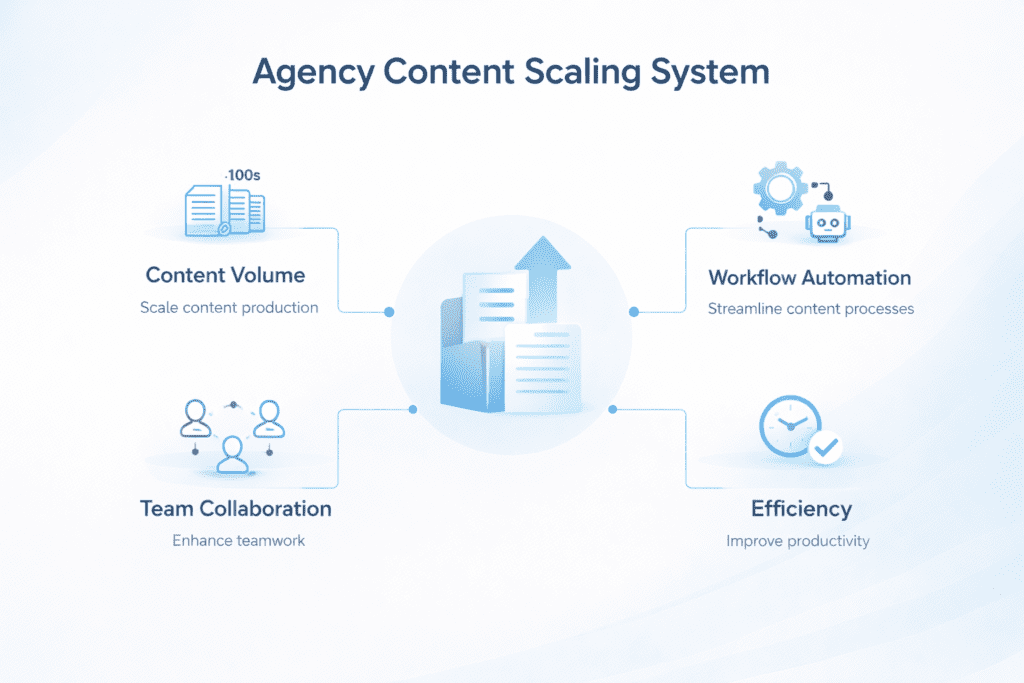
Why agencies use AI tools:
• Content volume: Helps generate large amounts of content
• Efficiency: Reduces time spent on repetitive writing tasks
• Workflow support: Fits into agency processes
• Team collaboration: Supports multiple users
For example, an agency managing 15 clients might need to produce dozens of blog posts, emails, and social media posts every week.
Doing that manually can slow things down.
Using an AI writing tool changes the writing process. It allows teams to generate drafts quickly, then refine them before publishing.
What You’ll Learn from This Guide
This guide is designed to help you find the best AI writing tools for agencies based on real use cases.
Instead of just listing features, we’ll look at how these tools actually perform when used in agency workflows.
What this guide covers:
• Tool comparison: Side by side look at top AI writing software
• Real workflows: How agencies use AI tools in practice
• Scaling strategies: How to manage content production
• Tool selection: How to choose the right AI writing tool
That said, not every tool will fit your agency.
Some are better for SEO, some for marketing teams, and others for quick content generation. The goal here is to help you choose based on your actual needs.
Comparison Table of AI Writing Tools for Agencies
Before choosing an AI writing tool, it helps to see how different options compare side by side.
Because honestly, most agencies don’t pick a tool based on features alone. They look at pricing, workflow fit, and how well the tool supports their content creation process.
| Tool | Free Plan | Paid Pricing | Best For | Key Feature |
|---|---|---|---|---|
| Jasper AI | No | $69/month | Agencies | AI writing assistant |
| Scalenut | No | $39/month | SEO agencies | Optimization tools |
| Writesonic | Yes | $16/month | Content teams | AI content generator |
| Copy.AI | Yes | $49/month | Marketing agencies | Workflow automation |
| ChatGPT | Yes | $20/month | General use | AI text generator |
| Anyword | No | $39/month | Ads | Predictive AI writing |
| Notion AI | Yes | $10/month | Workflow | Documentation |
| Rytr | Yes | $9/month | Small agencies | AI writer |
| Frase | No | $14/month | SEO content | Content optimization |
| Surfer AI | No | $89/month | SEO agencies | AI + SEO integration |
From my research, pricing often reflects specialization.
For example, Surfer AI costs more because it combines seo tools with content optimization. On the other hand, Rytr keeps pricing low by focusing on simple content generation.
What Are AI Writing Tools for Agencies and Why They Matter
AI writing tools for agencies are designed to support content creation at scale.
Let’s keep it simple.
These tools use an AI model to generate content based on prompts. Instead of writing everything manually, teams can use AI writing software to speed up the writing process.
Core functions:
• Content generation: Helps create blog posts, emails, and marketing copy
• Writing assistance: Supports editing and improving drafts
• Workflow integration: Fits into agency processes
• Scalability: Enables content production at scale
Here’s the thing.
An AI tool doesn’t replace human input. It supports it.
Most agencies use AI writing tools to generate drafts, then refine them before publishing. That balance usually leads to better results.
How AI Writing Tools Help Agencies Scale Content Production
Scaling content is one of the biggest challenges agencies face.
Because as the number of clients grows, the workload increases quickly.
This is where AI tools start to play a bigger role.
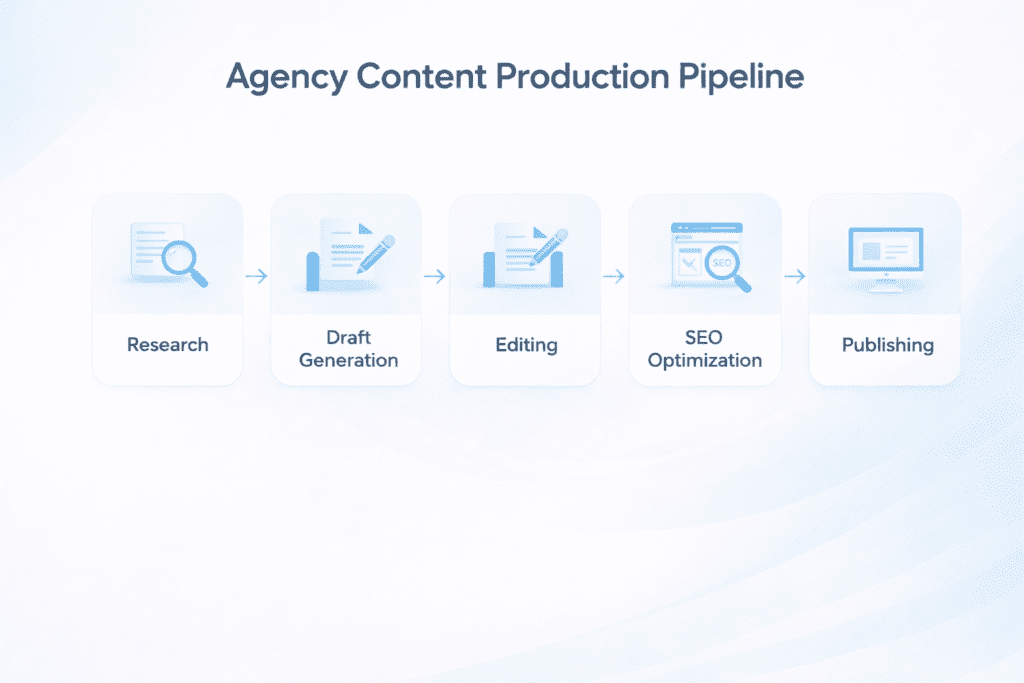
How AI helps agencies scale:
• Speed: Helps generate content quickly
• Consistency: Maintains structure across content
• Efficiency: Reduces manual workload
• Output volume: Supports multiple clients
Now this is where people get confused.
They think AI automatically solves scaling problems. But in most cases, it only works if you combine it with a proper workflow.
For example, some agencies use tools like ChatGPT for idea generation, Jasper for structured content, and Surfer AI for optimization.
That combination often works better than relying on a single AI writing tool.
10 Best AI Writing Tools for Agencies
Now let’s get into the tools.
This list focuses on AI writing tools for agencies that actually fit real workflows, not just feature lists.
Jasper AI
Jasper is one of the best AI writing tool options for agencies that need structured content at scale.

It’s designed for marketing teams and supports long-form content, which makes it useful for blogs, campaigns, and content marketing.
Key features:
• Long-form content: Helps generate detailed articles
• Team collaboration: Supports multiple users
• Brand voice control: Maintains consistency
Pricing:
• Paid plans: Starts at $69/month
Pros and cons:
• Pros: High-quality output
• Cons: Higher cost
This tool is often used by larger agencies that need consistent content across multiple clients.
Scalenut
Scalenut is focused on SEO-driven content creation.
If your agency is heavily focused on search traffic, this is where it becomes useful.
Key features:
• SEO tools: Helps with optimization
• Content planning: Supports structured outlines
• AI writing assistant: Generates content
Pricing:
• Paid plans: Starts around $39/month
Pros and cons:
• Pros: Strong for SEO content
• Cons: Slight learning curve
Here’s what I noticed.
Agencies that prioritize SEO often prefer tools like this over general AI writing tools.
Writesonic
Writesonic is a more affordable AI writing tool that works well for agencies handling multiple small clients.
It’s flexible and supports different types of content.
Key features:
• AI content generator: Creates multiple formats
• Templates: Speeds up writing tasks
• Chat-based writing: Interactive content generation
Pricing:
• Free plan: Available
• Paid plan: Starts at $16/month
Pros and cons:
• Pros: Budget-friendly
• Cons: Requires editing
For agencies that need to balance cost and output, this tool can be a practical option.
Copy.AI
Copy.AI is built for agencies that want structured workflows and automation.
Instead of just generating text, it helps marketing teams manage campaigns, create marketing copy, and streamline content creation.
Key features:
• Workflow automation: Helps manage multi step content processes
• Templates: Supports ads, emails, and social media posts
• AI writing assistant: Improves speed and structure
Pricing:
• Free plan: Available
• Paid plan: Starts at $49/month
Pros and cons:
• Pros: Strong workflow support for marketing teams
• Cons: Limited SEO depth compared to tools like Surfer
From my research, tools like Copy.AI are often used alongside others instead of being a single solution.
ChatGPT
ChatGPT is one of the most flexible AI writing tools for agencies.
It works differently from structured tools. Instead of templates, it relies on prompts, which gives you more control.
Key features:
• AI text generation: Handles multiple writing tasks
• Prompt based workflow: Flexible output control
• Multi use: Blogs, emails, social media posts
Pricing:
• Free version: Available
• Paid plan: Around $20/month
Pros and cons:
• Pros: Versatile and adaptable
• Cons: Depends heavily on prompt quality
Here’s what I noticed.
Agencies often use ChatGPT for brainstorming and first drafts, then move to other tools for refinement.
Anyword
Anyword is designed for agencies focused on performance and conversions.
Unlike general tools, it emphasizes data driven content.
Key features:
• Predictive scoring: Estimates content performance
• AI writing tool: Generates marketing focused content
• Ad optimization: Helps improve ad copy
Pricing:
• Paid plans: Starts around $39/month
Pros and cons:
• Pros: Strong for conversion focused campaigns
• Cons: Limited for long form content
According to industry comparisons, tools like Anyword are built specifically for marketers who want measurable results from content.
Notion AI
Notion AI is different from most tools on this list.
It focuses more on workflow and documentation rather than pure content generation.
Key features:
• Writing assistance: Helps improve internal content
• Collaboration: Supports team workflows
• Documentation: Useful for managing projects
Pricing:
• Free version: Available
• Paid add on: Around $10/month
Pros and cons:
• Pros: Strong for internal workflows
• Cons: Limited as a full AI writing tool
This is usually used alongside other AI writing software rather than as a primary content generator.
Rytr
Rytr is one of the most affordable AI writing tools for agencies.
It focuses on simplicity and speed, which makes it useful for smaller teams.
Key features:
• AI content generator: Produces short form and simple content
• Tone options: Adjusts writing style
• Templates: Supports common writing tasks
Pricing:
• Free plan: Available
• Paid plan: Starts at $9/month
Pros and cons:
• Pros: Budget friendly and easy to use
• Cons: Limited depth for complex content
Rytr is often recommended for quick content generation, especially for copywriting tasks.
Frase
Frase is designed for agencies that focus on research driven content.
It combines content research with an AI writing tool, which helps teams build better structured articles.
Key features:
• SEO tools: Helps analyze top ranking content
• Content briefs: Organizes structure before writing
• AI writing assistant: Supports content generation
Pricing:
• Paid plans: Starts at $14/month
Pros and cons:
• Pros: Strong for research and planning
• Cons: Takes time to learn
From my research, agencies that focus on SEO content often use tools like Frase alongside other AI tools.
Surfer AI
Surfer AI is built for agencies that prioritize SEO performance.
Instead of just generating content, it helps optimize it based on data.
Key features:
• SEO integration: Combines writing with optimization
• AI content generation: Produces structured content
• Optimization tools: Guides keyword usage
Pricing:
• Paid plans: Starts at $89/month
Pros and cons:
• Pros: Strong SEO performance
• Cons: Higher cost
For agencies focused on ranking content, this is often one of the best AI writing tool options available.
Real Examples of AI Writing Tools in Agency Workflows
Understanding tools is one thing.
Seeing how they are actually used is different.
For example, an agency managing 10 to 20 clients might use multiple AI tools together instead of relying on a single AI platform.
The workflow often looks like this.
Typical workflow:
• Research stage: Using ChatGPT or Frase to gather ideas
• Content creation: Using Jasper or Writesonic to generate drafts
• Optimization: Using Surfer AI for SEO improvements
• Final editing: Using tools like Notion AI for refinement
Here’s what I noticed.
Agencies rarely depend on just one AI writing tool. They combine tools to improve efficiency and output quality.
Best AI Writing Tools for Agencies by Use Case
Different agencies have different priorities.
So instead of picking one tool, it helps to match tools with specific use cases.
Best tools by use case:
• SEO agencies: Scalenut or Surfer AI
• Content scaling: Jasper AI
• Budget agencies: Writesonic or Rytr
• Marketing workflows: Copy.AI
That said, this usually works, but not always.
Some agencies mix tools depending on the project type.
Before vs After Using AI Writing Tools in Agencies
The impact of AI becomes clearer when you compare workflows.
Without AI, most agencies rely heavily on manual writing. That slows down production and limits how much content can be delivered.
With AI writing tools for agencies, the process changes.
Before using AI:
• Manual writing: Slower content creation
• Limited output: Fewer projects handled
• Higher workload: More pressure on writers
After using AI:
• Faster content creation: Generate drafts quickly
• Higher efficiency: Handle more clients
• Improved workflow: Better content management
For example, some agencies report reducing workload by nearly half after integrating AI into their content creation process.
Step by Step Workflow for Using AI Writing Tools in Agencies
Using AI writing tools for agencies without a clear process can lead to inconsistent results.
So let’s keep this practical.
Most agencies follow a structured workflow to manage content efficiently across multiple clients.
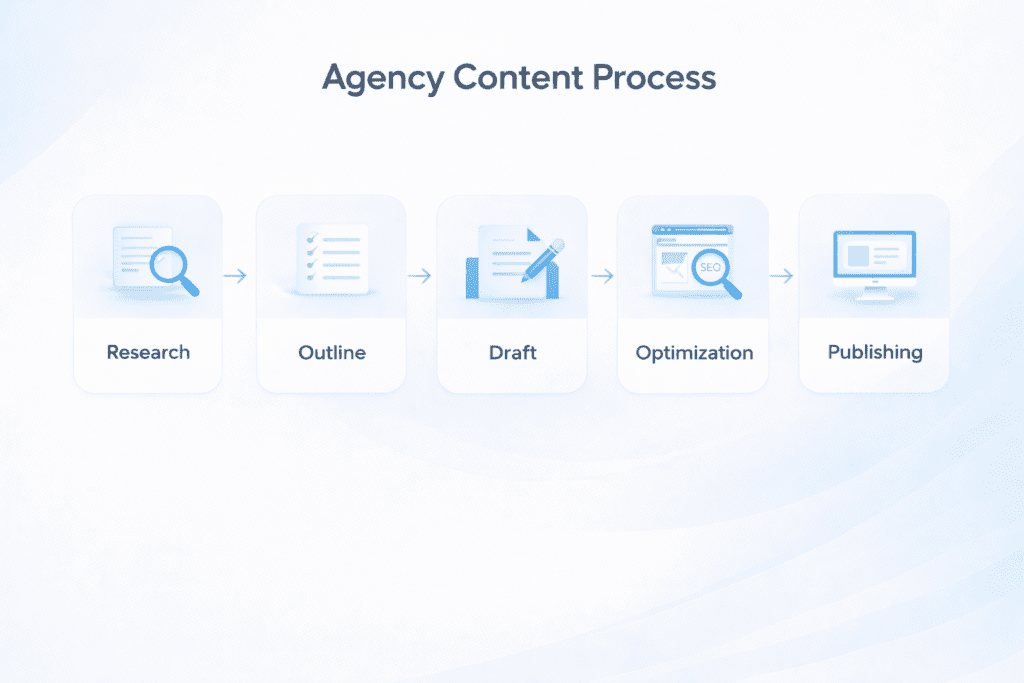
Step by step workflow:
• Research stage: Use an AI tool to gather ideas and topics
• Outline creation: Build a clear structure before writing
• Content generation: Generate drafts using an AI writing tool
• SEO optimization: Improve structure and keyword placement
• Publishing: Finalize and deliver content
Here’s the thing.
The tools don’t replace the process. They support it. Without a clear workflow, even the best AI writing software won’t give consistent results.
Do AI Writing Tools Actually Save Money for Agencies
This is one of the most common questions.
Do AI tools actually reduce costs?
In most cases, yes. But it depends on how they’re used.
Cost factors:
• Tool cost: Monthly subscription fees
• Time savings: Faster content creation
• Output volume: Ability to handle more clients
• Profit margins: Increased efficiency
For example, an agency charging $100 per article might reduce production cost to around $20 using AI tools.
That difference adds up quickly.
But there are exceptions.
If the workflow is not optimized, the savings may not be as high as expected.
How Agencies Use AI Writing Tools in Real Workflows
AI writing tools for agencies are rarely used in isolation.
Instead, different team members use different tools at different stages.
Role based usage:
• Writer: Uses ChatGPT or Jasper to generate drafts
• Editor: Uses Surfer AI for optimization
• Manager: Uses Notion AI to manage workflow
Here’s what I noticed.
This kind of setup makes the entire content creation process more efficient because each tool is used for a specific purpose.
Best AI Tool Stack for Agencies to Scale Content
Instead of relying on one tool, many agencies build a stack.
This allows them to combine strengths and cover different parts of the workflow.
Common tool stacks:
• Content stack: ChatGPT + Jasper + Surfer AI
• Budget stack: Writesonic + Scalenut + Notion AI
This approach helps agencies scale content while maintaining quality.
How Different Agencies Use AI Writing Tools
Not every agency uses AI in the same way.
It depends on the type of services they offer.
Agency types:
• SEO agencies: Focus on optimization and ranking content
• Content agencies: Focus on blog and article production
• Social media agencies: Focus on short form content
• Ad agencies: Focus on marketing copy
For example, an SEO agency might rely more on tools like Scalenut, while an ad agency might prefer tools like Anyword.
How to Scale Content Production Using AI Tools
Scaling content is not just about speed.
It’s about managing multiple projects without losing quality.
Scaling strategies:
• Batch creation: Generate multiple pieces at once
• Automation workflows: Use structured processes
• Client management: Handle multiple accounts efficiently
From my research, agencies that combine AI tools with clear workflows scale more effectively than those that rely on tools alone.
How Agencies Maintain Content Quality with AI
One common concern is quality.
Because while AI helps generate content quickly, quality still matters.
Quality control methods:
• Editing process: Review and refine drafts
• Fact checking: Verify information
• Brand voice: Maintain consistent tone
Here’s the thing.
AI can generate content, but humans still shape the final output.
How to Choose the Best AI Writing Tools for Agencies
Choosing the right AI writing tool depends on your agency’s needs.
Not every tool will fit your workflow.
What to consider:
• Client type: Different clients require different content
• Content volume: Higher volume needs scalable tools
• Features: Choose tools that match your workflow
Performance factors:
• Output quality: How good the content is
• Workflow efficiency: How well it fits your process
• Team collaboration: Support for multiple users
That said, choosing the right AI tool is more about fit than features.
Accuracy and Limitations of AI Writing Tools
AI writing tools are useful, but they have limitations.
Understanding these helps avoid mistakes.
Limitations:
• AI hallucinations: Can generate incorrect data
• Prompt dependency: Output depends on input quality
• Editing required: Needs human review
For example, AI might generate statistics that sound correct but are inaccurate. That’s why fact checking is important.
Who Should Not Use AI Writing Tools
AI is not for everyone.
In some cases, it may not be the right choice.
Not suitable for:
• Manual only workflows: Teams avoiding AI completely
• No editing process: Users expecting perfect output
• Highly sensitive content: Requires full accuracy
Common Mistakes Agencies Make When Using AI Writing Tools
Even good tools can lead to poor results if used incorrectly.
Common mistakes:
• Over reliance: Depending fully on AI
• Weak workflows: No structured process
• Ignoring SEO: Missing optimization
• Poor prompts: Low quality input
Here’s what I noticed.
Most problems are not caused by the tools, but by how they are used.
What Most AI Writing Tools for Agencies Lists Miss
Most lists focus only on tools.
But they miss something important.
What they overlook:
• Workflow matters more than tools
• Combining tools improves results
• Scaling challenges are real
• Prompt quality impacts output
That’s why understanding usage is just as important as choosing tools.
FAQs About AI Writing Tools for Agencies
What are AI writing tools for agencies and how do they help?
AI writing tools for agencies help create and edit content fast, letting teams scale marketing efforts and use these tools to improve client work.
Can an AI assistant or AI agent replace a human copywriter?
Not fully, an AI assistant speeds drafting and idea generation, but humans still add strategy, voice, and final edits.
Are there free trial or free tier options for many AI writing tools?
Yes, dozens of AI writing tools offer a free trial or free tier so agencies can test AI features before buying.
Which AI marketing tool is best for creative writing and content marketing?
Different AI tools excel at different tasks; look for one that supports creative writing, AI marketing workflows, and integrates with your stack.
Do AI writing tools produce AI generated content that passes detection tools?
Some AI generated content can be flagged by AI detectors, so edit outputs and run AI detection tools if you need to avoid detection.
How can agencies leverage generative AI tools to boost productivity?
Use generative AI to draft copy, create variants, and speed research so your team can focus on strategy and polishing content.
Are there AI website builder features in these platforms too?
Yes, many AI platforms include AI website builder features or integrations to help agencies build pages quickly with AI content.
What about academic writing or strict compliance – can AI help you choose the best output?
AI can help draft academic writing, but you should verify citations and use detection tools to ensure originality and compliance.
How do AI copywriting tools fit into an AI marketing agency workflow?
AI copywriting tools generate drafts, headlines, and A/B variants that marketing teams can test and refine fast.
Are tools like Jasper for marketing teams still popular compared to new tools?
Yes, Jasper and other popular AI platforms remain common, but new tools on the market keep adding features and free trials.
Can every AI writing tool improve your SEO and content strategy?
Many AI writing tools include SEO suggestions and AI search features, but you still need human oversight to match intent and quality.
How do I pick between dozens of AI writing tools and different AI models?
Compare AI features, pricing, free tier options, and run a free trial to see which tools fit your agency’s workflow and goals.

Final Verdict: Best AI Writing Tools for Agencies
So what does this mean for you?
Choosing the right AI writing tools for agencies depends on your workflow, team size, and content needs.
Here’s a simple way to think about it.
If you want scalability, tools like Jasper work well. If you focus on SEO, tools like Scalenut or Surfer AI are more suitable. If budget matters, Writesonic or Rytr can be practical options.
Bottom line?
There’s no single best AI writing tool for every agency.
The best approach is to combine tools, build a workflow, and use AI to support your content creation process instead of replacing it.