

Grant funding is more competitive than ever, and many nonprofits and grant professionals struggle to keep up with the growing demand for high quality proposals. That’s where AI Grant Writing Tools are starting to change how people approach grant writing.
Here’s the thing. Instead of spending days drafting every grant proposal manually, you can now use AI to speed up the grant writing process, improve structure, and uncover better funding opportunities. That’s why more organizations are turning to AI Grant Writing Tools to streamline their workflow and improve their chances of success.
Quick Picks: Best AI Grant Writing Tools (2026)
If you don’t want to explore every tool in detail, here are the top options based on real use cases.
Quick Recommendation: AI Grant Writing Tools Snapshot (2026)
Best Overall: Grantable
Best for: Nonprofits and grant professionals managing full proposal workflows
Best Budget Option: Rytr
Best for: Small nonprofits and beginners needing simple grant writing support
Best for Research and Workflow: Instrumentl
Best for: Organizations focused on finding funding opportunities and tracking applications
Best for Nonprofits: GrantHub
Best for: Teams managing multiple grants, deadlines, and proposal workflows
Now this is where people get confused. The best tool depends on what part of grant writing you struggle with.
For example, if you already have a grant writer but need help finding grant opportunities, a research platform like Instrumentl makes more sense than a writing tool.
Comparison Table of the Best AI Grant Writing Tools
Here’s a clear comparison with separate pricing columns.
| Tool | Free Plan | Paid Pricing | Best For | Key Feature |
|---|---|---|---|---|
| Grantable | No | Custom pricing | AI grant writing workflow | AI-powered grant proposal drafting |
| Instrumentl | No | $99/month | Grant research | Grant opportunities tracking |
| Rytr | Yes | $9/month | Budget writing tool | AI writing assistant |
| ChatGPT | Yes | $20/month | Flexible writing | AI proposal generation |
| GrantHub | No | $75/month | Workflow management | Proposal tracking |
| Foundant Grant Lifecycle Manager | No | Custom pricing | Nonprofits | End to end grant workflow |
| Jasper AI | No | $69/month | Proposal writing | AI-powered writing tool |
| Copy.ai | Yes | $49/month | Quick drafting | AI workflows |
| GrantStation | No | $99/year | Grant database | Funding opportunities database |
| Sudowrite | No | $10/month | Creative writing | AI-powered writing tool |
From my research, tools like Grantable focus heavily on writing and workflow, while platforms like Instrumentl and GrantStation focus more on grant research and funding discovery.
That said, many organizations use a combination of both instead of relying on a single tool.
What Are AI Grant Writing Tools and How They Work
AI Grant Writing Tools are platforms that help nonprofits, grant professionals, and freelance grant writer roles improve how they write grants, find funding, and manage the grant application process.
Let’s keep it simple. These tools use artificial intelligence to assist with drafting proposals, organizing workflow, and identifying relevant grant opportunities.
What Are AI Grant Writing Tools
These tools are designed to support different parts of grant writing.
• Proposal drafting: Helps create grant proposal drafts
• Research support: Identifies grant opportunities
• Workflow management: Organizes grant application process
• Optimization: Improves proposal quality
In most cases, these tools act as a writing tool that helps you write grants faster while keeping your proposal structured.
How AI Grant Writing Tools Work in Real Scenarios
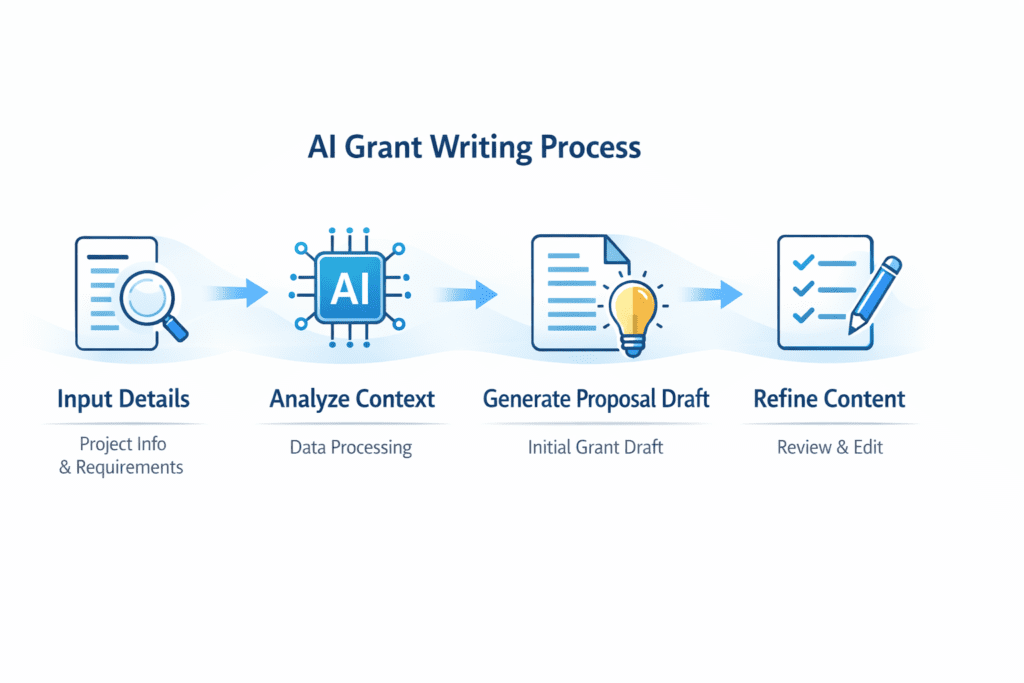
Most AI Grant Writing Tools follow a similar process, but how you use them makes a real difference.
Let’s keep it simple. You provide a prompt, add details about your nonprofit or project, and the tool helps draft a proposal or support your grant research.
Here’s how the process typically works.
• Input details: Add project goals, impact, and funding needs
• Analyze context: AI models process your information
• Generate draft: Create a grant proposal draft
• Refine content: Adjust language and structure
Now this is where people get confused. AI can generate a proposal quickly, but it doesn’t fully understand your mission unless you guide it properly.
From my research, users who refine the output get better results than those who rely only on generated content.
Why AI Grant Writing Matters
Grant writing takes time, especially when you are applying to multiple funders.
That’s where AI helps.
• Speed: Reduces writing time
• Efficiency: Makes writing more efficient
• Consistency: Keeps proposal structure clear
• Access: Improves access to grant funding
Here’s what I noticed. Small nonprofits often struggle with limited resources, and using AI can help them handle more applications without increasing workload.
Who Should Use AI Grant Writing Tools
These tools are useful for different types of users.
• Nonprofits: Managing multiple grant applications
• Grant professionals: Handling complex proposals
• Freelance grant writer roles: Supporting multiple clients
• Organizations: Seeking consistent funding
That said, not everyone needs advanced tools. If you only apply for one or two grants occasionally, a simple writing tool may be enough.
How We Tested the Best AI Grant Writing Tools
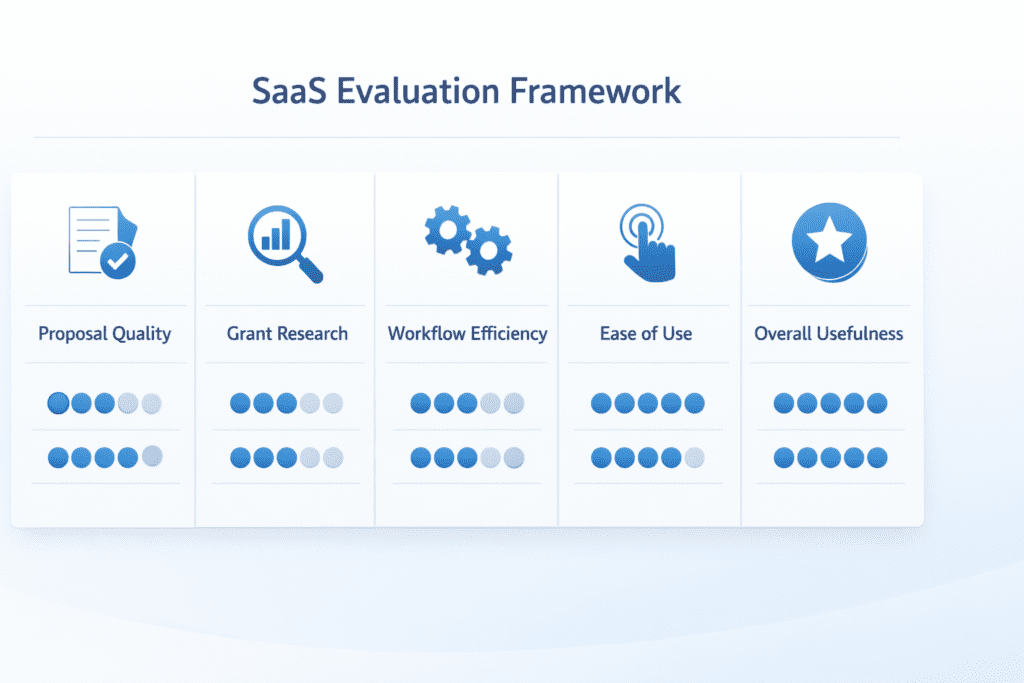
To identify the best AI Grant Writing Tools, we tested each tool across real grant writing scenarios.
From my research, many tools appear similar at first, but their effectiveness depends on how well they support research, drafting, and workflow.
Evaluation Criteria
We focused on factors that impact real outcomes.
• Proposal quality: Clarity and structure of the proposal
• Grant research: Ability to find relevant funding
• Workflow efficiency: How well the tool organizes tasks
• Ease of use: Learning curve and usability
• Support for grant writing: Overall usefulness
Here’s the thing. A tool that generates content quickly is helpful, but if it doesn’t align with funder expectations, it won’t improve success rates.
Real Use Cases
We tested tools across common grant writing situations.
• Writing grant proposals: Drafting full proposals
• Finding funding: Searching for grant opportunities
• Managing workflow: Tracking applications
• Supporting nonprofits: Handling multiple projects
For example, a small nonprofit applying for 5 to 10 grants per month can benefit from tools that help streamline the grant writing process while maintaining proposal quality.
Now this is where it becomes clear. AI helps with speed, but strategy still plays a major role in results.
What Most Blogs Miss About AI Grant Writing
Most blogs focus on features like templates, automation, and AI writing.
But here’s the thing. That’s not what actually improves your chances of getting funding.
From my research, the biggest factor is how well your proposal aligns with the funder’s goals, not how quickly it was generated.
There are a few important points people often overlook.
• No replacement for expertise: AI won’t replace a skilled grant writer
• Strategy matters more: Alignment with funder priorities is critical
• Editing is required: AI generated proposals need refinement
• Tool choice matters: The right AI tool impacts results
Here’s what I noticed. Even the best AI Grant Writing Tools won’t fix a weak proposal idea or poor research.
Now this is where people get confused. They assume better tools lead to better results. In most cases, the outcome depends more on strategy than the tool itself.
Types of AI Tools That Support Grant Writing
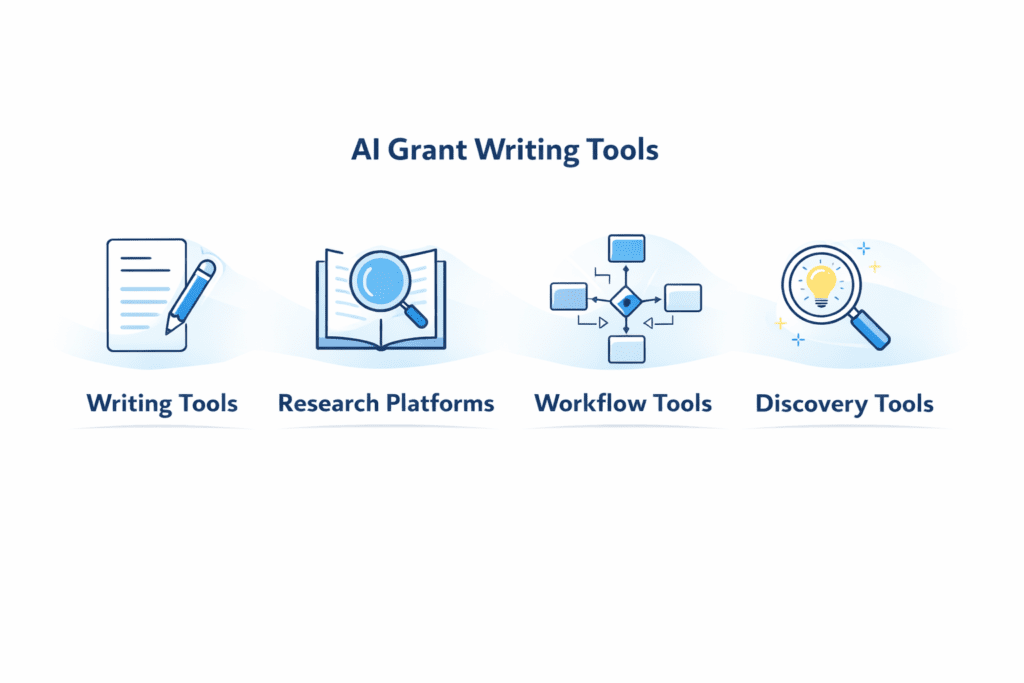
Not all AI Grant Writing Tools serve the same purpose.
Let’s keep it simple. Different tools support different parts of the grant writing process.
• AI writing tools: Help draft proposals and content
• Grant research platforms: Identify funding opportunities
• Workflow tools: Manage applications and deadlines
• AI powered discovery tools: Match you with relevant funders
From my research, combining different types of tools often works better than relying on just one.
How to Use AI Grant Writing Tools Step by Step
Using AI Grant Writing Tools becomes more effective when you follow a clear process.
The goal is not just to generate a proposal, but to create a strong and relevant application.
Step by Step Process
- Choose tool: Select the right AI tool for your needs
- Research funding: Identify suitable grant opportunities
- Generate draft: Create a grant proposal draft
- Customize proposal: Align with funder requirements
- Review content: Improve clarity and structure
- Submit application: Finalize and send
Here’s what I noticed. People who follow a structured process tend to produce stronger proposals than those who rely only on automation.
Best Prompts for AI Grant Writing
The quality of your output depends on your prompt.
Here’s the thing. A vague prompt leads to generic results.
Example Prompts
• “Write a grant proposal for a nonprofit focused on education impact”
• “Improve this grant writing section for clarity and funding success”
• “Generate measurable outcomes for this proposal”
Now this is where people get confused. They expect AI to understand everything automatically, but better prompts usually lead to better results.
What Funders Look for in a Grant Proposal
Understanding what a funder expects is critical.
• Clear impact: Defined outcomes
• Measurable results: Specific metrics
• Alignment: Matches funding priorities
• Strong storytelling: Clear narrative
Let’s be real for a second. A well structured proposal matters, but relevance matters more.
If your proposal doesn’t align with the funder’s goals, it’s unlikely to succeed.
How to Find Grant Opportunities Faster Using AI
Finding the right grant opportunities can take more time than writing the proposal itself.
Here’s the thing. Many organizations spend hours searching, only to apply for funding that isn’t a good fit.
AI helps reduce that problem.
• Use research tools: Identify relevant grant opportunities faster
• Set alerts: Get notified when new funding opens
• Filter results: Narrow down by niche or eligibility
• Track opportunities: Manage applications in one place
From my research, tools like Instrumentl and GrantStation are built specifically for grant research, while writing tools focus more on drafting.
Now this is where it becomes useful. When you combine research tools with writing tools, you save time and improve your chances of finding the right funding.
AI Grant Writing vs Traditional Grant Writing
AI and traditional grant writing follow different approaches.
Key Differences
• AI approach: Faster and scalable
• Traditional approach: Manual and strategic
Performance Comparison
• AI speeds up writing: Reduces drafting time
• Humans improve quality: Add strategy and storytelling
Here’s what I noticed. The best results usually come from combining both approaches instead of choosing one over the other.
Free vs Paid AI Grant Writing Tools
Choosing between free and paid tools depends on your needs and resources.
Free Tools
• Basic features: Suitable for simple grant writing
• Limited workflow: Fewer advanced options
• Good starting point: Useful for beginners
Paid Tools
• Advanced features: Better workflow and automation
• Stronger research: Access to funding databases
• Improved results: Better proposal quality
That said, many users start with free tools and upgrade later once they understand their requirements.
Signs You Are Using the Wrong AI Grant Writing Tool
Not every tool fits every user.
Here are some common signs that your tool may not be the right choice.
• Poor proposal quality: Content lacks clarity
• Weak research: Limited grant discovery features
• Limited workflow: Hard to manage applications
• Low success rate: Poor funding outcomes
Here’s the thing. Switching to a better tool often improves results faster than trying to fix a weak workflow.
Best Workflow: AI Tools With Grant Writing Strategy
A structured workflow makes grant writing more manageable.
Simple Workflow
- Research funding: Identify suitable grants
- Shortlist opportunities: Focus on best matches
- Use AI tools: Generate proposal drafts
- Customize content: Align with funder requirements
- Submit applications: Complete the process
- Track results: Monitor outcomes
Here’s what I noticed. Organizations that follow a consistent workflow tend to produce better proposals and improve their funding success over time.
Common Grant Writing Mistakes That Reduce Funding Chances
Even with AI Grant Writing Tools, mistakes can reduce your chances of securing funding.
Here’s the thing. Most failures don’t happen because of the tool, but because of how the proposal is written.
• Generic proposals: Lack of customization
• Poor alignment: Does not match funder goals
• Weak storytelling: Unclear impact
• No measurable outcomes: Missing data
From my research, proposals that clearly connect goals with outcomes tend to perform better than those that focus only on descriptions.
Now this is where people get confused. They assume using AI automatically improves results. In most cases, it only improves speed.
Quick Grant Writing Checklist Before Submission
Before submitting a grant application, it helps to review the basics.
• Clear objectives: Defined goals
• Strong proposal: Well structured content
• Relevant data: Supports your claims
• Tailored content: Matches funder requirements
Here’s what I noticed. A simple checklist can catch small issues that might otherwise reduce your chances.
Top Trends in AI Grant Writing
AI Grant Writing Tools are evolving, but the focus is shifting toward practical outcomes.
From my research, the biggest improvements are in research, workflow, and proposal quality.
• AI powered grant matching: Better funding discovery
• Automated workflows: Improved efficiency
• System integration: Works with nonprofit platforms
• Smarter proposal tools: Better content generation
Here’s the thing. AI is becoming more useful, but results still depend on how you use it.
10 Best AI Grant Writing Tools (Detailed Breakdown)
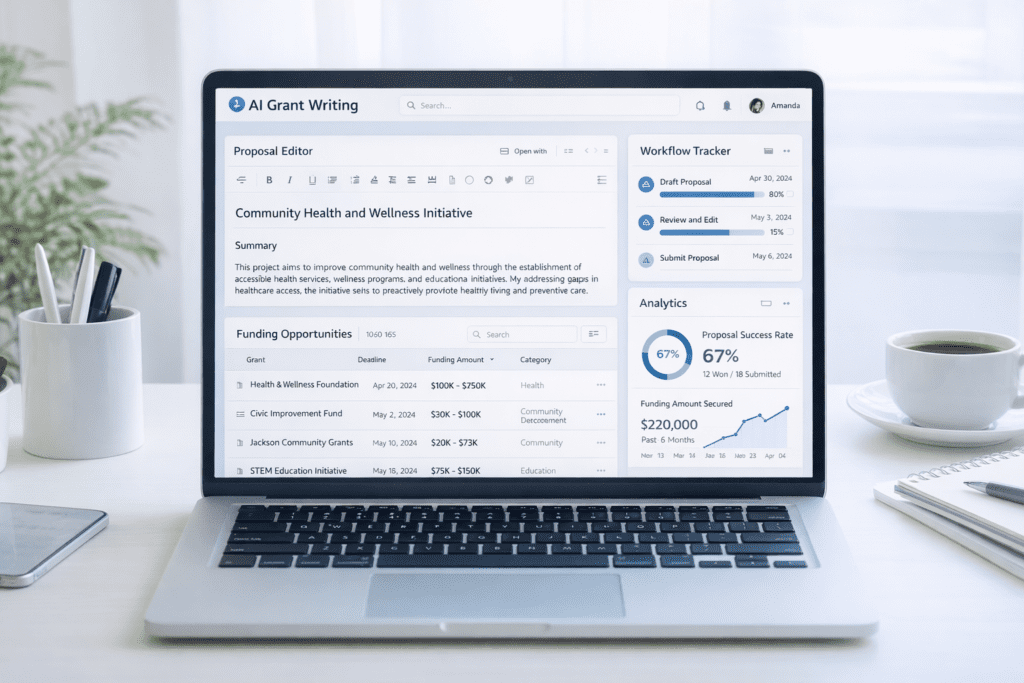
Grantable: Best AI Grant Writing Tool Overall
Grantable is a specialized AI grant writing platform designed to streamline the entire workflow.
It focuses on helping users create proposals more efficiently while maintaining structure and clarity.
Key Features
• AI powered drafting: Helps create grant proposals
• Workflow automation: Improves efficiency
• Collaboration tools: Supports team use
Pricing Plans
• Starter Plan – Custom pricing
• Team Plan – Custom pricing
Pros
• Specialized tool: Built for grant writing
• Strong workflow: Organized process
Cons
• Custom pricing: Limited transparency
Best For
Nonprofits and grant professionals.
Here’s what I noticed. Tools like Grantable work best when you need both writing support and workflow management.
Instrumentl: Best for Grant Research and Funding
Instrumentl focuses on helping users find grant opportunities and manage funding.
It is more about research and tracking than writing.
Key Features
• Grant research database: Finds funding opportunities
• Funding tracking: Monitors progress
• Workflow tools: Manages applications
Pricing Plans
• Basic Plan – $99 per month
• Professional Plan – $179 per month
Pros
• Strong research: Helps find relevant grants
• Excellent tracking: Keeps everything organized
Cons
• Expensive: Higher pricing
Best For
Users focused on grant research.
Rytr: Best Budget AI Writing Tool
Rytr is a simple writing tool that helps with basic grant writing tasks.
It works well if you want to generate content quickly without using complex platforms.
Key Features
• AI writing assistant: Helps draft content
• Templates: Provides structure
• Quick output: Generates text fast
Pricing Plans
• Free Plan – $0
• Saver Plan – $9 per month
• Unlimited Plan – $29 per month
Pros
• Affordable: Low cost option
• Easy to use: Simple interface
Cons
• Limited features: Not specialized for grant writing
Best For
Beginners and small nonprofits.
Here’s what I noticed. Tools like this are useful for drafting, but you still need to refine the proposal for better results.
ChatGPT: Best Flexible AI Tool
ChatGPT is a flexible AI writing tool that can support many parts of grant writing.
It works well for drafting, brainstorming, and improving proposal sections.
Key Features
• AI proposal generation: Creates drafts
• Flexible prompts: Adapts to different needs
• Multi use: Supports various tasks
Pricing Plans
• Free Plan – $0
• Plus Plan – $20 per month
Pros
• Flexible: Works across different use cases
• Powerful: Supports complex prompts
Cons
• Requires prompts: Needs clear input
Best For
Users who want flexibility in writing.
GrantHub: Best Workflow Tool
GrantHub focuses on managing the grant writing workflow rather than generating content.
It helps teams stay organized and track applications.
Key Features
• Workflow tracking: Organizes tasks
• Proposal management: Tracks submissions
• Team tools: Supports collaboration
Pricing Plans
• Basic Plan – $75 per month
• Advanced Plan – Custom pricing
Pros
• Organized: Helps manage workflow
• Useful for teams: Improves collaboration
Cons
• Limited AI features: Focus on management
Best For
Teams managing multiple grants.
Foundant Grant Lifecycle Manager: Best for Nonprofits
Foundant provides a full grant management system designed for nonprofits.
It supports the entire grant lifecycle from application to reporting.
Key Features
• Grant management: Handles full process
• Reporting tools: Tracks outcomes
• Workflow automation: Improves efficiency
Pricing Plans
• Custom pricing
Pros
• Enterprise level: Comprehensive solution
• Full workflow: Covers all stages
Cons
• Expensive: Higher cost
Best For
Large nonprofits and organizations.
Jasper AI: Best for Proposal Writing
Jasper AI is known for creating high quality long form content, which makes it useful for proposal writing.
It helps structure content clearly and maintain consistency across sections.
Key Features
• AI writing tool: Generates proposal content
• Templates: Provides structured formats
• Long form support: Handles detailed proposals
Pricing Plans
• Creator Plan – $69 per month
• Pro Plan – $99 per month
• Business Plan – Custom pricing
Pros
• High quality output: Strong content generation
• Scalable: Suitable for teams
Cons
• Not specialized: Built for general writing
Best For
Users focused on detailed proposal writing.
Here’s what I noticed. Tools like this work well when you already have a clear proposal idea and need help structuring it.
Copy.ai: Best for Quick Drafting
Copy.ai is designed for speed and simplicity.
It helps generate proposal drafts quickly without requiring complex setup.
Key Features
• AI workflows: Structured content generation
• Templates: Ready to use formats
• Writing assistant: Helps draft content
Pricing Plans
• Free Plan – $0
• Pro Plan – $49 per month
• Team Plan – Custom pricing
Pros
• Fast: Quick drafting
• Easy to use: Beginner friendly
Cons
• Limited depth: Needs refinement
Best For
Users who want quick drafts.
GrantStation: Best for Grant Database
GrantStation focuses on providing access to funding databases rather than writing proposals.
It helps users discover grant opportunities more efficiently.
Key Features
• Grant database: Access funding sources
• Research tools: Supports grant discovery
• Alerts: Notifies users
Pricing Plans
• Annual Plan – $99 per year
Pros
• Useful database: Helps find funding
• Good insights: Supports research
Cons
• No AI writing: Focus is not on drafting
Best For
Users focused on research and funding discovery.
Sudowrite: Best for Creative Writing
Sudowrite is a creative writing tool that can help with storytelling in grant proposals.
It is not specifically built for grant writing but can support idea generation.
Key Features
• AI writing assistant: Helps generate ideas
• Content enhancement: Improves writing
• Creative support: Adds depth to storytelling
Pricing Plans
• Hobby Plan – $10 per month
• Professional Plan – $29 per month
Pros
• Creative: Helps improve storytelling
• Unique: Adds variation
Cons
• Not specialized: Limited grant focus
Best For
Users who want to improve narrative sections.
Best AI Grant Writing Tools by Use Case
Choosing the right tool depends on your specific grant writing needs and workflow.
• Best AI grant writing tool: Grantable
• Best for research: Instrumentl
• Best for budget: Rytr
• Best for flexibility: ChatGPT
• Best for nonprofits: Foundant
Here’s the thing. Different tools solve different parts of the grant writing process, so combining them often gives better results.
When You Should NOT Use AI Grant Writing Tools
AI tools are helpful, but they are not suitable for every situation.
• Complex grants: Require deep expertise
• High stakes funding: Needs precision
• Specialized proposals: Demand domain knowledge
In these cases, a grant writer plays a critical role in improving proposal quality.
Common Mistakes in Grant Writing with AI
Using AI incorrectly can reduce your chances of success.
• Over relying on AI: Leads to generic proposals
• Not customizing: Weak alignment with funder needs
• Weak research: Poor understanding of requirements
• Poor alignment: Misses funding goals
Now this is where people get confused. AI helps with speed, but strategy still drives results.
FAQs About AI Grant Writing Tools
What are ai grant writing tools and how do they help?
AI grant writing tools are software that use generative AI to help draft, edit, and format grant proposals, helping you streamline your grant writing and save time.
Can nonprofits use ai for grant applications safely?
Yes, grant writing tools for nonprofits can be safe if you vet data policies and use AI to draft ideas, then review for accuracy and ethical use.
Will AI create winning grant proposals for me?
AI can help craft clear, strong drafts and suggest data analysis, but human review and strategy are still key to successful grant outcomes.
How fast can I get grant proposals in minutes with AI?
Some top AI grant writing tools can generate initial drafts or outline proposals in minutes, though polishing and customization take more time.
What is generative AI and how does it fit in grant-writing?
Generative AI produces text or content from prompts, so you can use AI to draft narratives, budgets, and supporting sections of a grant.
How do I choose the right ai tool for my nonprofit?
Compare features like grant assistant checks, data analysis, templates, and pricing to pick powerful tools that match your team’s needs.
Are there ai chatbots that can help with grants?
Yes, AI chatbots can answer questions, suggest edits, and guide you through parts of your grant, acting like a virtual grant assistant.
Can AI help with data analysis and visualization for proposals?
AI tools often include data analysis and visualization features to make your metrics clearer and strengthen your grant funding case.
What are best practices when using ai to apply for grants?
Use AI to draft and streamline your grant, always verify facts, customize language for funders, and protect sensitive data as best practices.
Are there named tools like Grant Orb or Grant Assistant I should consider?
Tools like grant orb and other leading ai platforms offer templates and grant assistant checks, so test a few to see which fits your workflow.
Will AI replace freelance grant writers or grant professionals?
AI helps automate routine work and can streamline your grant writing, but human grant professionals remain essential for strategy and funder relationships.

Final Verdict: Best AI Grant Writing Tools in 2026
The best AI Grant Writing Tools help you streamline workflow, improve proposal quality, and increase funding success.
• Grantable is best for workflow: Complete proposal support
• Instrumentl is best for research: Strong funding discovery
• Rytr is best for budget users: Simple and affordable
If you want to win more funding and improve your success rate, using AI Grant Writing Tools is a practical step forward.
Start using the right AI grant writing tool to build stronger proposals and secure funding more efficiently.