

A common SEO mistake is chasing high search volume keywords without checking competition, search intent, or realistic ranking opportunities first. That usually leads to frustration because newer websites end up competing against large authority domains like HubSpot, Forbes, or NerdWallet before building topical authority.
Keyword Research with AI changes that workflow quite a bit. Modern AI tools can help speed up keyword research, organize topic clusters, analyze search intent, and simplify SEO planning without requiring advanced technical expertise. This guide focuses on practical AI keyword research systems, beginner-friendly workflows, ChatGPT prompts, keyword clustering methods, SEO strategies, and realistic ways to find easier ranking opportunities using AI-powered tools.
What Is Keyword Research with AI?
Beginner-Friendly Definition of AI Keyword Research
Keyword Research with AI means using AI tools and AI-powered workflows to assist with keyword discovery, topic clustering, search intent analysis, and SEO planning.
Traditional keyword research often involves manually sorting keyword lists, analyzing competitors, and organizing content ideas. AI keyword research speeds up parts of that process by helping generate keyword ideas, identify related topics, and group keywords together faster.
That said, AI doesn’t fully replace SEO judgment.
Here’s the thing. AI tools can generate hundreds of keyword suggestions quickly, but experienced SEO professionals still manually review competition levels, SERP quality, and ranking difficulty before building content strategies.
How AI Changes Keyword Research Workflows
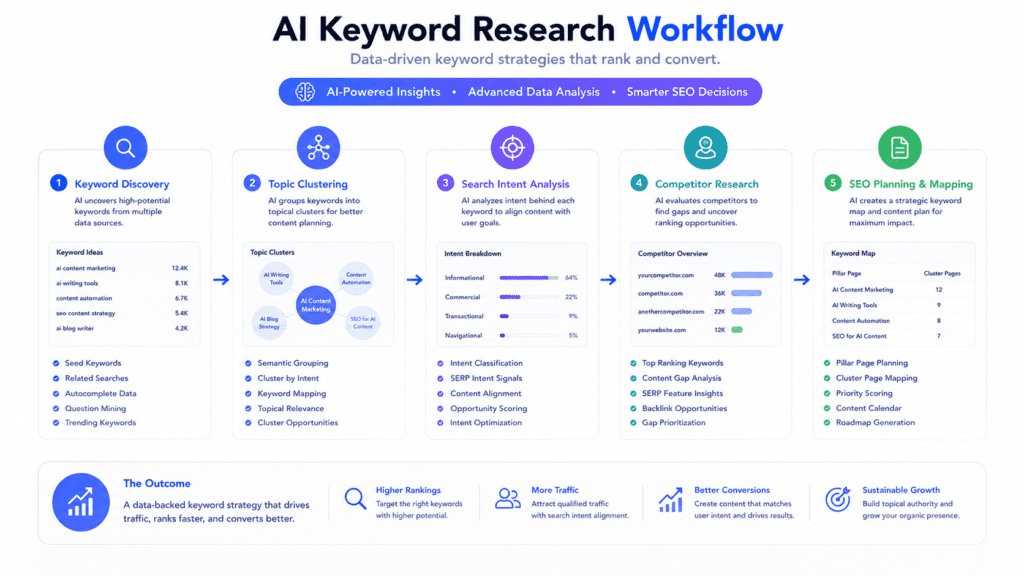
Faster Idea Generation
AI tools simplify brainstorming significantly.
This often includes:
• Long tail keyword generation: Expanding content opportunities
• Question keyword discovery: Supporting informational SEO content
• Related topic suggestions: Improving content planning
A beginner blogger may use ChatGPT to generate dozens of keyword ideas around “best AI writing tools” within minutes instead of manually searching Google for hours.
Better Topic Clustering
AI-powered keyword research also improves content organization.
This usually includes:
• Semantic grouping: Organizing related keyword phrases
• Topic clustering: Building structured SEO content systems
• Internal linking ideas: Supporting topical authority
A niche blogger using AI to organize keyword lists into clusters may build stronger content structures than someone publishing random unrelated articles.
Easier Search Intent Analysis
Search intent still matters heavily for SEO.
AI tools may help identify:
• Informational keywords: Educational content opportunities
• Commercial keywords: Product research intent
• Transactional keywords: Purchase-focused searches
Now this is where people sometimes misunderstand AI SEO workflows. AI can help identify patterns faster, but understanding user behavior and intent for each keyword still requires human review.
Workflow Automation
AI workflows also reduce repetitive SEO tasks.
This may include:
• Keyword grouping: Faster organization systems
• Content planning: Structured publishing workflows
• SEO research support: Simplifying the research process
Some marketers combine ChatGPT, Semrush, and Google Keyword Planner together to streamline SEO workflows more efficiently.
Why Keyword Research Still Matters in 2026
Search engine competition continues growing across almost every niche.
That means SEO still depends on:
• Search intent alignment: Matching user expectations
• Content quality: Building trust and authority
• Structured keyword targeting: Improving SEO organization
• Topical authority: Expanding content depth
A newer affiliate site targeting low competition keyword opportunities often performs better than a site chasing only massive search volume terms dominated by authority websites.
Reality check though. AI can help generate keyword ideas faster, but strategy, SERP analysis, and realistic SEO judgment still matter heavily for long-term rankings.
Why Keyword Research with AI Matters for SEO
Finding Easy Ranking Opportunities Faster
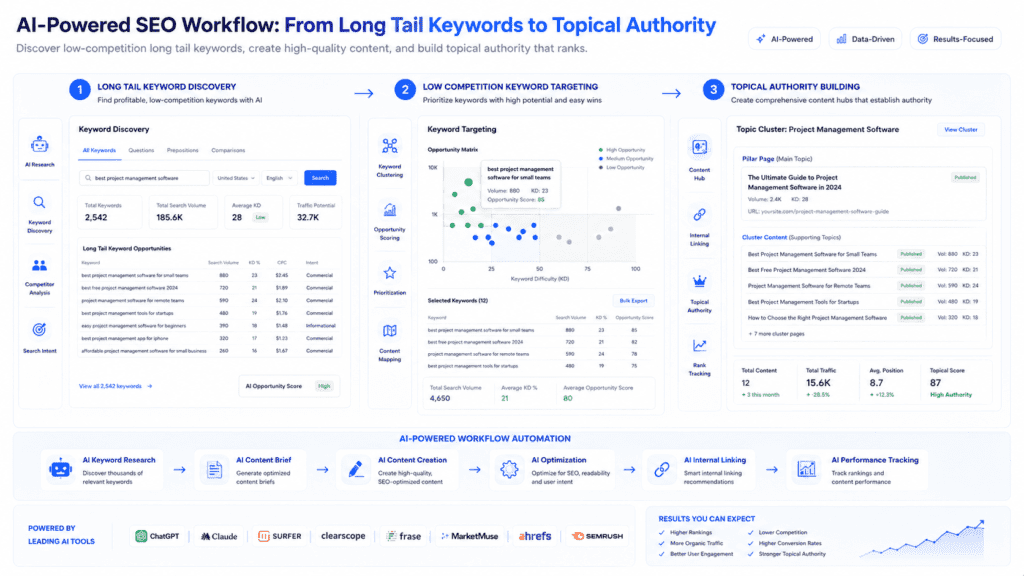
One of the biggest advantages of Keyword Research with AI is speed.
AI tools for keyword research can quickly identify:
• Long tail keywords: Easier ranking opportunities
• Low competition searches: More realistic SEO targets
• Question keywords: Informational content ideas
• Related keyword phrases: Expanding topic coverage
A smaller niche website targeting long tail SEO opportunities often ranks faster than websites competing for extremely broad keyword phrases immediately.
Honestly, this is usually where beginner bloggers improve the most. Instead of guessing keywords randomly, AI-powered keyword research creates a more organized keyword strategy.
Scaling Content Research
Content planning becomes difficult once websites grow larger.
AI-assisted workflows help simplify:
• Keyword organization: Managing larger keyword lists
• Topic mapping: Structuring SEO content clusters
• Workflow efficiency: Reducing repetitive SEO tasks
A blogger managing dozens of SEO articles may use AI-powered workflows to organize keyword opportunities across multiple topic clusters faster.
Improving SEO Strategy
AI keyword research also supports broader SEO planning.
This often includes:
• Content hierarchy planning: Organizing pillar content
• Search intent analysis: Matching user expectations
• SEO workflow systems: Improving publishing consistency
Some SEO professionals use Semrush and ChatGPT together because AI can help brainstorm faster while SEO tools validate keyword data and competition levels.
Now this is where people sometimes overtrust automation. AI-generated keyword suggestions still need manual review because keyword difficulty and SERP competition vary significantly.
Building Better Content Clusters
Topical authority matters heavily for modern search engine optimization.
AI helps with:
• Semantic clustering: Grouping related keywords
• Internal linking planning: Improving SEO structure
• Supporting content ideas: Expanding topical coverage
A niche blogger may organize dozens of AI writing tool keywords into structured SEO clusters instead of publishing unrelated standalone articles.
Supporting Content Marketing Workflows
Keyword research workflows connect directly with content marketing systems.
This usually includes:
• Editorial planning: Organizing publishing schedules
• SEO content planning: Matching search demand
• Topic expansion: Scaling article ideas
A marketer using ai-powered keyword research may build a six month content calendar faster than someone manually organizing every keyword and topic.
How AI-Powered Keyword Research Actually Works
AI Tools Analyze Search Patterns
Modern AI systems analyze large amounts of search data and topic relationships.
This often includes:
• Search trends: Identifying growing topics
• Related searches: Discovering connected keywords
• Search intent signals: Understanding user behavior
• Topic relationships: Building semantic clusters
Platforms like Semrush, Ahrefs, and AI chatbots help organize SEO workflows by identifying patterns humans might overlook initially.
AI Helps Generate Keyword Variations
AI tools also simplify keyword expansion.
This may include:
• Long tail keyword variations: Supporting niche targeting
• Comparison keywords: Buyer-focused SEO content
• Question-based searches: Informational content ideas
• Related keyword suggestions: Expanding topical coverage
A blogger using ChatGPT may generate informational and commercial keyword ideas around “best keyword research tool” within minutes before validating them manually.
AI Assists With Topic Clustering
AI-assisted clustering improves content organization significantly.
This usually includes:
• Semantic keyword grouping: Organizing related topics
• Content hierarchy planning: Structuring SEO articles
• Internal linking workflows: Strengthening topical authority
A niche blogger may use AI to organize hundreds of keyword opportunities into structured SEO clusters before publishing content.
Honestly, organized topic clusters usually outperform scattered publishing because search engines understand topical relevance more clearly.
Traditional Keyword Research vs AI Keyword Research
| Feature | Traditional Keyword Research | AI Powered Keyword Research |
|---|---|---|
| Keyword discovery speed | Slower manual workflows | Faster AI-assisted workflows |
| Topic clustering | Mostly manual organization | AI-assisted grouping |
| Search intent analysis | Manual interpretation | Faster pattern detection |
| Workflow efficiency | More repetitive tasks | Streamlined organization |
| SEO planning | Time consuming | Faster content mapping |
| Human SEO judgment | Still required | Still required |
Keyword Research with AI speeds up brainstorming and workflow organization, but human SEO strategy still matters heavily.
That’s probably the biggest misconception people have about AI SEO systems. Faster workflows don’t automatically guarantee better rankings.
What AI Keyword Research Tools Still Get Wrong
Misunderstanding Search Intent
AI tools sometimes misunderstand what users actually want.
This may happen when:
• Commercial keywords appear informational: Misaligned content intent
• Buyer intent gets confused: Weak conversion targeting
• SERP context gets ignored: Poor search matching
A keyword tool may suggest an informational article for a transactional search phrase where Google mostly ranks ecommerce pages instead.
Suggesting Unrealistic Keywords
Some AI-powered tools prioritize search volume over realistic ranking potential.
This often leads to:
• Competitive keyword targeting: Difficult ranking environments
• Authority site competition: Unrealistic SEO goals
• Weak opportunity filtering: Poor keyword prioritization
A beginner blog targeting “best credit cards” immediately would probably struggle because the SERP is dominated by large authority brands.
Now this is where realistic SEO judgment becomes important. Search volume and keyword difficulty should work together during keyword research, not separately.
Ignoring SERP Competition
AI keyword research tools don’t always analyze SERP quality deeply enough.
This may include:
• Weak competitor evaluation: Missing authority signals
• Forum-heavy SERPs: Easier ranking opportunities overlooked
• Thin content analysis: Missed SEO gaps
Some SEO professionals manually review Google search results even after using Semrush or Ahrefs because real SERP analysis often reveals opportunities hidden inside keyword data.
Weak Context Understanding
AI still struggles with nuance sometimes.
This often includes:
• Industry-specific language: Weak contextual interpretation
• Audience intent differences: Inconsistent targeting
• Local SEO context: Poor regional understanding
A local SEO campaign targeting “roof repair Houston” requires different keyword intent analysis compared to national affiliate SEO content.
Over Reliance on Search Volume
A high search volume keyword isn’t always the best keyword.
SEO professionals also evaluate:
• Competition strength: Realistic ranking opportunities
• Search intent quality: Matching audience goals
• Content gaps: Easier SEO openings
Honestly, smaller low competition keyword phrases often drive better organic traffic for newer websites than chasing massive search volume immediately.
How Real SEO Professionals Use AI for Keyword Research
Brainstorming Seed Keywords
Most SEO workflows begin with a seed keyword.
This usually includes:
• Broad topic discovery: Starting keyword research workflows
• Audience targeting: Identifying user interests
• SEO niche mapping: Organizing content direction
An SEO strategist may ask AI to generate related keyword ideas around “AI writing tools” before validating them in Semrush.
Building Topic Clusters
AI-assisted clustering simplifies SEO planning.
This often includes:
• Content grouping: Organizing keyword relationships
• Supporting article ideas: Expanding topic depth
• Topical authority mapping: Improving SEO structure
A niche blogger organizing keyword lists into clusters often creates stronger SEO content systems than someone publishing disconnected articles randomly.
SERP Analysis Assistance
AI can also support SEO analysis workflows.
This may include:
• Competitor summaries: Faster research organization
• Search result analysis: Understanding SERP patterns
• SEO gap discovery: Finding missing topic coverage
A marketer may use ChatGPT alongside Ahrefs to identify keyword gap opportunities between competing websites before publishing new SEO content.
Search Intent Categorization
Search intent analysis remains one of the most important parts of keyword research.
SEO professionals often organize keywords into:
• Informational intent: Educational content searches
• Commercial investigation: Product comparison searches
• Transactional intent: Purchase-focused searches
• Navigational intent: Brand-specific searches
A marketer building affiliate SEO content may separate “best AI writing tools” from “how to use ChatGPT for SEO” because the audience intent is completely different.
That said, AI-powered keyword research still requires manual validation. AI can detect patterns quickly, but understanding user psychology and conversion behavior usually needs human review.
Supporting Content Planning
Keyword Research with AI also improves content planning workflows.
This often includes:
• Content calendar organization: Structuring publishing schedules
• Topic prioritization: Choosing realistic SEO opportunities
• Internal linking systems: Supporting topical authority
• SEO workflow management: Improving consistency
A blogger may use ChatGPT and Semrush together to organize three months of SEO content before writing the first article.
Honestly, stronger planning usually prevents random publishing habits that weaken topical authority over time.
Best AI Tools for Keyword Research

Different AI tools support different parts of the keyword research process.
ChatGPT
ChatGPT works well for:
• Keyword brainstorming: Expanding topic ideas
• Topic clustering: Organizing SEO workflows
• Search intent analysis: Understanding content direction
• SEO content planning: Supporting article workflows
A blogger may use ChatGPT to generate supporting article ideas around a primary target keyword before validating keyword data manually.
Semrush
Semrush remains one of the most widely used SEO platforms.
It’s commonly used for:
• Search volume analysis: Measuring keyword demand
• Keyword difficulty evaluation: Assessing competition
• Competitor research: Identifying ranking opportunities
• SEO strategy planning: Supporting content strategies
Many SEO professionals combine Semrush with AI chatbots because the platform provides stronger keyword data validation than relying only on AI-generated suggestions.
Ahrefs
Ahrefs focuses heavily on backlink analysis and SEO competitor research.
This often includes:
• Backlink analysis: Evaluating authority signals
• SERP research: Understanding ranking competitors
• Keyword opportunities: Finding content gaps
• SEO analysis: Supporting advanced workflows
Some affiliate marketers use Ahrefs to discover keyword gap opportunities where competitors rank for keywords their own websites haven’t targeted yet.
Google Keyword Planner
Google Keyword Planner remains one of the most popular free keyword research tool options for beginners.
It’s commonly used for:
• Search volume estimates: Measuring keyword demand
• Google Ads insights: Supporting PPC and SEO planning
• Keyword suggestions: Discovering related searches
A beginner blogger may use Google Keyword Planner before investing in paid SEO tools like Semrush or Ahrefs.
Ubersuggest
Ubersuggest works well for beginner SEO workflows because the platform feels simpler compared to larger enterprise tools.
This usually includes:
• Easy keyword discovery: Beginner-friendly research
• Basic keyword data: Supporting SEO planning
• Content ideas: Expanding article opportunities
Honestly, some beginners prefer simpler tools initially because advanced dashboards can feel overwhelming early in the keyword research process.
Best Free Keyword Research Tools Beginners Can Use
Free Keyword Research Tool Options
Several free tools still provide useful keyword research support.
Common options include:
• Google Keyword Planner: Basic keyword and PPC data
• ChatGPT: AI-assisted keyword brainstorming
• Google Search suggestions: Real user search behavior
• AnswerThePublic: Question keyword discovery
• Ubersuggest free version: Beginner SEO workflows
A smaller niche blog may use free AI keyword research workflows successfully before scaling into paid SEO platforms later.
When Free AI Keyword Research Tools Are Enough
Free keyword research workflows usually work well for:
• New blogs: Early-stage SEO development
• Small niche sites: Lower publishing volume
• Basic SEO workflows: Simpler content planning
A beginner affiliate marketer using ChatGPT, Google Search, and Google Keyword Planner may still build strong keyword clusters without expensive SEO software initially.
When Paid SEO Tools Become Necessary
Paid SEO platforms become more valuable once content operations grow larger.
This often includes:
• Advanced competitor research: Deeper SERP analysis
• Keyword difficulty analysis: Better ranking evaluation
• Scaling content production: Larger SEO strategies
• Analytics workflows: Supporting SEO optimization
A blogger publishing several SEO articles weekly may eventually need stronger keyword data and competitor tracking systems from Semrush or Ahrefs.
Now this is where budget planning matters. Some newer websites spend hundreds on SEO tools before publishing enough content to justify the expense.
How to Use ChatGPT for Keyword Research
Generate Seed Keyword Ideas
Keyword research often starts with a broad seed keyword.
ChatGPT may help with:
• Topic expansion: Discovering related niches
• Audience targeting: Understanding user interests
• SEO brainstorming: Supporting keyword discovery
A blogger may ask ChatGPT to generate keyword ideas around “AI SEO tools” before narrowing the focus toward specific keyword opportunities.
Find Long Tail Keywords
Long tail keywords usually provide easier ranking opportunities for smaller websites.
This often includes:
• Question-based searches: Informational SEO content
• Specific keyword phrases: Lower competition targeting
• Buyer-focused searches: Commercial intent keywords
A smaller affiliate website targeting “best free keyword research tool for beginners” may rank faster than targeting “SEO tools” broadly.
Discover Question Keywords
Question keywords support educational SEO content and topical authority building.
This may include:
• How-to searches: Tutorial content ideas
• Problem-solving queries: Informational keyword targeting
• Beginner questions: Audience-focused SEO content
A blogger using ChatGPT prompts may generate dozens of informational keyword opportunities for supporting SEO articles around one target keyword.
Best AI Keyword Research Workflow Based on Website Type
Different websites usually require different keyword research systems because audience intent changes across niches.
Affiliate Website Workflow
Affiliate SEO workflows often prioritize buyer intent keywords.
This usually includes:
• Comparison keywords: Product evaluation searches
• Review-focused keywords: Affiliate SEO opportunities
• Commercial intent searches: Conversion-focused traffic
A smaller affiliate blog targeting “Semrush vs Ahrefs for beginners” may rank faster than targeting broader SEO keywords immediately.
SaaS SEO Workflow
SaaS websites often focus on problem-solving SEO content.
This may include:
• Feature comparison keywords: Software evaluation searches
• Workflow-related searches: Operational SEO content
• Educational keyword phrases: Funnel-focused SEO content
A SaaS company using Keyword Research with AI may organize content clusters around onboarding, automation, analytics, and workflow optimization topics.
Local SEO Workflow
Local SEO requires geographic keyword targeting.
This often includes:
• City-based keywords: Location-specific searches
• Service area phrases: Local intent targeting
• Local search optimization: Supporting nearby traffic
A roofing company in Dallas would target completely different keyword opportunities compared to a national affiliate SEO website.
Niche Blog Workflow
Niche blogs often focus on topical authority and long tail content.
This usually includes:
• Informational keyword targeting: Educational SEO content
• Topic clustering systems: Supporting content hierarchy
• Long tail keyword research: Easier ranking opportunities
A blogger building a niche AI website may organize dozens of related SEO articles around AI writing tools, AI workflows, and AI productivity systems.
Ecommerce SEO Workflow
Ecommerce SEO focuses more heavily on commercial intent.
This often includes:
• Product category keywords: Shopping-focused searches
• Commercial search intent: Conversion-focused traffic
• Product-focused SEO strategy: Supporting ecommerce visibility
An ecommerce store may use ai-powered keyword research to organize category pages, product descriptions, and informational SEO articles together into one larger content strategy.
How to Spot Easy Ranking Opportunities Using AI
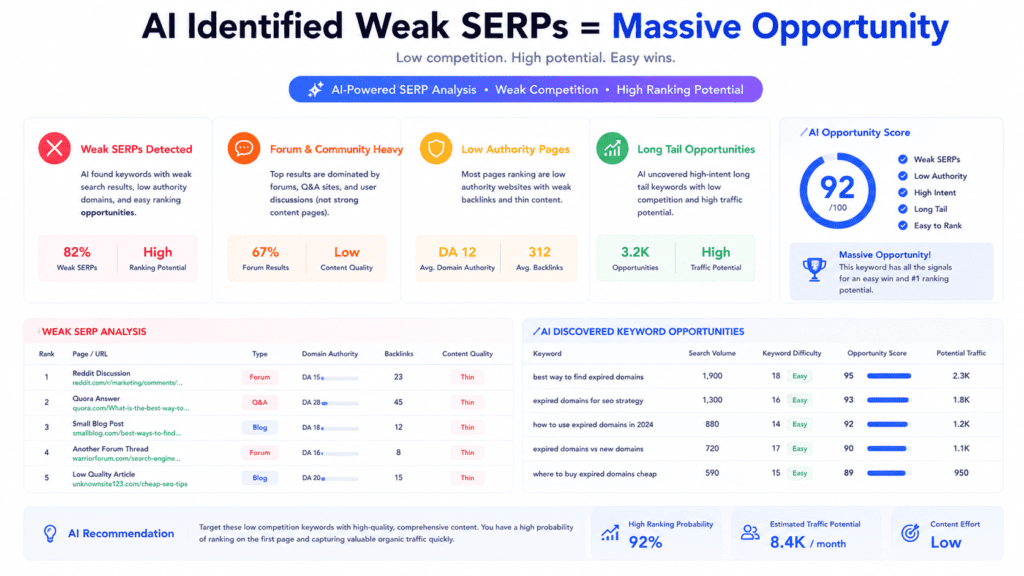
AI-assisted keyword research helps identify weaker competition areas faster.
This often includes:
• Weak SERPs: Low-quality ranking pages
• Forum-heavy search results: Easier competition
• Thin existing content: Weak SEO coverage
• Emerging topics: New search demand opportunities
• Long tail search queries: Lower competition keywords
A beginner blogger may discover AI workflow keyword opportunities where Google search results contain weak Reddit threads, outdated articles, and low-authority websites instead of major brands.
Honestly, these weaker SERPs often create the best early SEO opportunities for smaller websites.
How AI Helps Build Better SEO Content Strategies
Keyword Research with AI supports broader SEO planning beyond simple keyword discovery.
This usually includes:
• Topic clustering: Organizing SEO structures
• Content calendar planning: Improving publishing consistency
• Search intent mapping: Matching audience goals
• Internal linking opportunities: Strengthening SEO systems
A marketer using AI-assisted keyword workflows may organize six months of SEO content faster than manually planning every article individually.
How AI Helps Build Topical Authority Faster
Topical authority improves when websites cover related topics consistently.
AI workflows help support:
• Supporting article generation: Expanding topic depth
• Semantic keyword expansion: Improving SEO coverage
• Internal linking systems: Strengthening authority signals
A niche blogger may build a complete AI SEO cluster around “AI writing tools” using AI-generated supporting article ideas and topic mapping workflows.
Now this is where consistency becomes important. Publishing connected SEO content usually performs better than random unrelated articles spread across dozens of topics.
Best Types of Keywords AI Can Help Generate
Informational Keywords
Informational keywords help build organic traffic and topical authority.
This may include:
• Tutorial searches: Educational content opportunities
• Beginner-focused queries: Problem-solving SEO content
• Workflow-related searches: Operational educational content
Commercial Investigation Keywords
Commercial searches often appear before buying decisions.
This often includes:
• Tool comparison keywords: Product evaluation intent
• Alternative searches: Competitor-focused SEO content
• Pricing-related keywords: Commercial research intent
Comparison Keywords
Comparison keywords usually support affiliate marketing and SaaS SEO workflows.
This may include:
• Product versus searches: Buyer comparison intent
• Feature comparison phrases: Software evaluation searches
• Alternative-focused searches: Product substitution intent
A blogger targeting “Jasper vs ChatGPT for SEO writing” may attract users already evaluating SEO software actively.
Buyer Intent Keywords
Buyer intent searches often connect more directly with conversions.
This usually includes:
• Best keyword research tool searches: Purchase-focused intent
• Software review keywords: Commercial investigation searches
• Keyword tool pricing searches: Buyer evaluation intent
Question Based Keywords
Question keywords support SEO content and featured snippet opportunities.
This may include:
• How-to searches: Educational SEO workflows
• What-is searches: Beginner informational content
• Why-focused questions: Audience education opportunities
How to Use AI for Competitor Keyword Research
Competitor research remains an important part of SEO workflows.
AI-assisted competitor analysis often includes:
• Competitor topic analysis: Reviewing ranking content
• Keyword gap discovery: Finding missing opportunities
• SERP analysis: Evaluating search competition
• Supporting content discovery: Expanding SEO coverage
A niche site owner may use Semrush and ChatGPT together to analyze competitor keyword gaps before creating supporting SEO articles.
How to Organize AI Keyword Research Into Content Clusters
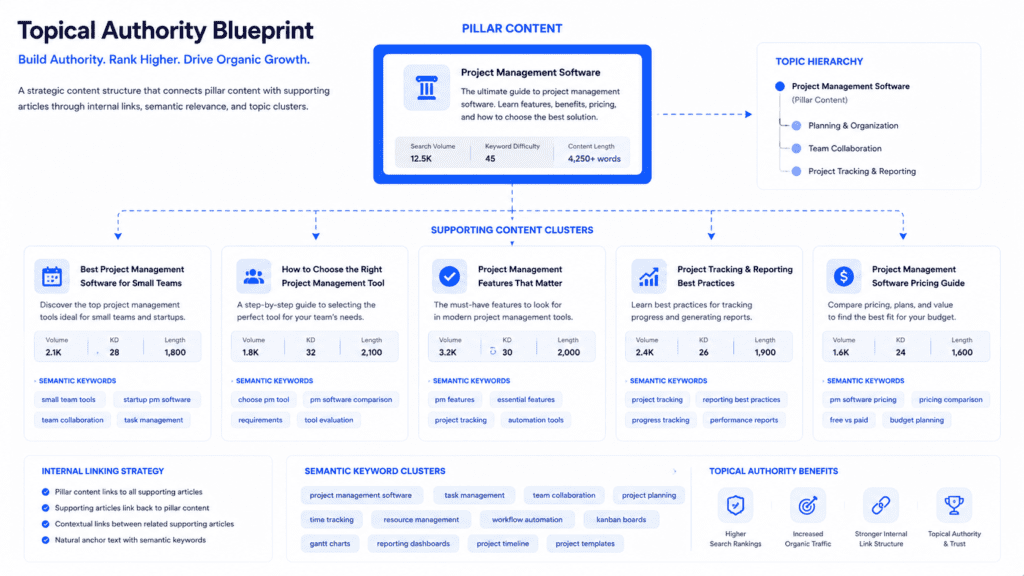
Content clusters help search engines understand topic relationships more clearly.
This often includes:
• Pillar content: Core SEO authority pages
• Supporting articles: Expanding topic coverage
• Internal linking structures: Strengthening topical authority
A content creator organizing grouped keyword research around “AI writing tools” may create stronger topical authority than a site publishing isolated articles randomly.
AI Keyword Research vs Traditional Keyword Research
Keyword Research with AI improves workflow speed and organization significantly, but traditional SEO research still provides important strategic oversight.
AI-powered keyword research usually helps with:
• Faster idea generation: Supporting content planning
• Workflow efficiency: Reducing repetitive SEO tasks
• Topic clustering: Organizing keyword structures
Traditional workflows still help with:
• Human SEO judgment: Evaluating ranking opportunities
• Search intent interpretation: Understanding audience behavior
• Manual SERP analysis: Reviewing real competition
Reality check though. Experienced SEO professionals still manually review keyword opportunities before building major content strategies.
Common AI SEO Mistakes Beginners Should Avoid
This usually includes:
• Blindly trusting AI suggestions: Weak keyword targeting
• Ignoring search intent: Misaligned SEO content
• Chasing search volume only: Unrealistic competition
• Publishing thin AI content: Weak topical authority
• Skipping manual SERP analysis: Poor SEO validation
A beginner blogger targeting highly competitive search terms dominated by Forbes or HubSpot often struggles despite using strong AI tools.
Common Mistakes People Make With AI Keyword Research
Some keyword research mistakes appear repeatedly across beginner SEO workflows.
This often includes:
• Weak content clustering: Poor topical organization
• Poor internal linking: Weak SEO structure
• Ignoring competitor authority: Unrealistic keyword targeting
• Low quality SEO content: Weak search value
A smaller niche blog may struggle because keyword research workflows focused entirely on volume instead of realistic ranking opportunities.
What AI Keyword Research Tools Still Cannot Fully Replace
AI still cannot fully replace several important SEO areas.
This often includes:
• Human SEO strategy: Long-term planning decisions
• Search intent interpretation: Understanding user psychology
• Editorial judgment: Evaluating content quality
• Brand positioning: Strategic differentiation
A stronger SEO strategy usually combines AI-powered assistance with manual SEO review instead of relying entirely on automation.
How to Make AI Keyword Research More Accurate
Accuracy improves when multiple systems work together.
Helpful practices include:
• Combine multiple SEO tools: Improve keyword validation
• Review real search results: Understand actual competition
• Validate keyword data manually: Improve SEO accuracy
• Analyze competitor content: Evaluate ranking quality
A blogger combining ChatGPT brainstorming with Semrush keyword data and Google search review often identifies more realistic keyword opportunities.
Best AI SEO Workflow Stacks for Keyword Research
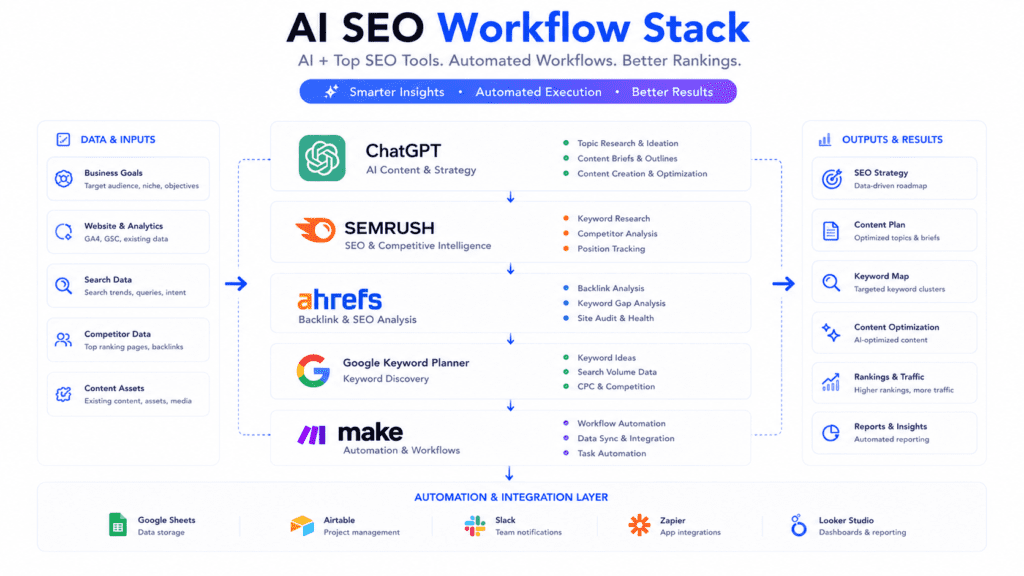
Beginner SEO Stack
A simple beginner workflow may include:
• ChatGPT: Keyword brainstorming
• Google Keyword Planner: Basic keyword validation
• Google Search: SERP analysis workflows
Affiliate SEO Stack
Affiliate marketers often use:
• Semrush: SEO keyword research and analytics
• ChatGPT: Topic clustering and workflows
• Surfer SEO: SEO optimization systems
Advanced SEO Stack
Advanced workflows may combine:
• Ahrefs: Backlink and competitor research
• AI chatbots: Workflow automation support
• Automation tools: Scaling SEO operations
How Much Keyword Research Should You Do Before Writing Content?
Most smaller websites don’t need endless keyword research before publishing.
A practical workflow often includes:
• Basic keyword validation: Confirming SEO opportunities
• Content cluster planning: Organizing related topics
• Search intent review: Matching audience goals
A beginner blogger spending one day organizing SEO clusters may publish an entire month of SEO content more efficiently afterward.
How Keyword Research With AI Supports Affiliate Marketing
Affiliate marketers often use AI workflows to identify buyer-focused SEO opportunities faster.
This usually includes:
• Comparison keyword targeting: Supporting affiliate SEO content
• Buyer intent keyword discovery: Improving conversion opportunities
• SEO funnel planning: Organizing affiliate workflows
A marketer may identify product comparison keywords faster using AI-assisted brainstorming and competitor research systems.
Signs Your AI Keyword Research Strategy Is Working
A stronger keyword research process usually creates measurable workflow improvements.
This often includes:
• Faster content planning: Better SEO organization
• Improved rankings: Better keyword targeting
• Stronger content clusters: Better topical authority
• More consistent publishing: Improved workflow efficiency
A blogger organizing keyword clusters with AI-powered workflows may improve publishing consistency significantly over time.
The Future of AI Powered Keyword Research
AI SEO workflows continue evolving.
This often includes:
• AI-powered content planning: Faster workflow systems
• Predictive search trends: Earlier topic discovery
• Smarter search intent analysis: Improved keyword categorization
• Automated topic clustering: Better SEO organization**
More SEO professionals now combine AI-assisted workflows with manual SEO review instead of relying entirely on traditional keyword research systems.
Beginner 30 Day Plan for Keyword Research with AI
Week 1
• Learn SEO basics: Understand ranking fundamentals
• Explore AI tools: Learn keyword workflows
• Study search intent: Understand audience goals
Week 2
• Generate keyword ideas: Expand topic opportunities
• Build topic clusters: Organize SEO content
• Create content calendars: Plan publishing systems
Week 3
• Validate keyword data: Review competition and SERPs
• Analyze competitors: Evaluate ranking opportunities
• Improve SEO strategy: Refine targeting workflows
Week 4
• Publish optimized SEO content: Launch content systems
• Monitor rankings: Review SEO performance
• Refine workflows: Improve keyword processes
A beginner blogger using Keyword Research with AI may build the first structured SEO cluster within 30 days using organized workflows and realistic keyword targeting.
Frequently Asked Questions
What is keyword research with AI and how does it help find the right keywords?
Keyword research with AI uses tools that analyze data to suggest the right keywords quickly, helping you target queries people actually search for.
Can AI-powered SEO replace traditional keyword explorer tools like Keyword Explorer or Keyword Magic Tool?
AI-powered SEO adds speed and pattern detection to traditional tools, but combining both gives a fuller list of keywords and better insight.
How do difficulty scores work and should I trust them for choosing keywords to use?
Difficulty scores estimate how hard it is to rank for a keyword; they are helpful but should be used with search volume and low competition checks.
Is there a free SEO option or free trial to test AI search keyword tools?
Many platforms offer free SEO features or a free trial so you can test ai search and keyword tool functions before paying.
How can I use Google Analytics and Google Search to improve keyword research results?
Use google analytics and google search console data to spot real traffic keywords and combine that with AI suggestions for better targeting.
What’s the best approach to build a list of keywords that are both relevant and low competition?
Start with a keyword overview from AI tools, filter by search volume and low competition, then refine with analytics and Google Search Console data.
Do AI chatbots and AI to generate keywords actually use artificial intelligence or are they just keyword lists?
They use artificial intelligence to analyze trends and user intent, not just static keyword lists, so suggestions are more dynamic and relevant.
How can I get a quick keyword overview to decide the best keywords for my page?
Run a keyword overview in a keyword tool or keyword explorer and look for relevance, search volume, and lower difficulty scores.
Can I connect Google Analytics and Search Console to AI keyword tools for better insights?
Yes, linking analytics and google search console gives AI tools real site data to suggest keywords that match your actual audience.
What are common uses of AI in keyword research beyond finding a list of keywords?
AI helps prioritize keywords, predicts trends, groups topics, and suggests content ideas for ai-powered seo strategies.
How do I decide between targeting high volume terms versus long-tail relevant keyword phrases?
Balance both: target some high volume best keywords for reach and long-tail relevant keyword phrases for easier wins and better conversions.

Final Verdict: Is Keyword Research with AI Worth Using in 2026?
Bottom line? Yes.
Keyword Research with AI helps simplify SEO workflows, organize content strategies, speed up keyword discovery, and improve topic clustering significantly.
That said, AI tools still work best as assistants instead of replacements for human SEO strategy. The strongest workflows usually combine AI-powered keyword research, manual SERP review, realistic keyword targeting, and strong content quality together.
My Recommendation
• Start with simple AI workflows: Learn keyword systems gradually
• Focus on search intent: Prioritize audience relevance over volume
• Use AI as an assistant: Avoid blindly trusting automation
• Build topical authority: Organize structured SEO clusters
A beginner affiliate blogger combining ChatGPT brainstorming with Semrush validation workflows may build topical authority much faster than someone publishing random SEO articles without structure.
Final Soft CTA
• Test beginner-friendly AI tools: Build simple SEO workflows first
• Combine ChatGPT with SEO data tools: Improve keyword accuracy
• Prioritize content quality: Focus on search intent and useful SEO content instead of only chasing search volume metrics