

Have you ever spent hours working on an assignment, only to feel like the structure still isn’t right or the ideas aren’t clear enough?
That’s one reason AI Tools for Students Writing Assignments are becoming more common. Instead of starting from a blank page, students now use AI to support their writing process, organize ideas, and improve clarity before submission.
Quick Picks: Best AI Tools for Students Writing Assignments Based on Use Case
If you want a simple starting point, these tools cover different parts of academic writing.
Some focus on drafting, others help refine content, and a few improve accuracy before submission.
Top picks:
Best Overall: ChatGPT
Best for: Flexible assignment drafting and idea generation
Best for Structured Writing: Jasper AI
Best for: Well-organized assignments with clear structure
Best Budget Option: Rytr
Best for: Simple and affordable writing support for assignments
Each tool supports a different part of academic writing.
Choosing the right one depends on whether you need help with drafting, editing, or final checks.
Why Students Are Using AI Tools for Assignments More Often
Academic writing takes time.
You need to research, structure ideas, write clearly, and check for errors. That entire process can feel overwhelming, especially when deadlines are tight.
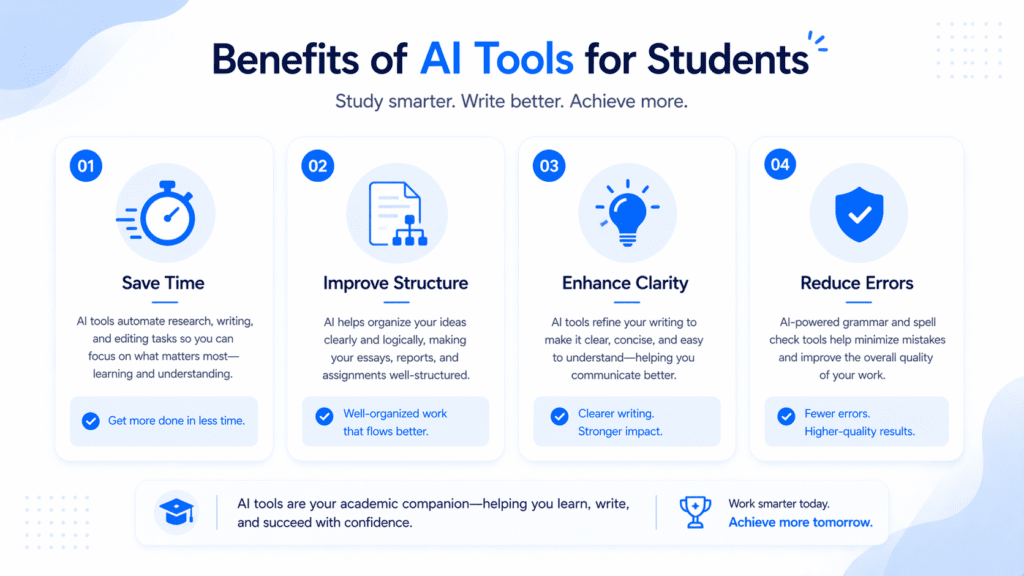
Why students use AI tools:
• Save time: Helps complete assignments faster
• Improve structure: Supports better organization of ideas
• Enhance clarity: Makes writing easier to understand
• Reduce errors: Helps with grammar and corrections
For example, a student working on a research paper might use AI to generate an outline, draft sections, and then refine the content before submission.
This approach doesn’t replace learning, but it helps manage the workload more efficiently.
What You’ll Learn in This Guide
This guide focuses on how AI Tools for Students Writing Assignments can support different parts of the academic writing process.
Instead of just listing tools, it explains how they fit into real student workflows.
What this guide covers:
• Tool comparison: Understand how different tools perform
• Writing workflow: How students use AI step by step
• Quality improvement: Ways to refine assignments
• Tool selection: Choose based on your needs
That said, not every tool works the same way.
Some are better for generating ideas, while others focus more on editing, plagiarism checking, or improving academic writing quality.
Comparison Table of AI Tools for Students Writing Assignments With Paid Plans
Before choosing between different AI Tools for Students Writing Assignments, it helps to compare them side by side.
Because in academic writing, students don’t just look at features. They care about accuracy, structure, and whether the tool fits into their writing process.
| Tool | Free Plan | Paid Pricing | Best For | Key Feature |
|---|---|---|---|---|
| ChatGPT | Yes | $20/month | Drafting | AI writing assistant |
| Jasper AI | No | $69/month | Structured writing | AI writing tool |
| Rytr | Yes | $9/month | Beginners | AI writer |
| QuillBot | Yes | $10/month | Editing | Paraphrasing tool |
| Grammarly | Yes | $12/month | Accuracy | Grammar checker |
| Writesonic | Yes | $16/month | Fast drafts | AI-generated content |
| Scalenut | No | $39/month | Research | Optimization tools |
From what I’ve seen, pricing usually reflects specialization.
For example, Grammarly focuses on grammar checks and plagiarism detection, while ChatGPT is more flexible for drafting assignments. Tools like QuillBot focus mainly on rewriting and improving clarity.
What Are AI Tools for Students Writing Assignments and How They Work
AI Tools for Students Writing Assignments are software tools powered by artificial intelligence that help with drafting, editing, and improving academic writing.
Let’s break it down simply.
You provide a topic or prompt, and the AI helps generate content, organize ideas, and improve structure.
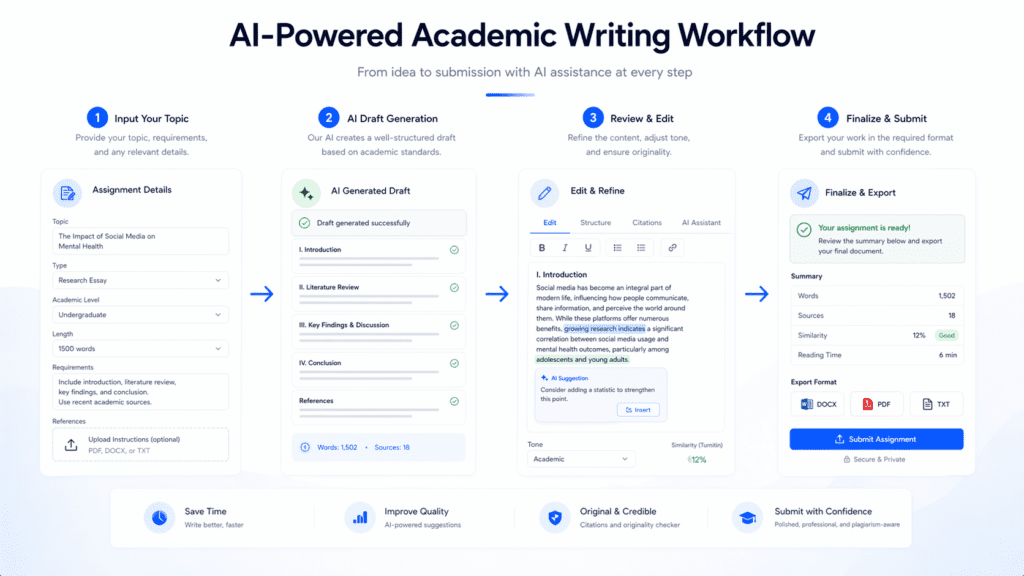
How these tools work:
• Input: Add topic, question, or assignment instructions
• Generation: AI generates a first draft or outline
• Editing: You refine and rewrite the content
• Final check: Use tools for grammar and plagiarism checks
These tools use AI models to understand language patterns and produce content that fits academic writing needs.
Why Students Use AI Tools to Improve Academic Writing and Productivity
Academic writing involves multiple steps.
Research, drafting, editing, and final checks all take time. AI Tools for Students Writing Assignments help simplify this process.
Why students use AI:
• Efficiency: Helps complete assignments faster
• Clarity: Improves writing structure
• Support: Assists during the writing process
• Accuracy: Reduces grammar errors
Now consider this.
Instead of struggling with writer’s block, students can use AI to generate a starting point and then refine it into a final submission.
How AI Changes the Academic Writing Process
The biggest shift is not just speed.
It’s how the entire writing process becomes more structured.
Traditional process:
• Manual writing: Start from scratch
• Editing: Revise multiple times
• Final check: Fix errors before submission
AI-supported process:
• Idea generation: Use AI to brainstorm ideas
• Draft creation: Generate a first draft quickly
• Editing: Improve clarity and structure
• Final check: Ensure accuracy and originality
This approach helps students focus more on understanding the topic rather than just writing.
7 Best AI Tools for Students Writing Assignments
Now let’s look at the tools that actually help students handle assignments more efficiently.
Each AI tool supports a different part of academic writing, from drafting to editing and final checks.
ChatGPT
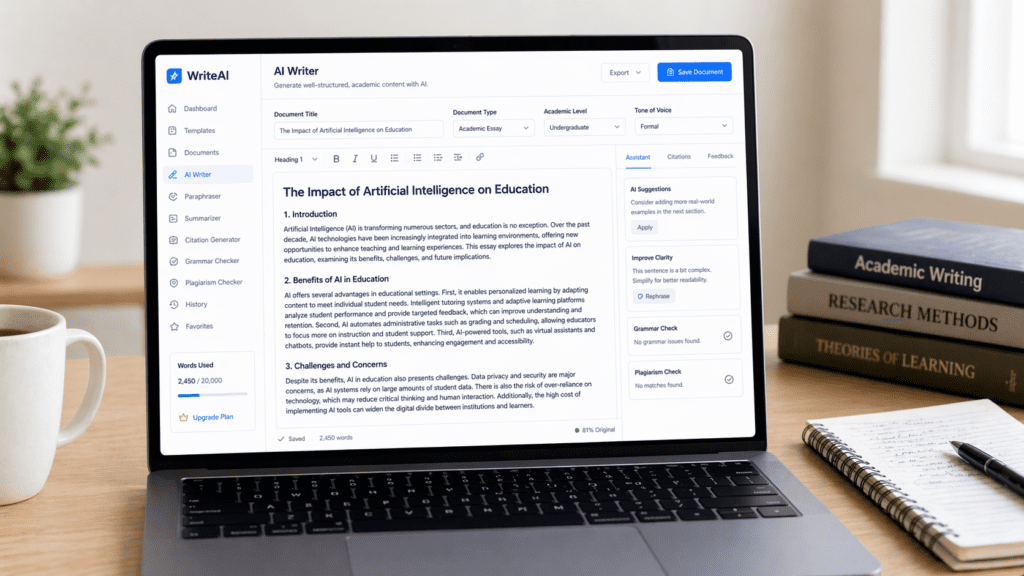
ChatGPT is one of the most widely used AI Tools for Students Writing Assignments.
It works as a flexible writing assistant that helps generate ideas, outlines, and full drafts.
Key features:
• AI writing: Helps create essays and assignment drafts
• Prompt-based: Adapts based on your topic
• Multi-use: Works for essays, reports, and case studies
Pricing:
• Free plan: Available
• Paid plan: $20/month
Pros and cons:
• Pros: Versatile and easy to use
• Cons: Output depends on prompt quality
For many students, this tool is the starting point for building a first draft quickly.
Jasper AI
Jasper is a structured AI writing tool that works well for more organized academic content.
It is often used when assignments require a clear format and logical flow.
Key features:
• Templates: Supports structured writing
• AI writing assistant: Helps create organized content
• Long-form content: Useful for essays and reports
Pricing:
• Paid plan: $69/month
Pros and cons:
• Pros: Produces well-structured content
• Cons: Higher pricing
This tool is useful when assignments require more polished and structured output.
Rytr
Rytr is a budget-friendly AI tool designed for simple writing tasks.
It helps students generate quick drafts without complex setup.
Key features:
• AI writer: Generates assignment drafts quickly
• Templates: Supports different content types
• Tone control: Adjusts writing style
Pricing:
• Free plan: Available
• Paid plan: $9/month
Pros and cons:
• Pros: Affordable and beginner-friendly
• Cons: Output can feel basic
This tool works well for short assignments or when you need a quick starting point.
QuillBot
QuillBot is mainly used for rewriting and improving clarity in assignments.
It works well when you already have a draft but want to make it clearer or more readable.
Key features:
• Paraphrasing tool: Helps rewrite sentences
• Clarity improvement: Makes content easier to understand
• Multiple modes: Adjusts rewriting style
Pricing:
• Free plan: Available
• Paid plan: $10/month
Pros and cons:
• Pros: Strong for editing and rewriting
• Cons: Not ideal for full assignment drafting
Many students use this after writing a draft to improve flow and avoid repetitive phrasing.
Grammarly
Grammarly focuses on improving accuracy in writing.
It helps catch grammar mistakes, improve sentence structure, and check clarity.
Key features:
• Grammar checking: Detects writing errors
• Clarity suggestions: Improves readability
• Writing feedback: Enhances overall quality
Pricing:
• Free plan: Available
• Paid plan: $12/month
Pros and cons:
• Pros: Reliable for final checks
• Cons: Not designed for generating full content
This tool is often used at the final stage before submitting assignments.
Writesonic
Writesonic helps generate assignment drafts quickly.
It is useful when you need a starting point or want to explore ideas.
Key features:
• AI-generated content: Creates drafts fast
• Templates: Supports different writing formats
• Content generation: Helps with multiple assignment types
Pricing:
• Free plan: Available
• Paid plan: $16/month
Pros and cons:
• Pros: Fast content creation
• Cons: Requires editing for academic quality
If you are short on time, this tool can help create a rough draft quickly.
Scalenut
Scalenut is more focused on research and structured content.
It helps students organize ideas and create well-structured assignments.
Key features:
• Content planning: Supports structured writing
• Research support: Helps gather information
• Optimization tools: Improves content quality
Pricing:
• Paid plan: $39/month
Pros and cons:
• Pros: Strong for research-based assignments
• Cons: Slight learning curve
This tool is useful when assignments require deeper structure and research.
Which AI Tool Produces the Best Assignment Quality Based on Testing
To understand how different AI Tools for Students Writing Assignments perform, a simple comparison was done.
The same prompt was used across multiple tools.
“Write a 1500 word essay on climate change”
The outputs were quite different once you looked beyond the surface.
What stood out:
• Clarity: ChatGPT produced more readable explanations
• Structure: Jasper created better organized content
• Speed: Writesonic generated content quickly
• Simplicity: Rytr provided shorter and simpler drafts
This usually works well, but not always.
Sometimes the quality depends on how clearly you define the topic and instructions.
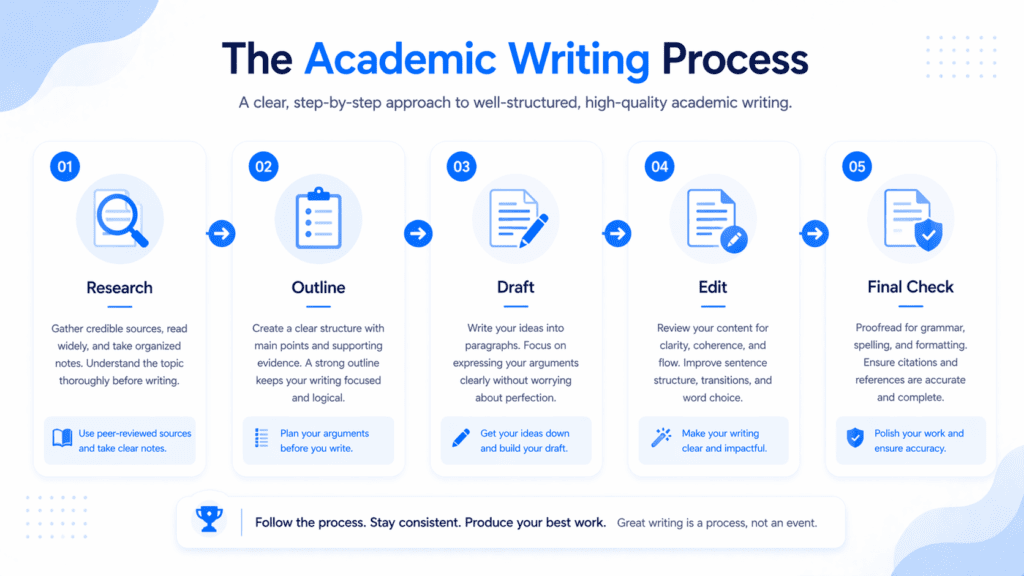
Step by Step Academic Writing Framework Using AI Tools
Using AI without a clear structure can lead to average results.
A simple framework helps improve both quality and workflow.
Step by step framework:
• Research: Gather information and understand the topic
• Outline: Use AI to organize key points
• Draft: Generate a first draft
• Edit: Improve clarity and structure
• Final check: Fix grammar and ensure originality
For example, a student might use ChatGPT to create an outline, Writesonic for the first draft, QuillBot to rewrite sections, and Grammarly for final checks.
Best AI Tools for Students Writing Assignments by Use Case
Different tools work better depending on what you need.
Choosing the right AI Tools for Students Writing Assignments depends on your specific use case.
Best tools by use case:
• Drafting: ChatGPT works well for generating ideas and content
• Structured writing: Jasper helps create organized assignments
• Editing: QuillBot improves clarity and rewriting
• Accuracy: Grammarly helps with grammar and corrections
This combination covers most parts of academic writing.
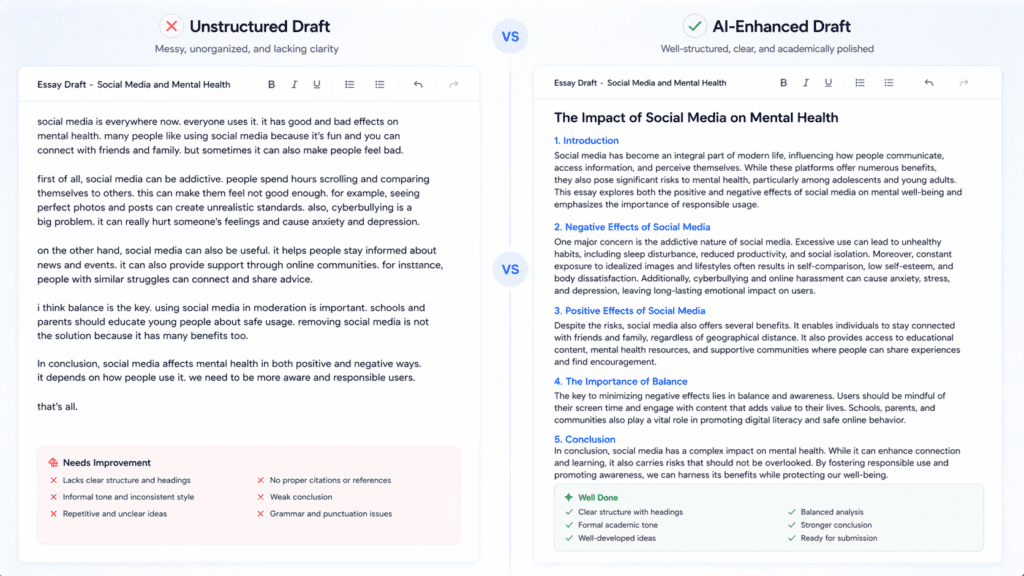
Before vs After Using AI for Assignments
The difference becomes clear when you compare workflows.
Without AI, writing assignments takes more time and effort.
With AI Tools for Students Writing Assignments, the process becomes faster and more structured.
Before using AI:
• Manual writing: Start from scratch
• Time required: Several hours for long assignments
• Editing: Multiple revisions
After using AI:
• Draft generation: Create content quickly
• Efficiency: Reduce time spent writing
• Improvement: Better structure and clarity
For example, writing a long essay manually may take several hours, while using AI tools can reduce the time significantly with proper editing.
How Students Use AI Tools in Their Daily Writing Workflow
AI is not used in just one step.
It supports the entire writing process.
Typical workflow:
• Idea generation: Use AI to brainstorm ideas
• Draft writing: Generate initial content
• Editing: Improve clarity and structure
• Final checks: Fix grammar and errors
This workflow helps students manage assignments more efficiently without skipping important steps.
How to Write Assignments Using AI Step by Step
Using AI effectively requires a simple process.
Without structure, results may feel generic.
Step by step process:
• Choose topic: Understand the assignment
• Generate outline: Use AI for structure
• Create draft: Generate first version
• Edit: Improve tone and clarity
• Check: Ensure accuracy and originality
One key detail is input quality.
Better prompts usually lead to better assignment drafts.
Best AI Tool Stack for Students Writing Assignments
Using one tool can help, but combining tools usually gives better results.
Different tools support different stages of the writing process.
Common tool stacks:
• Drafting stack: ChatGPT for ideas and initial drafts
• Editing stack: QuillBot for rewriting and clarity
• Final check stack: Grammarly for grammar and accuracy
This approach helps improve both speed and quality in academic writing.
How to Use AI Tools Ethically for Academic Writing
Using AI responsibly is important for academic success.
These tools should support learning, not replace it.
Ethical usage tips:
• Use AI as support: Do not rely completely on generated content
• Rewrite content: Ensure your own understanding
• Avoid plagiarism: Do not copy content directly
• Follow rules: Respect academic guidelines
Using AI in a responsible way helps maintain originality and credibility.
AI vs Student Writing What Actually Improves Learning
There is often a debate about AI versus traditional writing.
But the real benefit comes from combining both.
Comparison:
• AI support: Helps generate ideas and structure
• Student effort: Builds understanding and knowledge
• Best approach: Use AI for support and refine manually
AI can explain concepts, but learning happens when you process and rewrite the information yourself.
Speed vs Learning vs Quality in AI Writing Tools
Different tools offer different advantages.
Some focus on speed, while others support deeper learning.
Comparison:
• Fast tools: Writesonic generates drafts quickly
• Detailed tools: ChatGPT provides clearer explanations
• Balanced tools: Jasper combines structure and clarity
Faster output often needs editing, while deeper content takes more effort but improves understanding.
Plagiarism Citation and Accuracy in AI Generated Assignments
AI-generated content can be helpful, but it requires careful review.
Accuracy and originality are critical in academic writing.
Key considerations:
• Plagiarism risk: Always check content before submission
• Citation: Add proper references where needed
• Accuracy: Verify information from reliable sources
For example, AI-generated essays may not include proper citations, which can affect academic integrity.
Best AI Tool for Different Assignment Types
Different assignments require different approaches.
Choosing the right AI Tools for Students Writing Assignments depends on the type of work.
Assignment type recommendations:
• Essays: ChatGPT helps generate structured content
• Reports: Grammarly helps refine clarity and accuracy
• Case studies: Jasper supports structured writing
• Research papers: Scalenut helps organize content
Using the right tool for the right assignment improves overall results.
Benefits of AI Tools for Students Writing Assignments
AI Tools for Students Writing Assignments offer several advantages.
But results depend on how they are used.
Key benefits:
• Save time: Helps complete assignments faster
• Improve writing: Enhances clarity and structure
• Better workflow: Supports organized writing process
• Academic support: Helps manage workload
How to Choose the Right AI Tools for Students Writing Assignments
Choosing the right tools depends on your needs.
Not every AI tool works for every student.
What to consider:
• Assignment type: Essay, report, or research work
• Features: Drafting, editing, or checking tools
• Ease of use: Simple or advanced tools
Performance factors:
• Writing quality: Clarity and structure
• Accuracy: Grammar and correctness
• Workflow fit: How tools fit your process
The best setup is the one that supports your workflow effectively.
Accuracy and Limitations of AI Writing Tools for Students
AI tools are helpful, but they have limitations.
Understanding them helps avoid mistakes.
Common limitations:
• Generic content: Output may lack depth
• Over-reliance risk: Reduces learning if misused
• Editing required: Final review is necessary
For example, AI-generated content may not fully capture complex academic ideas without refinement.
Who Should Not Use AI Tools for Assignments
AI Tools for Students Writing Assignments are not suitable for everyone.
Some situations require manual work.
Not suitable for:
• Students avoiding learning: Not engaging with content
• Users expecting perfect output: No editing effort
• Complex academic work: Requires deep expertise
Common Mistakes Students Make When Using AI
Even the best tools can produce poor results if used incorrectly.
Common mistakes:
• Copy-pasting content: Not rewriting AI output
• Ignoring plagiarism: Skipping checks
• Weak editing: Submitting unrefined drafts
• Over-reliance: Not understanding the topic
Most issues come from how the tools are used, not the tools themselves.
What Most AI Tools for Students Writing Assignments Lists Miss
Most lists focus on tools.
But they miss important factors.
What they overlook:
• Learning matters more than speed
• Editing is essential for quality
• AI is a support tool, not a replacement
• Academic integrity is critical
Understanding how to use AI properly matters more than choosing tools.
Frequently Asked Questions About AI Tools for Students Writing Assignments
What are AI tools for students writing assignments?
They are AI-powered programs that help you plan, draft, edit, and format essays or reports faster.
Can an essay writer generator do my whole assignment?
Some generators can produce a full draft, but you should review, add your voice, and check facts before submitting.
Are free AI writing tools safe to use for school work?
Many are safe, but check privacy rules and avoid sharing sensitive data or relying on them for graded work without permission.
How can an AI writing assistant overcome writer’s block?
It suggests topics, opening lines, and outlines so you can start the first draft and build momentum quickly.
Do AI-powered tools help with academic research and citations?
Yes, some tools act as a research assistant and can suggest sources and generate citations, but always verify accuracy.
Will AI detection or plagiarism checker flag AI-generated content?
Detection tools and plagiarism checkers may flag recycled text or copying, so edit and add original thoughts to avoid issues.
Can editing tools improve academic tone and language and grammar checks?
Editing tools help adjust tone, fix grammar, and shorten wordy sentences to match academic standards and clarity.
How do pdf and file formats work with these tools?
Many tools let you upload pdfs or documents for editing, extracting text, or creating revised versions easily.
Is it okay to use AI as a tool when conducting research and journal submission prep?
Using AI as a tool for drafts and idea generation is fine, but follow your school’s rules for originality and citation before submission.
Can AI help me write better product descriptions or academic paragraphs?
Yes, AI systems can generate concise paragraphs or ad copy that you can adapt to your given topic and audience.
How do I avoid accidental plagiarism with AI-generated content?
Always run a plagiarism checker, paraphrase, add citations, and ensure the final work reflects your own understanding.
Will using AI reduce my learning or reproduce answers without thinking?
If you rely too much, it can short-circuit learning; use AI-assisted drafts and then revise to build skills and deeper understanding.

Final Verdict Best AI Tools for Students Writing Assignments
So what does this mean for you?
Choosing the right AI Tools for Students Writing Assignments depends on your workflow and academic needs.
If you want flexible drafting, ChatGPT is a strong option. If you need structured writing, Jasper works well. If editing and accuracy matter, Grammarly and QuillBot are useful.
In the end, there is no single perfect solution.
The best approach is to combine tools, refine your writing process, and use AI in a responsible way to improve both efficiency and learning outcomes.