
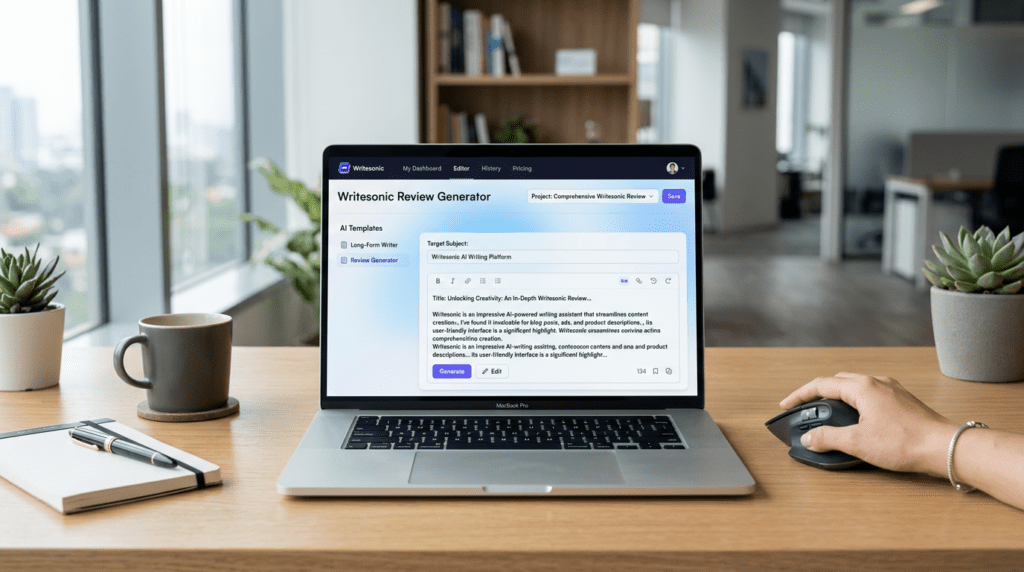
In today’s fast-paced digital world, businesses and marketers are constantly battling the ever-growing demand for fresh, engaging content. From blog posts and social media updates to ad copy and product descriptions, the content treadmill never stops. Many turn to artificial intelligence (AI) writing tools, hoping to boost their output without sacrificing quality or breaking the bank. But with so many options out there, how do you know which one actually delivers?
That’s where a thorough Writesonic Review comes in. We’ve spent significant time putting Writesonic through its paces, testing its capabilities, understanding its limitations, and evaluating its real-world value for content creators, marketers, and business owners. This isn’t just another feature list; it’s a practical look at whether this AI writer can genuinely fit into your workflow and help you achieve your content goals in 2026.
This review will cut through the marketing hype to show you exactly what Writesonic does well, where it might fall short, and most importantly, who stands to benefit most from adding it to their toolkit. If you’re weighing your options for an AI content generation platform, stick around – we’ll help you make an informed decision.
Quick Verdict: Is Writesonic Worth It in 2026?
Complete Verdict Table
| Criteria | Rating | Summary |
|---|---|---|
| Core Writing Quality | 4.2/5 | Strong for marketing copy and short-form content; requires editing for long-form. |
| Feature Set | 4.5/5 | Comprehensive, with unique tools like Audiosonic and Photosonic. |
| Ease of Use | 4.7/5 | Intuitive interface, suitable for beginners and teams. |
| Value for Money | 4.0/5 | Flexible pricing, but word credits can be confusing and costly for heavy users. |
| Overall | 4.3/5 | A powerful and versatile AI writer, especially for marketing and business use cases. |
Best For
Writesonic shines for individuals and marketing teams who need a versatile AI tool to handle a wide variety of content types. Think everything from snappy ad copy and engaging social media posts to detailed blog articles and even audio generation. It’s particularly strong for those who appreciate an all-in-one platform with a user-friendly interface that doesn’t require a steep learning curve.
Not Ideal For
If your primary need is to generate unlimited long-form content on a very tight budget, Writesonic might not be your first choice. Power users who churn out massive amounts of text daily may find its credit system more restrictive and potentially more costly compared to some competitors offering unlimited plans. Also, if you’re just looking for a super basic, no-frills AI text editor, some of Writesonic’s advanced features might feel like overkill.
Bottom Line
Overall, Writesonic stands out as a top-tier AI content platform. It truly excels in its versatility and ease of use, making it a powerful “Swiss Army knife” for many content creation tasks. While its pricing model, specifically the credit system, does require careful management to avoid unexpected costs, the sheer quality and breadth of its tools generally justify the investment for most businesses and marketing professionals. This Writesonic Review finds it to be a strong contender in the AI writing space.
How Writesonic’s Pricing and Value Actually Work
Understanding Writesonic’s pricing isn’t always as straightforward as a simple monthly fee. The platform uses a credit-based system that directly ties into the quality of the AI output you choose, which can significantly impact your actual costs and overall value. For anyone considering Writesonic, diving into these details is crucial to avoid unexpected expenses.
Breaking Down the Plans: Free, Business, and Enterprise
Writesonic offers a tiered structure designed to cater to different user needs, starting with a Free plan, moving to a flexible Business plan, and culminating in a custom Enterprise solution.
The Free plan is an excellent starting point for beginners or those wanting to test the waters. It typically provides a limited number of “Premium” quality words each month, often around 10,000 words. This is enough to generate a few short blog posts, social media captions, or ad copies. It’s ideal for individual bloggers or small businesses just exploring AI content generation without commitment. However, its limitations quickly become apparent if you need consistent, high-volume content.
The Business plan is where most serious users will land. It offers a range of options, typically starting around $16/month (billed annually) for 200,000 Premium words, or $20/month (billed monthly). This plan scales up significantly, allowing users to purchase millions of words per month. It unlocks all core features, including the long-form article writer, SEO tools, and access to Chatsonic. This plan is designed for freelancers, small to medium-sized businesses, and marketing teams who need a versatile AI content generator for various tasks.
For large organizations with extensive content needs, specific compliance requirements, or a desire for dedicated support and custom features, the Enterprise plan provides a tailored solution. Pricing for this is custom and negotiated directly with Writesonic, offering features like single sign-on (SSO), advanced user management, and API access.
Understanding Word Quality vs. Word Count: The Hidden Cost
One of the most critical aspects of Writesonic’s pricing model, and often a source of confusion for new users, is the distinction between “word count” and “word quality.” Unlike some competitors that offer unlimited words, Writesonic operates on a credit system where the quality level you select for your AI output directly impacts how many credits (or “words”) are consumed.
Writesonic typically offers four quality levels: Economy, Good, Average, and Premium. Generating content at the “Premium” level, which is generally recommended for the best results, consumes significantly more credits than generating content at the “Economy” level. For example, generating 1,000 words at the Premium level might consume 1,000 credits, while the same 1,000 words at the Economy level might only consume 100 credits.
The practical implication is that if you consistently aim for high-quality output, your allocated word count will deplete much faster than if you were generating lower-quality drafts. Beginners often struggle with this, expecting their monthly word allowance to last longer than it does, leading to unexpected credit top-ups or plan upgrades. This hidden cost means that while a plan might advertise “200,000 words,” if you’re always generating Premium quality, your effective word count for high-quality content is much lower. It becomes frustrating for users who need consistent, high-caliber content and find themselves constantly monitoring their credit usage.
Is the Business Plan Worth the Investment for Solo Creators?
For solo creators, such as freelance writers, bloggers, or small business owners managing their own content, the Business plan presents a compelling, yet nuanced, value proposition. On one hand, the sheer versatility of Writesonic, offering everything from blog post generation to ad copy and even image creation, can be a massive time-saver. If a solo creator needs to produce diverse content types regularly – think social media posts, email newsletters, website copy, and occasional blog articles – the Business plan, starting around $16/month (billed annually), can be a worthwhile investment. It consolidates multiple tools into one platform, streamlining the workflow.
However, the credit system requires careful management. A solo creator who primarily focuses on long-form content, like multiple in-depth blog posts each month, might find their Premium word allowance depleting quickly. For instance, generating four 2,000-word Premium articles could consume 8,000 credits just for the initial drafts, not accounting for revisions or other content types. If your primary need is high-volume, long-form content, and you’re on a tight budget, you might find yourself needing to upgrade plans or purchase additional credits more often than anticipated. The Business plan is most valuable for solo creators who leverage its breadth of features and can strategically manage their credit usage across various content formats.
How Writesonic’s Pricing Compares to Jasper and Copy.ai
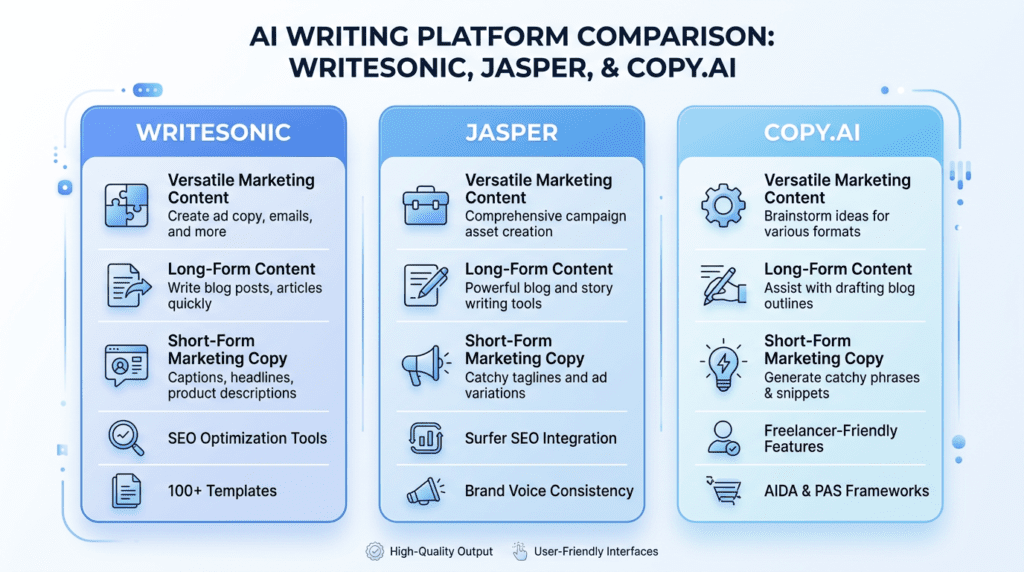
When evaluating Writesonic’s pricing, it’s helpful to compare it to other leading AI writing tools like Jasper and Copy.ai, as their models often differ significantly, impacting who benefits most.
Jasper typically offers plans that start around $39/month (billed annually) for 50,000 words, or $49/month (billed monthly) for the Creator plan. Their Boss Mode, which unlocks more advanced features and longer content generation, starts at $59/month (billed annually) for 50,000 words. Jasper’s pricing is often perceived as higher, but it generally offers a more robust long-form writing experience with features like Recipes and a stronger focus on brand voice integration.
Copy.ai often positions itself with a more generous free tier and a Pro plan that starts around $36/month (billed annually) for unlimited words, or $49/month (billed monthly). The “unlimited words” model is a significant differentiator, especially for users with very high volume needs or those who prefer not to worry about credit consumption. Copy.ai excels in short-form content and marketing copy, similar to Writesonic, but without the credit constraint.
| Category | Writesonic (Business Plan) | Jasper (Creator/Boss Mode) | Copy.ai (Pro Plan) |
|---|---|---|---|
| Best For | Versatile content, marketing, unique features (audio/image) | Long-form content, brand voice, advanced workflows | High-volume short-form, marketing copy, unlimited words |
| Pricing (Entry) | Starts ~$16/month (annual) for 200K Premium words | Starts ~$39/month (annual) for 50K words | Starts ~$36/month (annual) for unlimited words |
| Word Model | Credit-based, quality-dependent | Word count-based | Unlimited words |
| Key Strength | Feature breadth, ease of use, integrated tools | Long-form generation, advanced templates, brand voice | Unlimited generation, marketing copy, simplicity |
| Biggest Limitation | Credit management for high-quality output | Higher entry price, word limits on lower tiers | Less focus on long-form, fewer unique non-text features |
Who should choose Writesonic? Users who value an all-in-one platform with unique features like Audiosonic and Photosonic, and who can manage their credit usage across diverse content needs. When is it clearly better? If you need a comprehensive suite beyond just text generation, and the credit system aligns with your content volume. Who should choose Jasper? Those prioritizing deep, long-form content creation and robust brand voice adherence, willing to pay a premium. Who should choose Copy.ai? Users with very high volume needs for short-form marketing copy who want the peace of mind of unlimited word generation.
Long-Term Value: When Does an Annual Subscription Make Sense?
Opting for an annual subscription with Writesonic, or any SaaS tool, typically comes with a significant discount compared to monthly billing. For Writesonic, this discount can make the Business plan considerably more affordable, often saving users 20-30% over the year.
An annual subscription makes sense for users who have:
- Consistent Content Needs: If your business or personal brand requires a steady stream of content month after month, locking in an annual plan provides predictable costs and ensures continuous access to the tools.
- Established Workflow: You’ve integrated Writesonic into your content creation process and are confident in its ability to meet your needs. You understand the credit system and can effectively manage your usage.
- Budget Certainty: An annual payment simplifies budgeting by eliminating recurring monthly charges and often provides a better overall financial return.
However, an annual commitment may not be ideal if:
- You’re Still Testing: If you’re new to AI writing or still evaluating Writesonic against alternatives, a monthly plan offers more flexibility to switch if it doesn’t meet your expectations.
- Fluctuating Content Volume: Businesses with highly seasonal or unpredictable content demands might find themselves overpaying during slow periods if they’ve committed to an annual plan based on peak usage.
- Rapidly Evolving Needs: The AI landscape changes quickly. While Writesonic is constantly updated, committing for a full year might feel restrictive if a new, more suitable tool emerges or your business needs pivot dramatically.
For bootstrapped startups or solo creators, the upfront cost of an annual plan can be a barrier, even with the savings. It’s a trade-off between immediate cash flow and long-term savings. Ultimately, an annual subscription is a strong choice for those who have moved past the experimentation phase and view Writesonic as a core, long-term component of their content marketing strategy.
Evaluating Writesonic’s Core AI Writing Capabilities
Beyond the pricing structure, the true test of any AI writer lies in the quality and utility of its generated content. Writesonic aims to be a comprehensive solution, but like all AI tools, it has strengths and areas where human oversight remains indispensable.
Article & Blog Writer: From Idea to First Draft
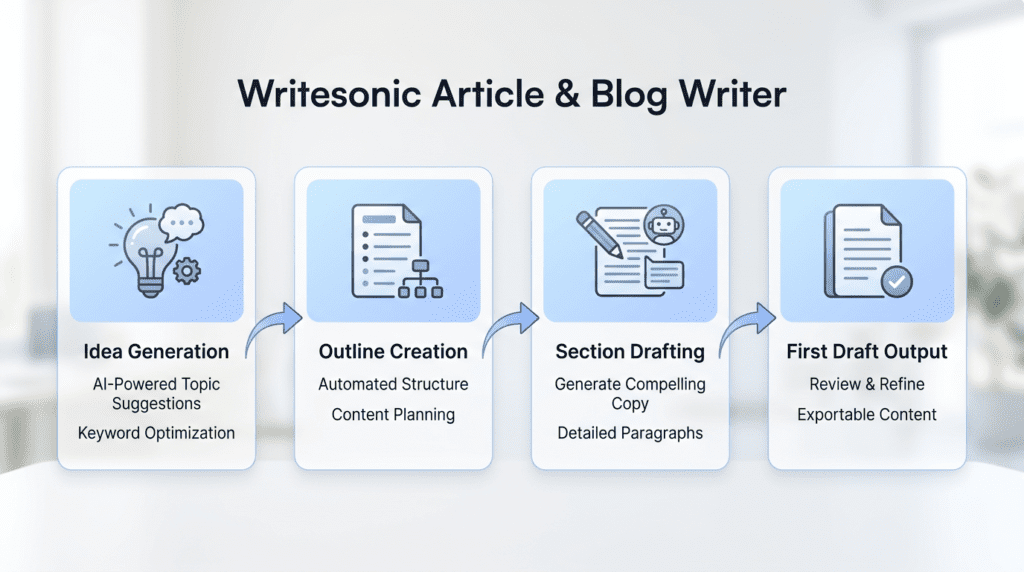
Writesonic’s Article & Blog Writer is one of its most popular features, designed to take users from a basic idea to a structured first draft. The workflow is generally intuitive: you input a topic, keywords, and perhaps a brief description, and the AI generates an outline, then expands on each section. This process can significantly accelerate the initial stages of content creation.
For beginners, the allure of a “one-click blog post” is strong, but the reality is that the output is a *first draft*. While it often provides a solid foundation, expecting a publish-ready article without any human intervention is a common misconception. The AI excels at structuring content, generating headings, and filling in paragraphs with relevant (though sometimes generic) information.
What gets easier over time is learning how to prompt the AI effectively. Users learn to provide more specific instructions, refine outlines, and guide the AI toward desired angles or tones. This iterative process improves the quality of the initial draft. However, what can become frustrating is the occasional repetition of phrases, a lack of deep insight, or the need for extensive fact-checking, especially for complex or niche topics. The AI is a powerful draft accelerator, but it doesn’t replace the critical thinking, unique perspective, or in-depth research a human writer brings to a truly high-quality, SEO optimized content piece.
Brand Voice: How Well Does It Capture Your Unique Style?
Writesonic includes a “Brand Voice” feature designed to help the AI mimic your company’s unique tone and style. Users can typically input examples of their existing content, define key characteristics (e.g., formal, casual, witty, authoritative), and set parameters for how the AI should write. The goal is to ensure consistency across all generated content, making it sound like it came from your brand, not a generic AI.
In practice, the Brand Voice feature can be quite effective for establishing a baseline tone. It helps prevent the AI from defaulting to overly robotic or generic language. For businesses with clearly defined brand guidelines and a consistent body of existing content, it can significantly reduce the amount of post-generation editing required to align with their style.
However, the feature does have its limitations. It often struggles with nuance, subtle humor, sarcasm, or highly specific industry jargon that isn’t explicitly fed into its training. While it can adopt a “friendly” or “professional” tone, capturing the unique “voice” that makes a brand truly distinctive often requires manual tweaking. It’s a powerful tool for consistency and efficiency, but it’s not a magic bullet for replicating a truly human, idiosyncratic brand voice. Users should view it as a strong starting point that still benefits from human refinement, especially for critical marketing copy or thought leadership pieces.
SEO Optimization: Testing the Surfer Integration and SEO Checker
For anyone focused on organic visibility, Writesonic’s SEO capabilities are a significant draw. The platform integrates directly with Surfer SEO, a popular tool for content optimization. This integration allows users to generate content drafts while simultaneously receiving real-time suggestions for keywords, headings, and content structure based on top-ranking pages for their target keyword.
The Surfer integration is genuinely useful for on-page SEO. It helps ensure that your generated content includes relevant terms and covers topics that search engines expect to see. This can be a huge advantage for improving the potential for ranking. Writesonic also has its own built-in SEO checker, which provides basic recommendations for keyword density, readability, and other on-page factors.
Its strengths lie in guiding the AI to produce content that is structurally sound and keyword-rich, addressing common SEO factors. It helps users avoid keyword stuffing while ensuring comprehensive topic coverage. However, it’s important to remember that SEO optimization is more than just on-page factors. The integration helps with the “what” and “how” of content, but it doesn’t replace a comprehensive SEO strategy that includes technical SEO, link building, and understanding search intent. It’s a powerful assistant for creating SEO optimized content, but it’s not a substitute for a human SEO specialist. For a thorough Writesonic Review, its SEO tools are a clear advantage for marketers.
Fact-Checking and Accuracy: Can You Trust the Output?
One of the most critical considerations for any AI content generator is factual accuracy. Writesonic, like all large language models, is trained on vast datasets, but it does not “understand” facts in the human sense. Its output is based on patterns and probabilities, meaning it can sometimes generate plausible-sounding but incorrect information, a phenomenon often referred to as “hallucination.”
Writesonic does not have a built-in, automated fact-checking mechanism for its core writing tools. While Chatsonic (discussed later) offers real-time web access and citations, the primary Article & Blog Writer and other templates do not inherently verify the information they produce. This means that every piece of content generated by Writesonic, especially for factual topics, must undergo rigorous human verification.
The necessity of human verification is a workflow implication that beginners often underestimate. It’s a common misconception that AI output is inherently accurate. This makes Writesonic less suitable for highly regulated industries (e.g., medical, legal, financial) where absolute factual precision is paramount and errors could have severe consequences. For general blog posts or marketing copy, the risk is lower, but the responsibility for accuracy always rests with the human editor. Budgeting time for thorough fact-checking and editing is non-negotiable when using any AI content software.
Multilingual Support: Performance Beyond English
Writesonic boasts multilingual support, allowing users to generate content in numerous languages beyond English. This feature is invaluable for global businesses, marketers targeting specific non-English speaking markets, or content creators with an international audience. The platform typically supports dozens of languages, including major ones like Spanish, French, German, Italian, Portuguese, and many more.
The quality of non-English output can vary. For widely spoken languages with extensive online data, the AI’s performance is often quite good, producing fluent and grammatically correct text. It can handle basic translations and content generation with reasonable accuracy. However, for less common languages or those with more complex grammatical structures and cultural nuances, the quality may not always match the English output. The AI might struggle with idiomatic expressions, subtle cultural references, or highly localized phrasing, making the content sound less natural or even slightly awkward to native speakers.
Who benefits most? Businesses looking to quickly localize marketing materials, product descriptions, or basic blog posts for multiple markets. It’s a powerful tool for expanding reach without needing a dedicated human translator for every piece of content. Who may not benefit? Those requiring highly nuanced, culturally sensitive, or deeply localized content in niche languages, where a human translator or native speaker editor would still be essential to ensure maximum impact and authenticity. The trade-off is often speed and cost-efficiency versus absolute linguistic and cultural perfection.
Beyond Text: Testing Writesonic’s Unique Features
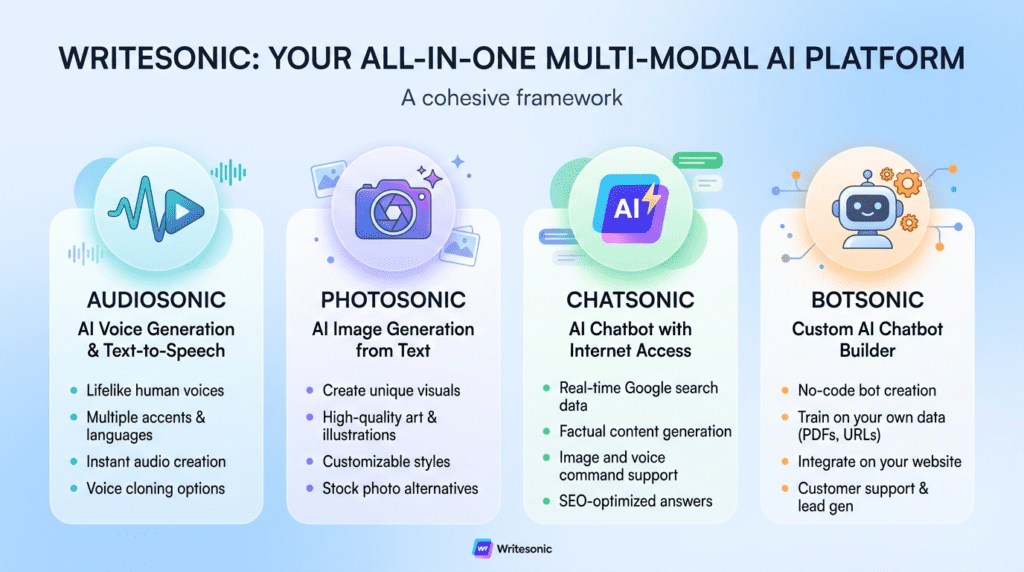
Writesonic distinguishes itself from many AI writing tools by offering a suite of features that extend beyond mere text generation. These unique capabilities, such as Audiosonic, Photosonic, Chatsonic, and Botsonic, aim to make it a more comprehensive content creation platform.
Audiosonic: Is AI-Generated Audio Ready for Prime Time?
Audiosonic is Writesonic’s AI-powered text-to-speech tool, designed to convert written content into natural-sounding audio. The feature typically allows users to select from various voices, languages, and even adjust parameters like speed and pitch. The promise is to quickly generate voiceovers for videos, podcasts, audio articles, or accessibility features without needing professional voice actors or recording equipment.
The quality of AI-generated audio has improved dramatically in recent years, and Audiosonic reflects this progress. Many of the voices are quite natural, with good intonation and rhythm, especially for standard informational content. For basic voiceovers, e-learning modules, or internal communications, it can be a highly efficient solution.
However, AI-generated audio is not yet fully “prime time” for all professional uses. While less robotic than older text-to-speech engines, it often lacks the emotional depth, nuanced inflection, and authentic human warmth that a professional voice actor brings. It can struggle with conveying complex emotions, sarcasm, or highly dramatic tones. For high-stakes marketing videos, professional podcasts, or brand-defining voiceovers, the subtle imperfections of AI audio can still be noticeable. Who benefits most? Content creators needing quick, functional voiceovers, those creating accessible versions of their content, or businesses looking to experiment with audio content on a budget. Who should avoid it? Those requiring highly polished, emotionally resonant audio that needs to connect deeply with an audience.
Photosonic: Creating Custom Images for Your Content
Photosonic is Writesonic’s AI image generator, allowing users to create custom visuals from text prompts directly within the platform. This feature aims to solve the common problem of finding relevant, unique, and royalty-free images for blog posts, social media, and marketing materials. Users input a description of the desired image, and Photosonic generates several options.
The quality and creativity of Photosonic’s generated images are generally good for basic needs. It can produce a wide range of styles, from realistic to artistic, and is particularly useful for abstract concepts or simple illustrations. For blog post headers, social media graphics, or internal presentations, it offers a convenient way to get unique visuals without relying on generic stock photos or hiring a designer.
However, Photosonic, like most AI image generators, has its limitations. It can sometimes struggle with highly specific details, complex compositions, or generating consistent characters/objects across multiple images. The output can occasionally look “AI-generated,” lacking the organic feel or artistic flair of human-created art or high-quality photography. While it’s a fantastic tool for quick visual content, it may not replace dedicated AI image generators like Midjourney or DALL-E for advanced users, nor will it substitute for professional photography or custom graphic design for brand-critical visuals. It’s a valuable addition for content creators looking to quickly add visual appeal to their Writesonic Review articles or other content.
Chatsonic: How It Stacks Up Against ChatGPT for Research and Ideation
Chatsonic is Writesonic’s conversational AI, designed to function similarly to ChatGPT but with some key differentiators. Its primary advantage is its real-time web access, meaning it can pull information from the internet to answer current events or provide up-to-date data, unlike earlier versions of ChatGPT that were limited to their training data cutoff. Chatsonic also often provides citations for its sources, which is invaluable for research and ensuring factual accuracy. Additionally, it allows for persona customization, letting users instruct the AI to respond as a specific character or expert.
For research and ideation, Chatsonic is a powerful tool. It can quickly summarize complex topics, brainstorm content ideas, generate outlines, and even help with competitive market analysis by pulling recent data. The external citation share feature is particularly useful for content marketers who need to back up their claims.
Compared to ChatGPT Plus (which also has web browsing capabilities), Chatsonic holds its own for general research and content-focused tasks. However, ChatGPT Plus might still offer a slight edge in terms of conversational depth, handling highly complex coding tasks, or maintaining longer, more intricate dialogues. Chatsonic’s persona feature is a strong point for tailoring responses, making it highly effective for specific marketing roles. For users who prioritize up-to-date information and verifiable sources within their AI search platforms, Chatsonic is a strong contender, often outperforming free versions of ChatGPT.
Botsonic: Building a No-Code AI Chatbot for Your Website
Botsonic is Writesonic’s solution for creating custom, no-code AI chatbots for websites. Its purpose is to automate customer support, answer frequently asked questions, generate leads, and enhance user engagement without requiring any coding knowledge. Users can train the chatbot on their website content, FAQs, or uploaded documents, allowing it to provide instant, relevant responses.
The “no-code” aspect makes Botsonic incredibly accessible for small businesses, e-commerce stores, and agencies looking to implement automated support quickly. Setting up a basic chatbot is straightforward, and it can significantly reduce the workload on customer service teams by handling common inquiries 24/7. This can free up human agents to focus on more complex issues, improving overall efficiency.
However, Botsonic’s effectiveness depends heavily on the quality and comprehensiveness of its training data. If the chatbot isn’t well-trained, it can provide generic or unhelpful answers, leading to user frustration. While it excels at answering specific questions based on provided information, it may struggle with highly nuanced conversations, emotional intelligence, or complex problem-solving that requires human judgment. For bootstrapped startups, it’s an excellent way to provide immediate support and capture leads. For enterprise marketing teams, it can be a valuable first line of defense, but it won’t entirely replace a robust human support system for critical or sensitive customer interactions. The trade-off is automation and efficiency versus the personalized touch of human support.
Real-World Scenario: Using Writesonic for a Marketing Campaign
This section provides a practical walkthrough of using Writesonic to create assets for a fictional product launch. It’s one thing to talk about features, but seeing them in action helps clarify their real-world utility and limitations.
The Goal: Launching a new e-commerce product.
Imagine we’re launching “EcoGlow,” a new line of sustainable, plant-based skincare products. Our marketing team needs to generate buzz, educate potential customers, and drive sales. This isn’t just about writing a few product descriptions; it’s about creating a cohesive campaign across multiple channels.
Step 1: Ideation & Research (Using Chatsonic for market trends)
Before writing anything, we’d start with market research. Instead of sifting through countless articles, we’d turn to Chatsonic. We might prompt it with questions like: “What are the current trends in sustainable skincare for Gen Z?” or “Identify key pain points for consumers looking for eco-friendly beauty products.” Chatsonic, with its real-time web access, can quickly pull recent data and summarize insights. It’s great for brainstorming product names, taglines, or even content ideas for blog posts. For instance, it could suggest “the rise of ‘skinimalism’ in eco-conscious beauty” as a trend, giving us a solid angle for our content. While it won’t replace deep market analysis, it’s a fantastic starting point for rapid ideation and getting a pulse on current conversations, saving hours of initial Googling.
Step 2: Core Content (Using Article Writer for a blog post)
With our market insights, the next step is to create a cornerstone piece of content – a blog post. We’d head to Writesonic’s Article Writer. We’d input our focus keyword, like “sustainable skincare benefits,” and provide a brief outline based on Chatsonic’s research. The AI then generates a full draft. For EcoGlow, we might get a post titled “Unlock Your Natural Radiance: The Unexpected Benefits of Sustainable Skincare.”
What’s great here is the speed. A first draft, often 1,500-2,000 words, can be ready in minutes. It’s a massive time-saver compared to staring at a blank page. However, this is where the “editing imperative” kicks in. While the structure and general flow are usually good, the content often needs factual verification, a stronger brand voice infusion, and more nuanced arguments. For example, the AI might mention generic benefits, but we’d need to edit it to specifically highlight EcoGlow’s unique ingredients or certifications. The built-in SEO tools, like the Surfer integration, can help optimize the draft for keywords and structure, but a human touch is still essential to make it truly compelling and accurate for our audience.
Step 3: Promotional Copy (Generating social media posts and ad copy)
Once the core blog post is drafted, we need to promote it and the product. This is where Writesonic truly shines for marketing teams. Using its various templates, we can quickly generate:
- Facebook Ad Copy: We’d input product features and target audience, and Writesonic would spit out several variations, from problem-solution to benefit-driven angles.
- Instagram Captions: Short, engaging captions with relevant hashtags for visual posts.
- Google Ads Headlines & Descriptions: Optimized for character limits and click-through rates.
- Email Subject Lines: Catchy options for our launch email sequence.
The sheer volume and variety of copy generated in minutes is incredibly valuable. Instead of spending hours crafting each piece, we can generate dozens of options, pick the best ones, and tweak them. This allows for A/B testing different messages without a huge time investment. For a product launch, this speed means we can react quickly to market feedback or test new angles on the fly.
Step 4: Visuals & Audio (Creating images with Photosonic and a short audio summary with Audiosonic)
To round out the campaign, we’d leverage Writesonic’s multimedia features.
- Photosonic: For social media or blog post headers, we might need custom images. We could prompt Photosonic with “minimalist skincare packaging, natural light, green leaves, soft focus” to generate unique visuals that align with the EcoGlow brand. While the output quality can vary, and sometimes requires multiple attempts to get the right aesthetic, it’s a quick way to get royalty-free, custom images without relying solely on stock photos. It’s not going to replace a professional product photographer, but for conceptual or supporting visuals, it’s surprisingly effective.
- Audiosonic: For a quick social media snippet or an audio summary of our blog post, Audiosonic comes in handy. We could feed it a paragraph from our blog post, and it would generate a natural-sounding voiceover. This is perfect for creating short, engaging audio clips for Instagram Reels, TikTok, or even a podcast intro. The voices are generally high-quality and less robotic than earlier AI iterations, making them genuinely usable for quick content pieces.
Outcome & Time Saved: A realistic assessment of the process and efficiency gains.
Using Writesonic for this EcoGlow launch campaign would realistically cut content creation time by 40-60%. The biggest gains come from overcoming writer’s block, generating multiple copy variations quickly, and having first drafts ready in minutes.
However, it’s crucial to understand the trade-offs. While Writesonic is a powerful assistant, it’s not a fully autonomous content creator. The output, especially for long-form content, still requires significant human editing for accuracy, brand voice, and nuanced messaging. For our EcoGlow campaign, we’d still need a human editor to ensure the scientific claims are correct, the tone is consistently warm and trustworthy, and the overall narrative flows seamlessly across all assets. The time saved isn’t in eliminating human involvement, but in shifting human effort from initial drafting to strategic editing and refinement. This allows marketing teams to focus on strategy and creativity, rather than just churning out words.
Who Benefits Most from Writesonic (and Who Should Look Elsewhere)?
Understanding who truly benefits from Writesonic means looking beyond the feature list and considering real-world workflows and business needs.
The Marketing Team: A powerful engine for ad copy, social media, and landing pages.
Marketing teams, especially those managing multiple campaigns or clients, are arguably Writesonic’s sweet spot. The platform excels at generating short-form, high-impact copy quickly. Think about the constant demand for fresh ad variations, social media posts for different platforms, and landing page headlines. Writesonic’s templates for these specific use cases are robust and efficient. It allows teams to test more ideas, iterate faster, and maintain a consistent content pipeline without needing to hire an army of copywriters. For agencies, the ability to quickly spin up content for diverse client needs, while maintaining some level of brand voice consistency (using the Brand Voice feature), is a significant advantage. It’s a force multiplier for content production, freeing up human marketers to focus on strategy and performance analysis.
The SEO Content Creator: Strengths and weaknesses for long-form, optimized articles.
For SEO content creators, Writesonic offers a mixed bag. Its Article Writer is excellent for generating initial drafts of blog posts and articles, especially when paired with its Surfer integration. This can significantly speed up the research and outlining phase, helping you get a keyword-optimized draft much faster than writing from scratch. If your goal is to produce a high volume of informational content that covers a wide range of topics, Writesonic can be a valuable tool.
However, its weaknesses become apparent when deep expertise, nuanced arguments, or highly original insights are required. While it can generate content that passes AI detection, it often lacks the unique perspective and critical thinking that a human expert brings. Factual accuracy, while improved, still needs rigorous checking. So, if you’re an SEO content creator aiming for top-tier, authoritative pieces that rank for highly competitive keywords and establish thought leadership, Writesonic is a powerful *drafting* tool, but it’s not a replacement for thorough human research, editing, and strategic input. It helps you get to 70% faster, but that final 30% still demands significant human effort.
The Small Business Owner: Is it a viable substitute for a freelance writer?
For many small business owners, the cost of a dedicated freelance writer or marketing agency can be prohibitive. Writesonic presents an intriguing alternative. It can absolutely help generate website copy, product descriptions, email newsletters, and basic blog posts without needing to hire someone. For a bootstrapped startup or a local business with limited marketing budget, it can be a game-changer, enabling them to create professional-sounding content that they otherwise couldn’t afford.
However, it’s not a complete substitute. A freelance writer brings not just writing skills, but also strategic thinking, an understanding of your brand’s unique voice, and the ability to conduct interviews or deep research specific to your niche. Writesonic can’t interview your customers or understand the subtle nuances of your local market. So, while it can handle many content tasks, small business owners should view it as a powerful *assistant* that reduces the need for constant external help, rather than a full replacement for a human expert who can provide strategic guidance and bespoke content.
The Agency: Managing multiple clients and brand voices.
Agencies face the unique challenge of managing diverse client needs, often with tight deadlines and varying brand guidelines. Writesonic can be incredibly beneficial here. The ability to quickly generate content for different industries, tones, and formats means agencies can scale their content production without proportionally scaling their headcount. The “Brand Voice” feature, if properly set up, can help maintain consistency across client projects.
The main challenge for agencies lies in credit management and ensuring output quality across multiple projects. If an agency has a high volume of long-form content needs, the credit system can become a bottleneck or an unexpected cost. Additionally, maintaining distinct brand voices for many clients requires diligent oversight and editing, as the AI can sometimes blend styles if not carefully managed. It’s a tool that allows agencies to be more efficient and competitive, but it demands a robust internal workflow for review and quality control.
Honest Take: The Hidden Trade-Offs of Using Writesonic
While Writesonic offers impressive capabilities, it’s important to discuss the less-advertised realities and practical limitations that emerge with real-world usage. This isn’t about flaws, but rather the inherent trade-offs of relying on AI for creative tasks.
The “Jack of All Trades” Problem: Is it master of none?
Writesonic boasts an incredibly broad feature set, from long-form articles to ad copy, image generation, and even audio. It truly is a “Swiss Army knife” for content. On one hand, this versatility is fantastic; you don’t need multiple subscriptions for different tools. On the other hand, this breadth can sometimes mean that while it does many things *well*, it doesn’t necessarily do *everything* perfectly. For instance, while Photosonic can create decent images, it might not rival dedicated AI art generators like Midjourney for artistic depth or specific stylistic control. Similarly, while the Article Writer is strong, a tool like Surfer SEO (which Writesonic integrates with) is still more specialized for deep SEO analysis. The trade-off is often between comprehensive utility and specialized excellence. Users might find themselves using Writesonic for 80% of their content needs, but still turning to niche tools for the remaining 20% that requires highly specialized output.
Managing the Credit System: The Mental Overhead of Word Counts
One of the most common hidden frustrations for Writesonic users, especially those coming from unlimited word count models, is managing the credit system. While the pricing plans offer flexibility, constantly monitoring your word credits can become a mental overhead. Every generation, every edit, every re-run consumes credits. This can lead to:
- Hesitation: Users might hesitate to experiment with different prompts or regenerate content for fear of “wasting” credits. This stifles creativity and the iterative process that AI tools are designed to facilitate.
- Workflow Interruptions: Running out of credits mid-project can halt your workflow, forcing you to upgrade or wait for the next billing cycle.
- Cost Anxiety: For heavy users, the cost can quickly escalate if they’re not careful, making the “affordable” starting price less so in practice.
This credit-based model, while transparent, fundamentally changes how you interact with the tool compared to an unlimited plan. It introduces a psychological barrier that can impact efficiency and user satisfaction, especially as usage grows.
The Editing Imperative: Why You Still Need a Human in the Loop
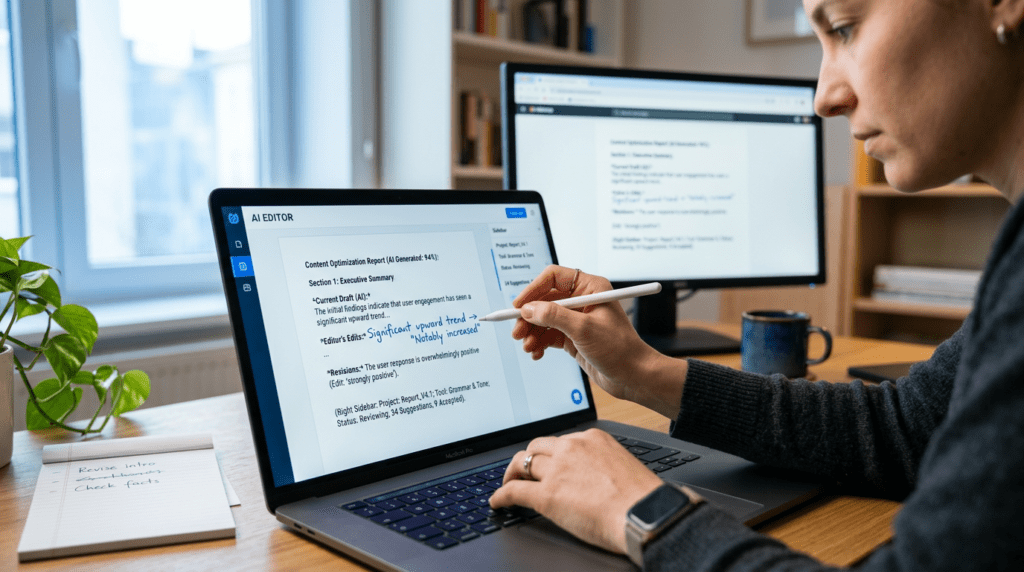
This is perhaps the most critical trade-off for any AI writing tool, and Writesonic is no exception. Despite advancements, AI-generated content is rarely publish-ready without human intervention. Marketing pages often highlight the speed of generation, but they rarely emphasize the *time spent editing*.
You’ll still need to:
- Fact-check: AI can hallucinate or present outdated information.
- Infuse Brand Voice: While Writesonic has a Brand Voice feature, it’s a guide, not a perfect mimic. Human editors ensure the tone, style, and personality truly align with your brand.
- Add Nuance and Depth: AI often produces content that is broad but lacks specific, insightful analysis or unique perspectives.
- Improve Flow and Readability: AI can sometimes be repetitive or produce awkward phrasing that a human editor would smooth out.
- Ensure SEO Effectiveness: While it helps with keywords, a human understands search intent and user experience in a way AI doesn’t fully grasp yet.
The reality is that Writesonic is a powerful *drafting* tool. It gets you from zero to 70% incredibly fast. But that final 30% – the polish, the accuracy, the unique human touch – still requires significant human time and expertise. Overestimating the AI’s ability to produce final copy is a common beginner mistake that leads to frustration and wasted effort.
Feature Bloat vs. Focused Utility: Navigating the Dashboard
Writesonic’s dashboard is packed with features and templates. While this offers immense power, it can also lead to a sense of “feature bloat,” especially for new users. The sheer number of options can be overwhelming, making it hard to identify the most effective tools for a specific task.
- Learning Curve: While the interface is generally user-friendly, mastering all the different templates and understanding when to use each one takes time.
- Underutilized Features: Many users will likely stick to a handful of core tools (like the Article Writer or Ad Copy templates) and never fully explore the deeper functionalities, potentially missing out on value.
- Decision Fatigue: Having too many options can sometimes slow down the workflow rather than speed it up, as users spend time deciding which template or feature to use.
The challenge for users is to navigate this rich environment and identify the tools that genuinely enhance their workflow, rather than getting lost in the abundance of choices. It requires a focused approach to truly maximize Writesonic’s utility.
How Writesonic Compares to Key Competitors
Writesonic vs. Jasper: The Battle of Premium Features and Brand Voice
While both Writesonic and Jasper stand as leading AI writing assistants, their strengths often cater to slightly different priorities. Jasper has long been lauded for its sophisticated brand voice capabilities and robust long-form content generation, often favored by larger teams and enterprises that require consistent messaging across extensive content libraries. Writesonic, on the other hand, has rapidly evolved into a more comprehensive content suite. Beyond its strong text generation, its integration of Photosonic for image creation and Audiosonic for audio summaries, as seen in our earlier marketing campaign scenario, positions it as a more “all-in-one” solution for diverse content needs. For users prioritizing multi-modal content creation alongside text, Writesonic offers a broader toolkit, whereas Jasper often appeals to those whose primary focus remains on high-volume, brand-aligned textual content.
Writesonic vs. Copy.ai: A Head-to-Head on Workflow and Team Collaboration
Copy.ai excels with its intuitive interface and a strong focus on short-form copy generation, making it a favorite for quick social media posts, ad headlines, and email subject lines. Its workflow often feels streamlined for rapid iteration on these specific content types. Writesonic, while also proficient in short-form copy, offers a deeper array of templates and a more structured approach to longer-form content and specialized marketing assets. For teams, both platforms offer collaboration features, but Writesonic’s expanding ecosystem, including its AI article writer and image/audio tools, can support a more integrated content production workflow from ideation to diverse asset creation. The choice often comes down to whether your primary need is quick, high-volume short-form copy (Copy.ai) or a more versatile platform capable of handling a wider spectrum of content formats and deeper marketing tasks (Writesonic).
Writesonic vs. ChatGPT Plus: When to Use a Dedicated Platform vs. a General AI
Comparing Writesonic to ChatGPT Plus highlights the distinction between a specialized tool and a powerful general-purpose AI. ChatGPT Plus, with its advanced language model, offers unparalleled flexibility for brainstorming, complex problem-solving, and generating creative text across virtually any topic. Its conversational interface makes it excellent for exploratory content generation and refining ideas through dialogue. However, as a general AI, it lacks the structured templates, specific marketing-focused outputs, and integrated non-text features that Writesonic provides. Writesonic’s strength lies in its purpose-built tools for specific content types – like blog posts, ad copy, product descriptions, and even images and audio. For users who need consistent, high-quality output for defined marketing and content creation tasks, Writesonic’s guided workflows and specialized engines often deliver more efficient and tailored results, reducing the need for extensive prompting and refinement required by a general AI like ChatGPT Plus.
Final Recommendation: Should You Buy Writesonic?
Buy It If
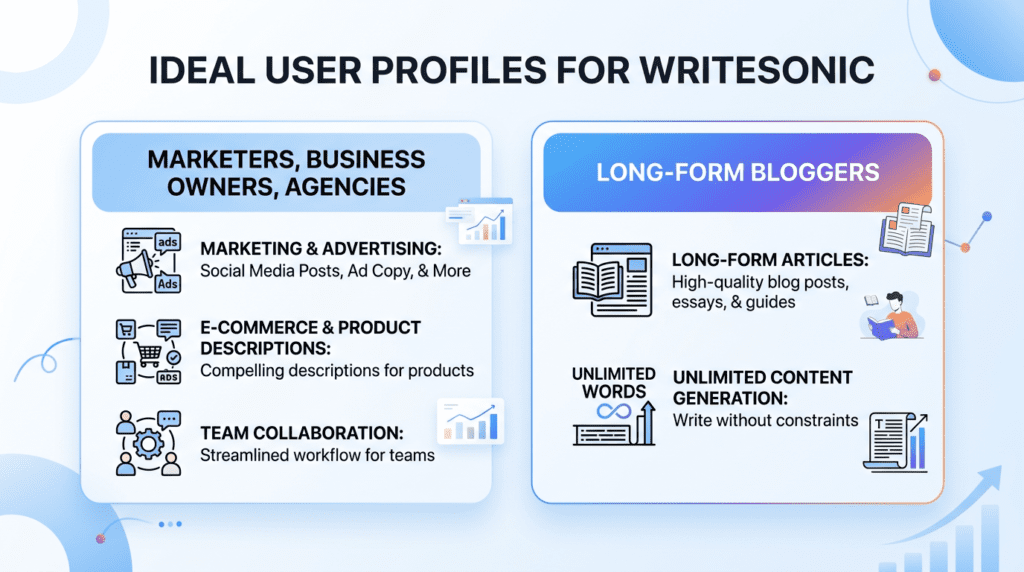
You are a marketer, business owner, or agency needing a versatile, all-in-one AI content toolkit and value ease of use and a broad feature set.
Writesonic truly shines for individuals and teams who require a comprehensive solution for their content needs. If your role involves generating a diverse range of content – from blog posts and social media updates to ad copy, product descriptions, and even visual or audio assets – Writesonic’s integrated suite offers significant efficiency. Its user-friendly interface and extensive template library make it accessible, allowing you to streamline workflows and produce varied content quickly, as demonstrated in our real-world marketing campaign scenario. For those looking to consolidate their AI tools and benefit from a platform that continues to innovate beyond text, Writesonic is a strong contender.
Consider Alternatives If
You are a blogger focused exclusively on long-form content and need unlimited words at the lowest possible price.
While Writesonic is capable of generating long-form articles, its credit-based system, as discussed in the “Managing the Credit System” section, might not be the most economical choice for bloggers or content creators whose sole focus is producing an extremely high volume of lengthy articles each month. Some alternative platforms offer unlimited word counts specifically for long-form content, which could prove more cost-effective for this particular use case. If your content strategy is singularly centered on maximizing long-form output with minimal budget constraints, exploring those dedicated long-form solutions might be beneficial.
The Final Word
Writesonic has matured into a formidable AI content platform. Its commitment to expanding beyond text into audio and images makes it a forward-thinking choice. For users who can justify the cost, it delivers significant value and efficiency, solidifying its place as a top contender in the AI writing space.
Writesonic has evolved beyond a simple AI writer into a robust content creation hub. Its continuous innovation, particularly with the integration of Photosonic and Audiosonic, positions it as a leader in offering a multi-modal content solution. While the investment requires consideration, for those who leverage its full spectrum of capabilities across various content types and formats, the gains in productivity and creative output are substantial. It’s a powerful tool for modern content creators and marketers looking to stay ahead.
Frequently Asked Questions (FAQs)
Is Writesonic better than ChatGPT?
Writesonic is not inherently “better” but is more specialized, offering structured templates and dedicated tools for specific marketing and content creation tasks, whereas ChatGPT is a more general-purpose AI for broad conversational and creative applications.
Can Writesonic’s content pass AI detection tools?
With proper human editing and refinement, content generated by Writesonic can often pass AI detection tools, as the goal is to produce human-quality output that is then polished by a human editor.
How much does Writesonic cost per month?
Writesonic offers various tiered pricing plans, with costs varying significantly based on the number of words/credits, features, and user seats included, typically ranging from a free plan to several hundred dollars for business plans.
Does Writesonic offer a lifetime deal?
Writesonic does not typically offer lifetime deals as a standard offering; such deals are usually rare, limited-time promotions from the company or through third-party platforms.
What are the main limitations of the Writesonic free plan?
The main limitations of the Writesonic free plan include a restricted number of words/credits per month and access to a more limited set of features and AI models compared to paid subscriptions.
Can I get a refund on Writesonic?
Writesonic generally offers a refund policy, often within a specific timeframe (e.g., 7 days) of purchase, provided certain conditions are met; it’s best to check their official terms of service for the most current details.