

In today’s fast-paced digital landscape, many businesses and content creators are looking for ways to scale their output without sacrificing quality or breaking the bank. The promise of AI writing tools, like Writesonic, often seems like the perfect solution, offering to churn out blog posts, marketing copy, and more at lightning speed. But as with any powerful tool, deciding whether to integrate it into your workflow isn’t always straightforward. You need to know if it genuinely fits your specific needs and budget, or if it’ll just add another layer of complexity.
That’s why we’re diving deep into the Writesonic Pros and Cons. This isn’t just another feature list; it’s a balanced, in-depth analysis designed to give you a clear picture of what this popular AI writing tool does well and where it might fall short. We’ll break down its strengths and weaknesses with a practical eye, helping you understand if Writesonic is truly the right investment to streamline your content creation process and deliver real value for your business.
Quick Verdict
Complete Verdict Table
| Criteria | Verdict | Summary |
|---|---|---|
| Content Quality | Strong | Generates high-quality, context-aware content, especially with GPT-4o. |
| Feature Set | Excellent | Extensive tools including AI Article Writer, Chatsonic, Photosonic, and Audiosonic. |
| Ease of Use | Very Good | Intuitive interface, but the sheer number of features can be overwhelming for new users. |
| Value for Money | Good | Flexible pricing, but word-based plans can be confusing and potentially costly for high-volume users. |
| Best For | Content Teams & Marketers | Ideal for users who need a versatile, all-in-one AI content creation platform. |
Best For
Content marketers, SEO specialists, and small business owners who need a single platform for diverse content formats, from blog posts and social media copy to AI-generated images and audio.
Not Ideal For
Individual writers or bloggers on a tight budget who only need basic long-form content generation and may find the extensive feature set and credit system overly complex.
Bottom Line
Writesonic is a powerful and versatile AI content suite that excels at producing a wide variety of content types. Its strengths in feature diversity and quality output make it a top contender, but potential buyers must carefully evaluate the word-based pricing model to ensure it aligns with their usage patterns and budget.
The Core Strengths: What Writesonic Does Well (Pros)
Pro 1: Unmatched Versatility with an All-in-One Content Suite
One of the most compelling advantages of Writesonic is its comprehensive suite of tools, extending far beyond basic text generation. For anyone managing a digital business, this means fewer subscriptions and a more streamlined workflow. Instead of juggling multiple platforms for different content needs, Writesonic aims to be a one-stop shop, significantly reducing the friction in content creation.
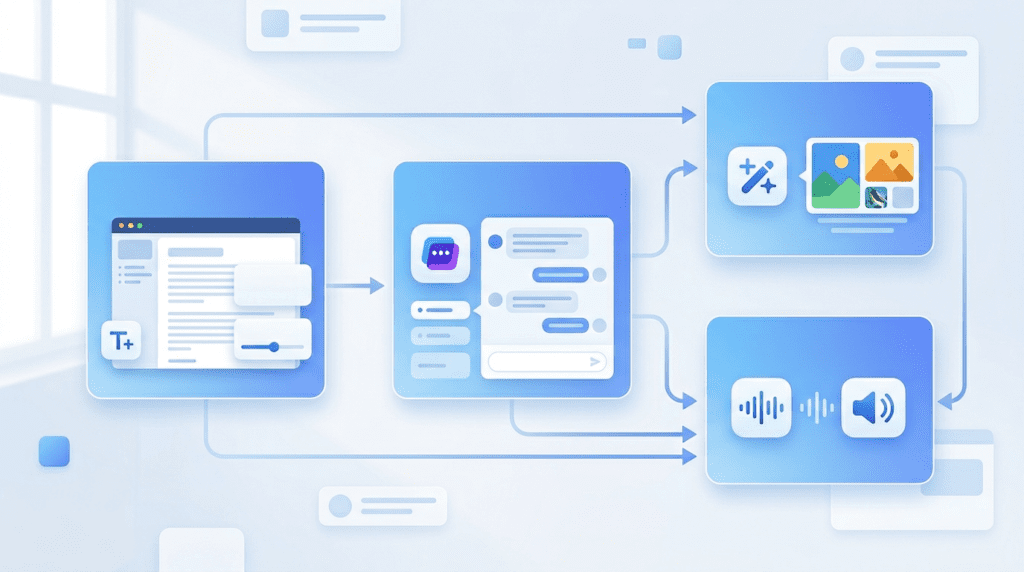
The AI Article Writer 5.0 stands out as a prime example. It’s not just a simple text box; it’s a guided process that helps you craft long-form content like blog posts and articles from start to finish. What makes it powerful is its ability to integrate factual accuracy checks and adapt to a specific brand voice, ensuring that the generated content isn’t just voluminous but also relevant and consistent. For a busy affiliate marketer or a SaaS founder needing to churn out informative blog posts, this means less time researching and more time refining. It tackles the beginner challenge of staring at a blank page by providing a structured path to a complete draft.
Then there’s Chatsonic, which many users find to be a significant upgrade from standard AI chatbots. For marketers, its real-time data access is a game-changer. Instead of generating generic responses based on outdated information, Chatsonic can pull current data, making it invaluable for creating timely social media updates, news-driven articles, or competitive analysis. This feature alone can save hours of manual research, allowing teams to react faster to market trends.
The inclusion of Photosonic and Audiosonic further solidifies Writesonic’s all-in-one appeal. Photosonic allows users to generate unique, royalty-free images directly within the platform, eliminating the need for separate stock photo subscriptions or complex design tools. This is particularly beneficial for small businesses or content creators who need visuals for blog posts, social media, or ad campaigns but lack a dedicated graphic designer. Similarly, Audiosonic enables the creation of voiceovers, which can be incredibly useful for podcasts, video scripts, or even accessibility features. The practical implication here is a noticeable reduction in both cost and complexity, as you’re not paying for or learning to use three separate tools. This integrated approach is a major selling point for those looking to scale their content operations without expanding their tech stack.
Pro 2: High-Quality Output & Advanced Customization
Beyond sheer volume, the quality of content generated by Writesonic is a critical factor, and it consistently delivers. A major reason for this is its strategic use of advanced AI models. By leveraging GPT-4 and GPT-4o, Writesonic can produce more nuanced, coherent, and contextually accurate content than many competitors still relying on older models. This means less time spent on heavy editing and fact-checking for users, which is a common frustration with lower-quality AI writers. For an SEO specialist, this translates to content that is not only optimized for keywords but also genuinely helpful and engaging for readers, improving dwell time and reducing bounce rates.
The Brand Voice feature is another powerful customization option that addresses a common pain point for businesses: maintaining consistency. You can upload existing content or guidelines, and Writesonic learns your brand’s specific tone, style, and even preferred terminology. Imagine an e-commerce business needing product descriptions across hundreds of items; this feature ensures every description sounds like it came from the same voice, reinforcing brand identity. This is particularly valuable for agencies managing multiple clients, as it allows them to scale content creation while preserving each client’s unique brand persona. It moves beyond generic AI output to truly personalized content.
Furthermore, the ability to create Custom Feature Templates empowers users to tailor the AI to their exact needs. If you frequently write a specific type of social media caption, email subject line, or even a unique internal report, you can build a template that guides the AI to produce exactly what you need, every time. This significantly improves workflow efficiency, especially for recurring tasks, and helps overcome the initial learning curve of adapting AI to specific business processes. It’s a feature that becomes increasingly valuable as your usage grows, allowing you to automate more complex or niche content generation tasks that marketing pages often overlook.
Pro 3: Strong Support for SEO and Marketing Workflows
Writesonic isn’t just about generating words; it’s designed with the practical needs of marketers and SEO professionals in mind. This focus on workflow integration and optimization is a significant strength. The built-in SEO tools, most notably the Surfer SEO integration, are a prime example. This isn’t just a superficial connection; it allows users to optimize content for search engines *during* the writing process. As you generate your blog post, Writesonic can provide real-time suggestions for keywords, headings, and content structure based on Surfer SEO’s analysis of top-ranking pages. This means less back-and-forth between tools and a higher likelihood of creating content that ranks well from the outset, directly impacting organic traffic and lead generation. This feature addresses the common beginner challenge of understanding SEO best practices and helps even experienced marketers streamline their optimization efforts.
For businesses that need to produce a high volume of content, the Bulk Content Generation capabilities are invaluable. Think of an e-commerce store launching a new product line, or a social media manager needing daily posts across multiple platforms. Writesonic can efficiently create hundreds of product descriptions, social media captions, or meta descriptions in a fraction of the time it would take manually. This feature is a game-changer for scaling content efforts without scaling your team proportionally, offering a clear advantage for businesses looking to expand their digital footprint rapidly. It directly tackles the scaling limitation of manual content creation.
Finally, the specialized Landing Page & Ad Copy Generators are tailored to accelerate marketing campaigns. Instead of struggling to write compelling headlines or persuasive body copy for a new ad, Writesonic offers templates and prompts specifically designed for these high-conversion assets. This speeds up the campaign creation process, allowing marketers to test different variations quickly and launch initiatives faster. For an affiliate marketer, this means getting new campaigns live sooner, potentially increasing revenue. These tools understand the specific psychology and structure required for effective marketing copy, making them far more useful than a general-purpose AI writer for these critical tasks.
The Key Weaknesses: Where Writesonic Falls Short (Cons)
While Writesonic offers a powerful suite of AI tools, it’s not without its drawbacks. Understanding these potential pitfalls is crucial for making an informed decision. These aren’t necessarily deal-breakers, but they represent areas where users might face challenges or unexpected costs.
Con 1: The Word-Based Credit System Can Be Confusing and Costly
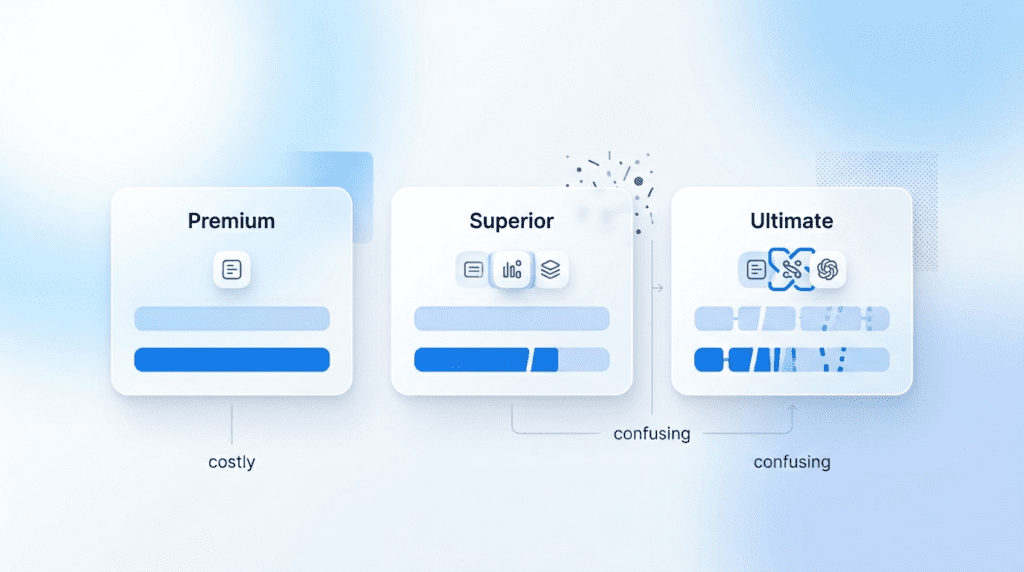
One of the most significant considerations when evaluating Writesonic is its credit-based pricing model, which can quickly become a source of frustration for high-volume users or those new to AI writing tools. Unlike some competitors that offer truly unlimited word generation, Writesonic operates on a system where “words” aren’t just words; they’re credits tied to quality tiers. This can make budgeting and predicting usage a real headache.
Understanding Word Quality Tiers
Writesonic doesn’t just count words; it assigns a credit value based on the quality of the AI model used for generation. You’ll encounter “Premium,” “Superior,” and “Ultimate” word credits. For instance, generating content using the “Ultimate” quality (which often leverages the most advanced GPT-4 models) consumes significantly more credits per word than “Premium” quality. This means your 100,000-word plan might only yield 25,000 “Ultimate” quality words, or even fewer if you’re using the absolute best models. This tiered system, while designed to offer flexibility, often feels like a hidden cost, especially when you’re aiming for the highest quality output for critical content like blog posts or landing pages. Beginners often struggle to grasp this distinction, leading to rapid credit depletion.
The Risk of Unexpected Costs
Imagine you’re a content team tasked with producing 20 long-form blog posts and 50 product descriptions each month. You might initially estimate your word count based on raw output. However, if you’re consistently using “Ultimate” quality for your blog posts and generating multiple variations for product descriptions, those credits vanish much faster than anticipated. A team might find themselves burning through their monthly allowance within the first two weeks, leading to a sudden halt in production or the need to purchase expensive add-on credits. This can disrupt workflows, delay projects, and inflate your monthly spend beyond the advertised plan cost. For a growing agency, this unpredictability can be a major scaling limitation, as it’s hard to budget accurately for client work.
Comparing Value vs. Unlimited Plans
This credit system stands in stark contrast to some competitors that offer truly unlimited word generation for a flat monthly fee. While Writesonic’s approach allows for more granular control over AI model usage, it introduces a layer of complexity and potential cost overruns that unlimited plans avoid. For users who prioritize predictable costs and don’t want to constantly monitor their credit balance, the trade-off for Writesonic’s advanced features might not be worth the financial uncertainty. It forces users to be very strategic about *when* and *how* they use their credits, which can be a hidden frustration.
Con 2: Feature Overload and a Steeper Learning Curve for Beginners
Writesonic prides itself on being an all-in-one content suite, and while this versatility is a pro, it can also be a significant con for new users. The sheer volume of tools, templates, and options can feel overwhelming, leading to a steeper learning curve than simpler, more focused AI writers.
Navigating the Dashboard
Upon logging in, a beginner might feel like they’ve stepped into a content creation cockpit with too many buttons. The dashboard is packed with options: AI Article Writer, Chatsonic, Photosonic, Audiosonic, various short-form templates, custom templates, and more. While experienced marketers might appreciate this breadth, someone just starting with AI writing can easily get lost trying to figure out where to begin or which tool is best for their specific need. This initial feeling of overwhelm can deter users before they even get to experience the platform’s true power.
Finding the “Right” Tool for the Job
The platform offers multiple ways to achieve similar outcomes. For example, there might be several “article writer” templates or different ways to generate marketing copy. This can lead to confusion, as users might spend valuable time experimenting with various tools to find the most effective one for their task, rather than immediately being productive. This trial-and-error phase is an investment of time that some users, especially those on tight deadlines, might not be willing to make.
Time Investment for Mastery
Unlocking Writesonic’s full potential isn’t an overnight process. It requires a dedicated time investment to explore its features, understand the nuances of its different AI models, and learn how to best prompt the system for optimal results. While the user interface is generally clean, the depth of functionality means that true mastery – where you can consistently generate high-quality, on-brand content efficiently – takes practice. This can be a hidden frustration for users expecting instant, perfect results without much effort.
Con 3: Inconsistent Performance on Highly Niche or Technical Topics
Even with access to advanced models like GPT-4, AI writing tools like Writesonic still have limitations, particularly when dealing with highly specialized, technical, or rapidly evolving subject matter. The quality of the output can vary significantly depending on the topic’s complexity and the availability of training data.
The Need for Expert Fact-Checking
When generating content on complex subjects – be it medical research, legal precedents, advanced engineering concepts, or niche scientific fields – Writesonic’s output, while grammatically sound, often requires extensive human review and fact-checking. The AI might confidently present information that is outdated, oversimplified, or even subtly incorrect. For professionals in these fields, relying solely on AI-generated content without expert oversight is a significant risk, as factual inaccuracies can damage credibility or have serious real-world consequences. This means the “time-saving” aspect is diminished, as a human expert still needs to dedicate substantial time to verification.
Potential for “Surface-Level” Content
For topics where deep, nuanced understanding is required, Writesonic can sometimes produce “surface-level” content. This means the output might sound plausible and well-written but lacks the depth, critical analysis, or unique insights that an expert human writer would provide. For example, asking it to write about the latest advancements in quantum computing might yield a general overview, but it won’t offer the kind of detailed explanation or novel perspective that would engage a specialist audience. This can be a limitation for businesses or individuals aiming to establish thought leadership in highly competitive or technical niches.
[Honest Take] Who Truly Benefits from Writesonic (and Who Should Look Elsewhere)?

Moving beyond a simple list of Writesonic pros and cons, let’s get real about who this AI writing tool is truly built for and who might be better served by other solutions. It’s about aligning the tool’s capabilities with your specific needs and workflow.
The Solo Blogger or Freelancer
For the individual blogger or freelancer, Writesonic might be overkill. If your primary need is to generate long-form blog posts and articles, and you’re working with a tight budget, the extensive feature set and the credit-based pricing model can quickly become a burden. You might find yourself paying for features like Photosonic, Audiosonic, or bulk content generation that you rarely use, while your word credits for essential long-form content deplete rapidly.
Who should look elsewhere: If you’re a solo content creator primarily focused on generating a few high-quality, long-form articles per month and prefer a predictable, unlimited word count, a simpler, more affordable AI writer focused solely on long-form content might be a better fit. The opportunity cost of learning and managing Writesonic’s complex credit system might outweigh the benefits for a single user.
The Marketing Agency
This is where Writesonic truly shines. For a marketing agency managing multiple clients and diverse content needs, Writesonic is a near-perfect fit. The ability to manage multiple brand voices, generate a wide array of content types (from social media captions and ad copy to landing pages and full blog posts), and utilize bulk generation features makes it an incredibly powerful efficiency driver. An agency can leverage Chatsonic for quick research, Photosonic for unique visuals, and the AI Article Writer for client deliverables, all within one platform.
Why it benefits them: The collaborative features, combined with the ability to maintain consistent brand voice across different client projects, streamline workflows significantly. It reduces the need for multiple subscriptions to specialized tools, consolidating content creation into a single, robust platform. The investment in Writesonic can lead to substantial time savings and increased output, directly impacting an agency’s profitability and client satisfaction.
The In-House Content Team
Writesonic is also a sweet spot for in-house content teams within businesses of all sizes. Whether it’s a small startup’s marketing department or a large enterprise’s content hub, the platform’s comprehensive toolset can dramatically improve productivity. The collaborative features allow team members to work together on projects, ensuring brand voice consistency across all generated content.
Why it benefits them: An in-house team can use Writesonic to quickly draft internal communications, generate marketing copy for new product launches, create SEO-optimized blog posts, and even develop scripts for video content. The all-in-one nature reduces the need for multiple software licenses and simplifies the content creation process. While the credit system still requires careful management, the overall value derived from streamlining diverse content needs and maintaining brand consistency often justifies the cost. It helps overcome scaling concerns by enabling a smaller team to produce a larger volume of high-quality content.
Final Recommendation: Is a Writesonic Subscription Worth It in 2026?
After a thorough examination of its capabilities and limitations, the ultimate value of a Writesonic subscription in 2026 hinges entirely on your specific operational needs and scale. Writesonic stands as an excellent, top-tier AI content platform, offering a comprehensive suite of tools that can significantly streamline content creation workflows.
For marketing agencies, in-house content teams, or businesses requiring a versatile, all-in-one solution for diverse content types, brand voice management, and collaborative features, the answer is a resounding “yes.” Its robust feature set, including advanced article generation, image creation, and audio capabilities, justifies the investment by driving efficiency and reducing the need for multiple specialized subscriptions. The platform excels when used to manage high volumes of content across various formats, making it a powerful asset for scaling content operations.
Conversely, for solo bloggers, individual freelancers with simpler content needs, or those operating under strict budget constraints, the cons related to its word-based credit system and initial learning curve may point towards more focused, potentially more affordable alternatives. While powerful, its complexity and cost structure might be overkill if your primary requirement is occasional long-form article generation without the need for extensive team collaboration or advanced multimedia features.
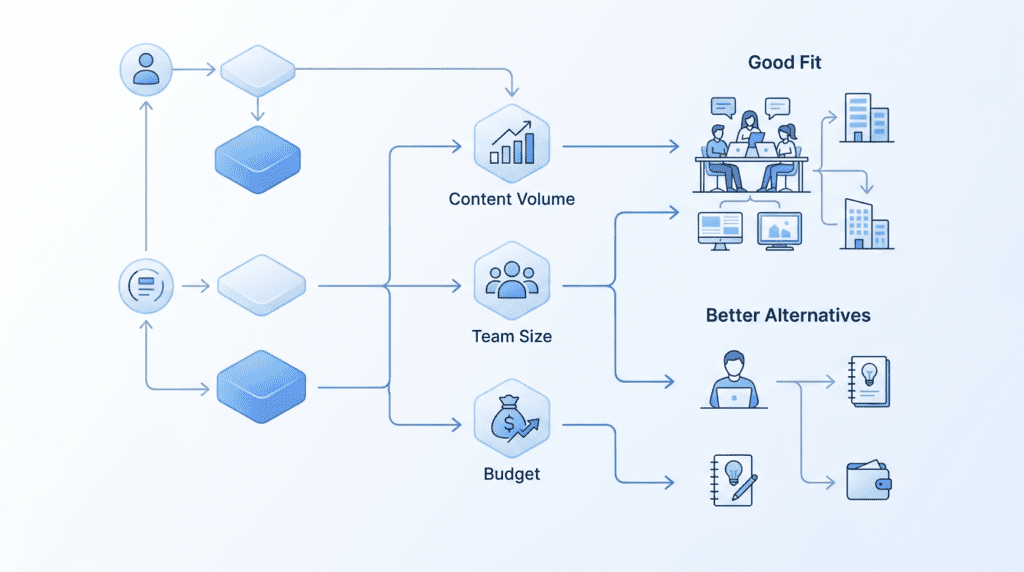
Ultimately, before committing, we encourage you to map your own content workflow needs against Writesonic’s extensive feature set. Consider your content volume, team size, budget, and the specific types of content you produce. If Writesonic’s comprehensive ecosystem aligns with your strategic content goals and operational scale, it represents a highly valuable investment for the future of your content strategy.
Frequently Asked Questions (FAQs)
How does Writesonic’s pricing actually work?
Writesonic operates on a credit-based system where different “qualities” of words (Premium, Superior, Ultimate) consume varying amounts of credits, with higher quality words costing more.
Is Chatsonic better than the free version of ChatGPT?
Chatsonic often offers more current information and integrates directly with Writesonic’s content creation tools, providing a more cohesive experience for content marketers than a standalone free ChatGPT.
Can Writesonic completely replace a human writer?
No, Writesonic is a powerful assistant that significantly enhances productivity, but it cannot fully replace the critical thinking, nuanced understanding, and expert fact-checking that a human writer provides, especially for niche or technical topics.
How does the Surfer SEO integration work?
The Surfer SEO integration allows you to generate content directly within Writesonic while leveraging Surfer’s content optimization recommendations for keywords, structure, and length, aiming to improve search engine rankings.
What happens if I run out of words in my monthly plan?
If you exhaust your monthly word credits, you will either need to upgrade your plan, purchase additional credits, or wait until your next billing cycle, which can lead to workflow interruptions or unexpected costs.
Is there a free trial to test the pros and cons myself?
Yes, Writesonic typically offers a free trial that provides a limited number of credits, allowing users to explore its features and assess its suitability for their needs before committing to a paid subscription.